- Le dossier d’évaluation est un extrait du plan pour en savoir plus avant achat. Donc inutile d’acheter plan et dossier d’évaluation.
- Le plan, ou dossier de construction, est le document de base pour construire le bateau. Il inclut une assistance par email ou téléphone.
- Attention : pour construire ce bateau, il vous faut acquérir un kit de contreplaqué en découpe numérique.
- Vous pouvez aussi commander des fichiers de découpe numérique et faire découper le kit par une entreprise de votre choix.
- Pour commander un kit, s’adresser à l’un de mes partenaires. En France, chantier Grand-Largue.
- Les frais postaux et la TVA, si elle s’applique, sont inclus dans les prix affichés.
Image already added
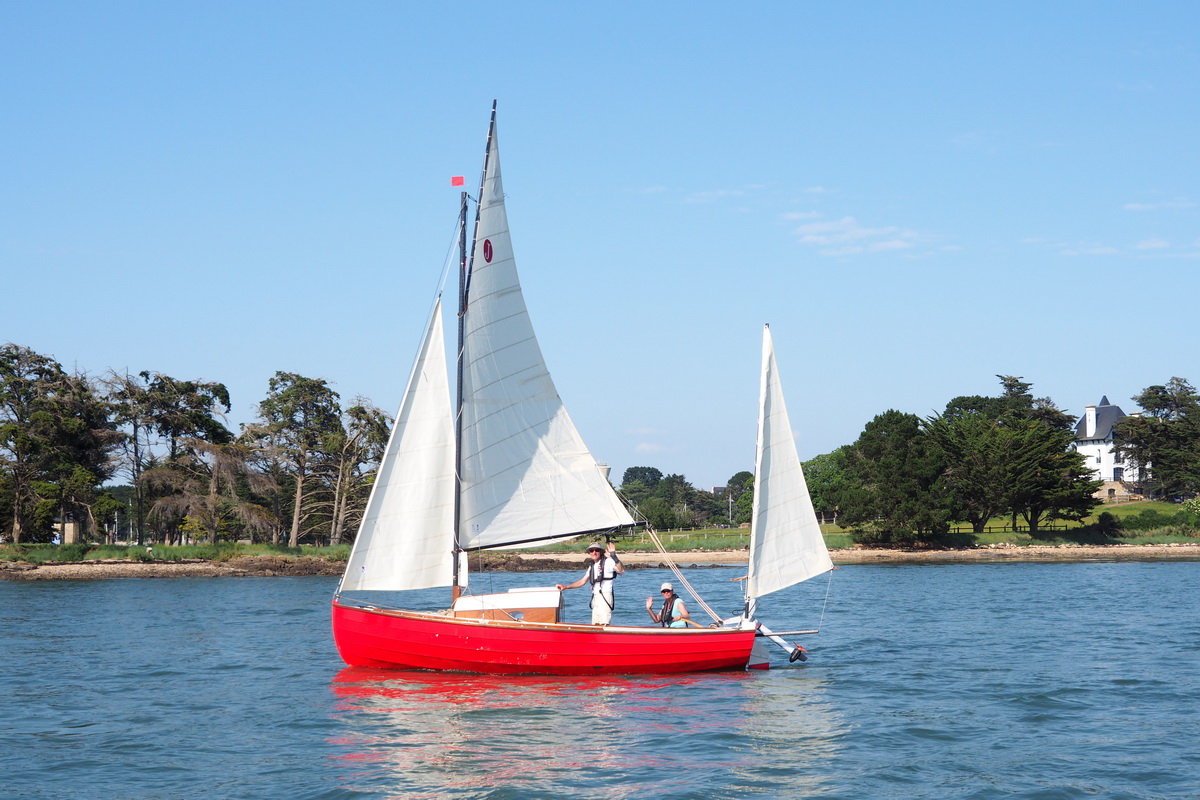
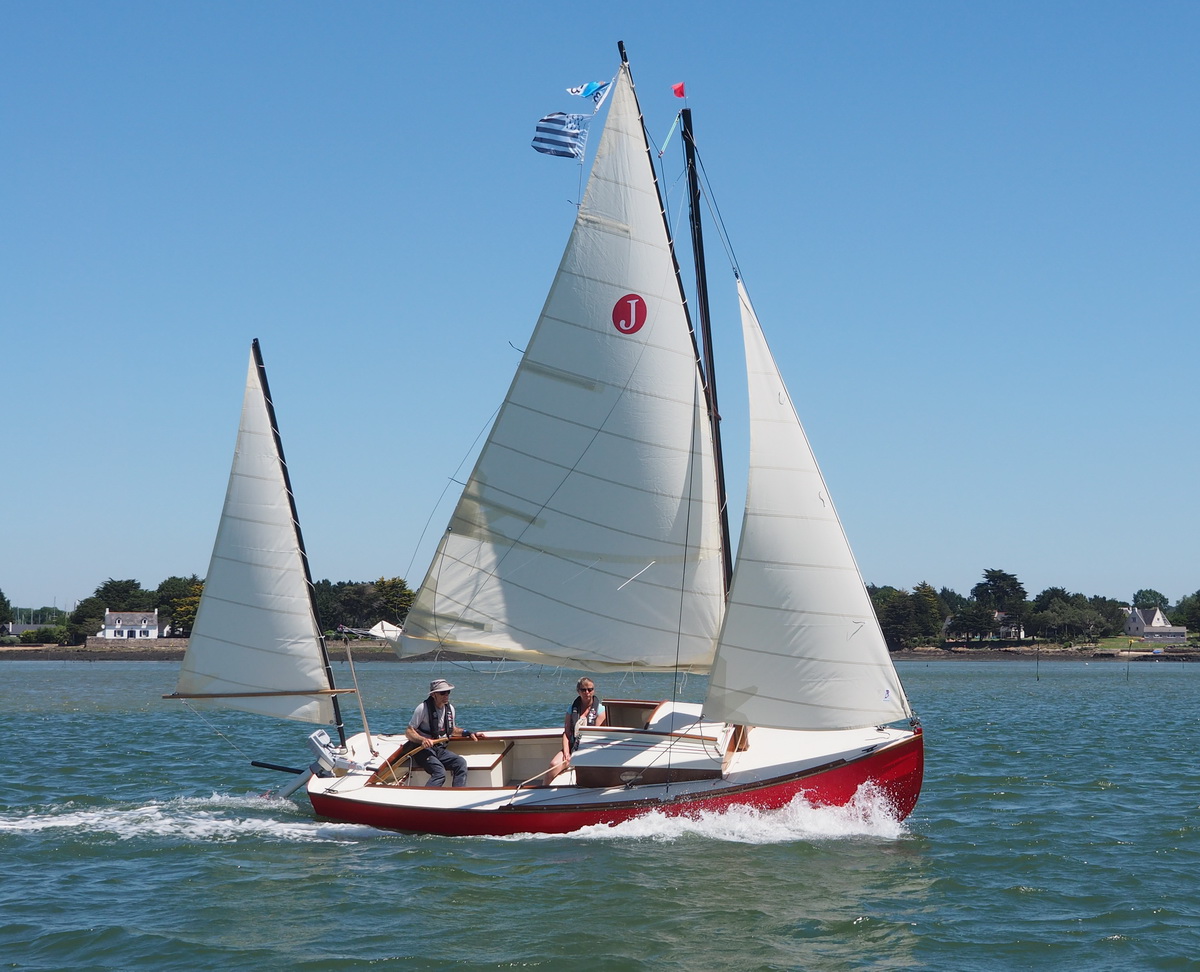
Yawl à cabine transportable de 6 m pour la navigation à la journée ou le raid
| Long. coque / flottaison | 5.99 / 5.40 m | Voilure | 22 m² |
| Largeur hors bordé / flottaison | 2.22 / 1.82 m | Moteur hors-bord | 3 à 6 ch |
| Tirant d’eau | 0.38 / 1.24 m | Catégorie et équipage | C4 / D6 |
| Poids lège complet / lest | 690 / 150 kg | Temps construction avec kit CP | 800 heures |
Jewell est né de discussions avec Clint Chase, chantier partenaire en Amérique du Nord. C’est un day-boat familial répondant aux besoins suivants :
- Être remorquable par un véhicule courant, et donc de poids modéré.
- Avoir un cockpit large et spacieux, adapté à la pêche et assurant une bonne sécurité pour des enfants.
- Être stable pour les navigations familiales mais tout de même performant pour des navigations plus sportives.
- Disposer d’une petite cabine, avec WC pour les dames et les enfants, un petit cuisine et deux couchettes pour passer une nuit ou deux ou encore s’offrir une petite sieste.
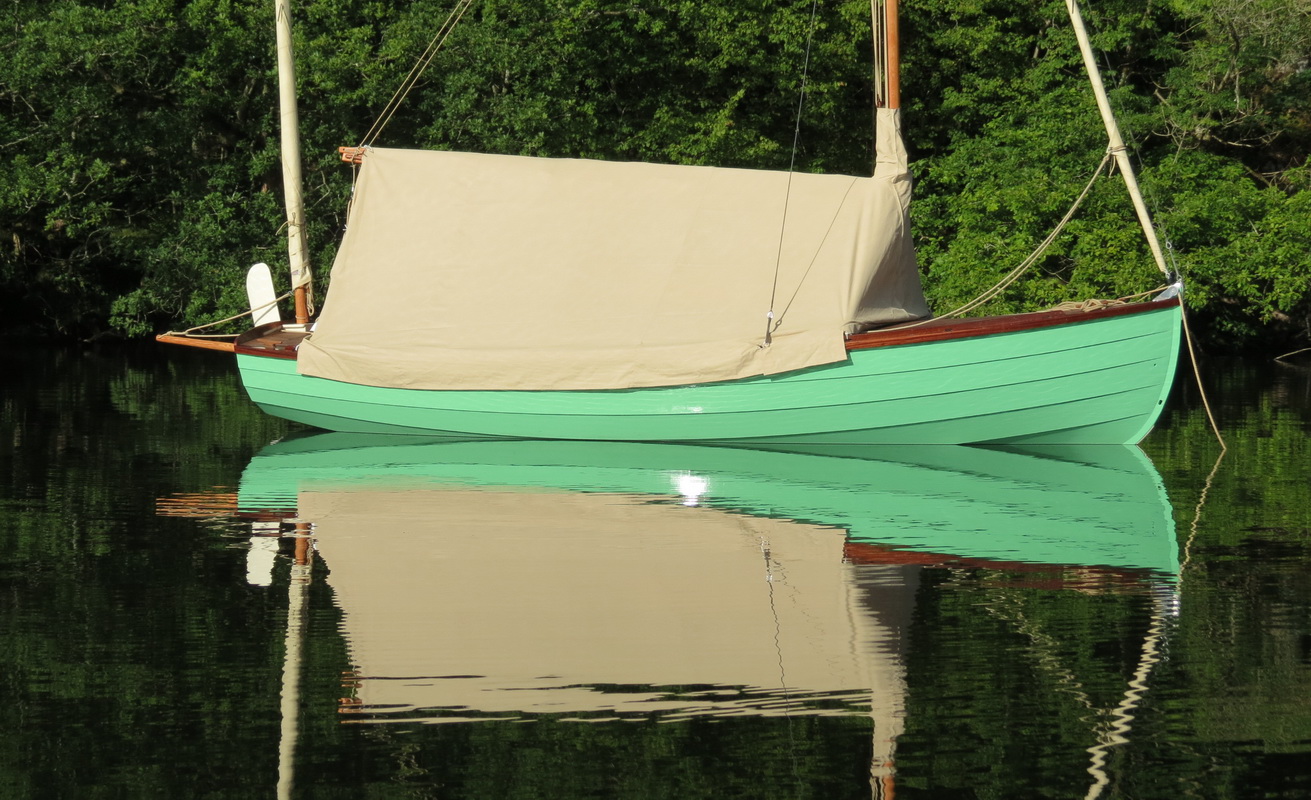
Nous avons choisi un gréement de yawl, parce qu’il est beau, très prisé en Amérique du Nord, très pratique d’utilisation et qu’il a prouvé être tout à fait performant. J’étais aussi content de faire autre chose que le simple sloup aurique comme sur mes autres day-boats : Stir Ven, Beniguet, Lilou… Le gréement de yawl est très polyvalent. On peut naviguer sous grand-voile seule ou au contraire sous foc et tape-cul. Cette dernière voile permet de maintenir le bateau bout au vent quand on met le moteur en route ou que l’on prend un ris dans la grand-voile. Le grand-mât est aussi plus court et plus léger, donc plus facile à dresser. En outre il est creux et les haubans sont en Dyneema, plus pratiques à manipuler.
Le foc recouvre un peu la grand-voile pour une bonne aptitude au près. J’ai toujours préféré les bateaux qui remontent bien au vent, ce qui est aussi facteur de sécurité. Le foc est petit, donc facile à border même en solitaire. Le tape-cul est une triangulaire à balestron que l’on simplement enrouler autour de son mât.
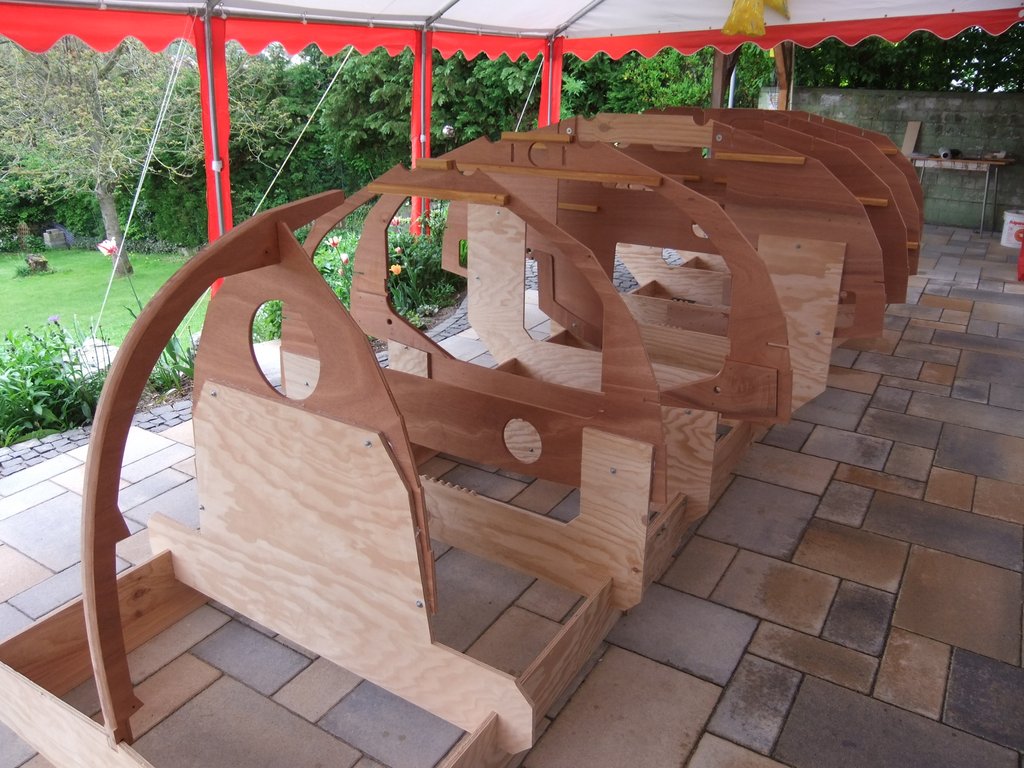
Jewell est conçu pour être construit aussi bien par un professionnel que par un amateur. Il est bordé à clin de CP sur une charpente en CP. La charpente axiale, intégrant le puits de dérive, est constituée de plusieurs plis de CP. Le kit de CP en découpe numérique, utilisé par les professionnels, est aussi disponible pour les constructeurs individuels. Il permet de gagner beaucoup de temps. Il inclus les gabarits supports et les bordés avec scarfs numériques.
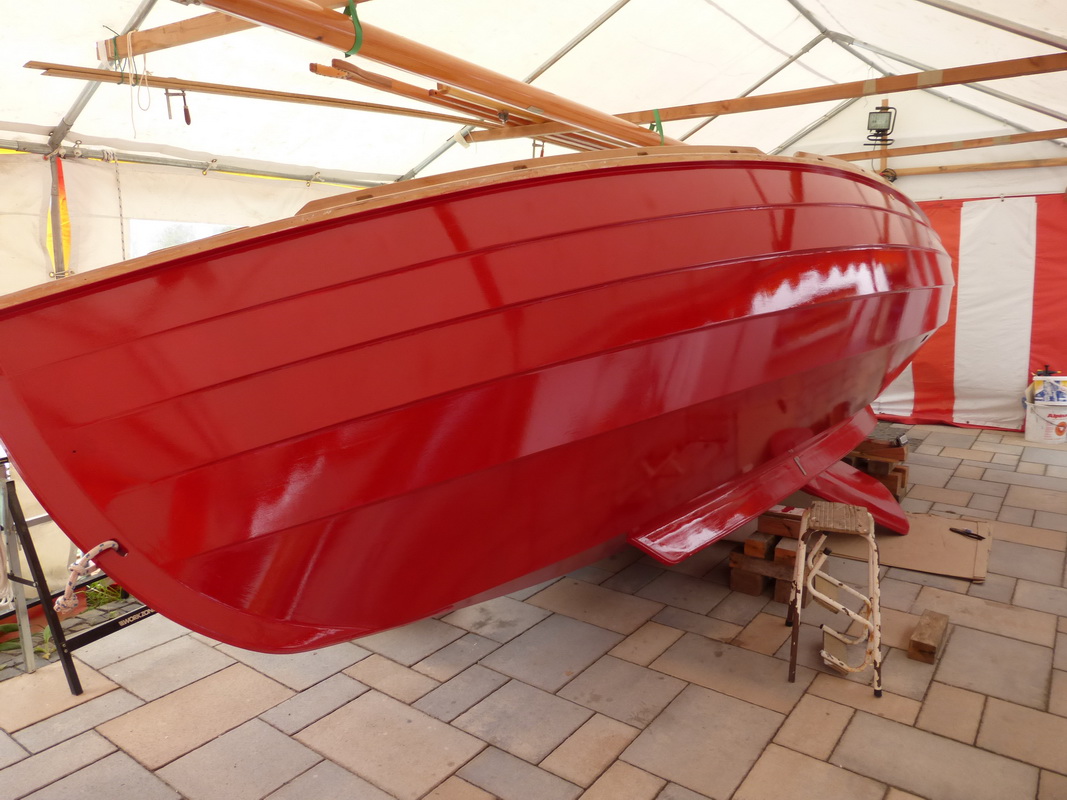
La construction est légère (bordé en CP okoumé de 9 mm) mais solide pour résister aux mauvais traitements d’un usage en raid et aux efforts ponctuels sur la remorque.
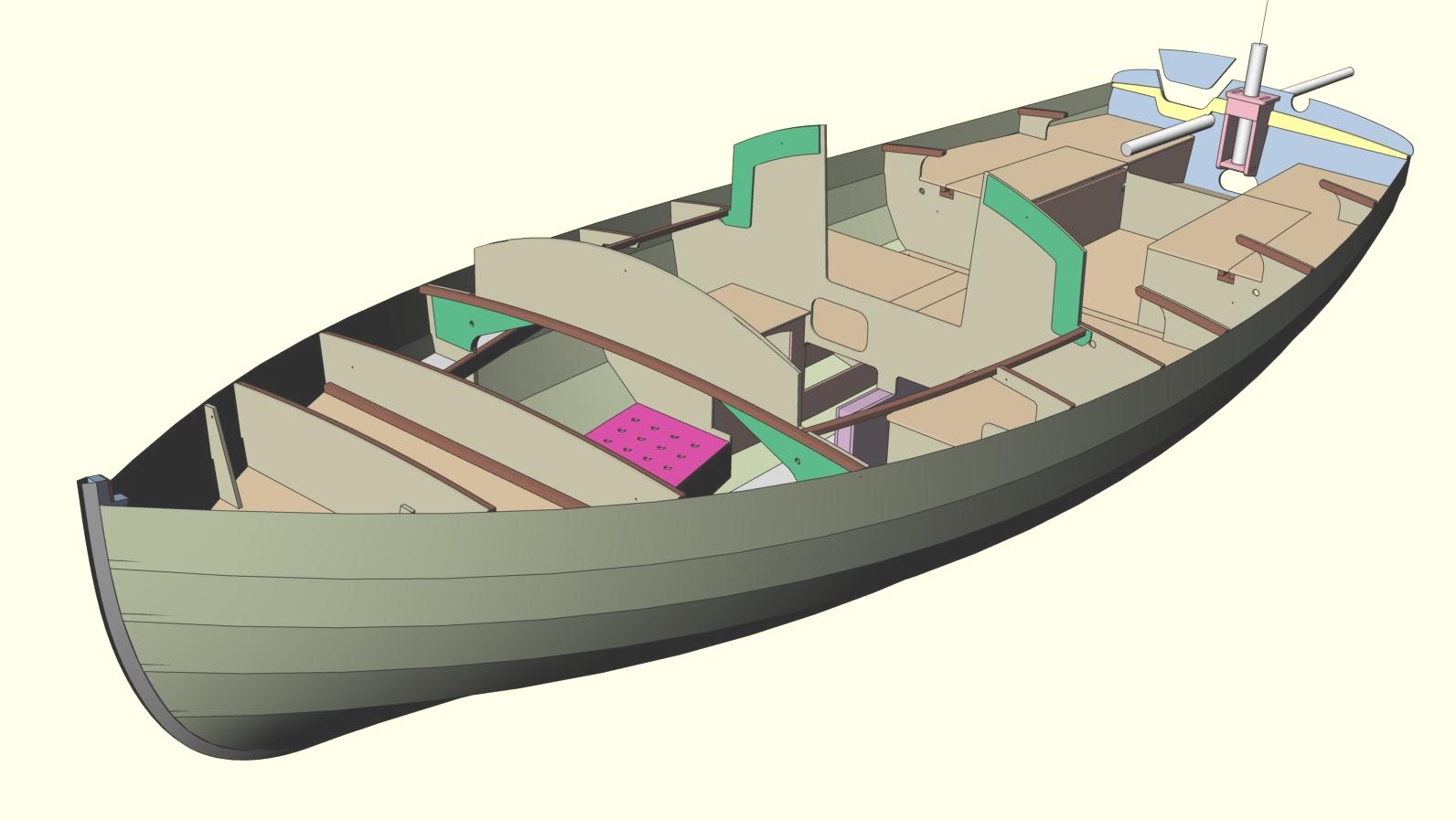
Le cockpit est en deux parties, classique à l’arrière et pleine largeur à l’avant comme celui du Stir Ven. Il est prévu étanche et autovideur. Des hiloires basses et arrondies permettent à l’équipage se s’asseoir au choix sur le pont latéral, le bridge-deck ou dans le fond du cockpit.
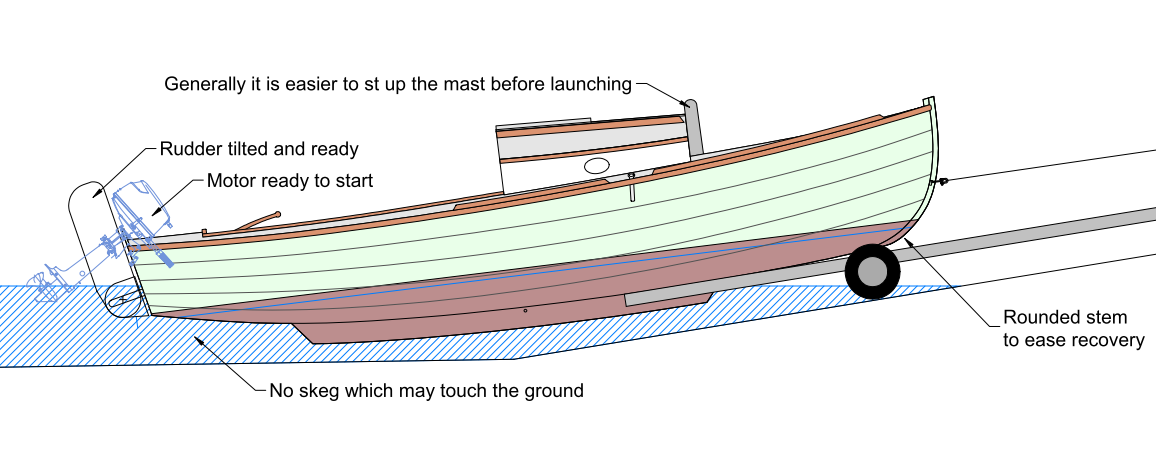
Le tableau arrière est muni d’une trappe obturable permettant l’installation d’un petit moteur hors-bord à arbre long de 3 à 5 ch à portée du barreur. Quand le moteur est rangé dans son coffre, l’esthétique du bateau est totalement préservée. On peut aussi utiliser un moteur électrique à la place d’un moteur à essence.
Un emplacement est prévu pour ranger une paire d’avirons de 3 m utilisables en nage ou en godille.
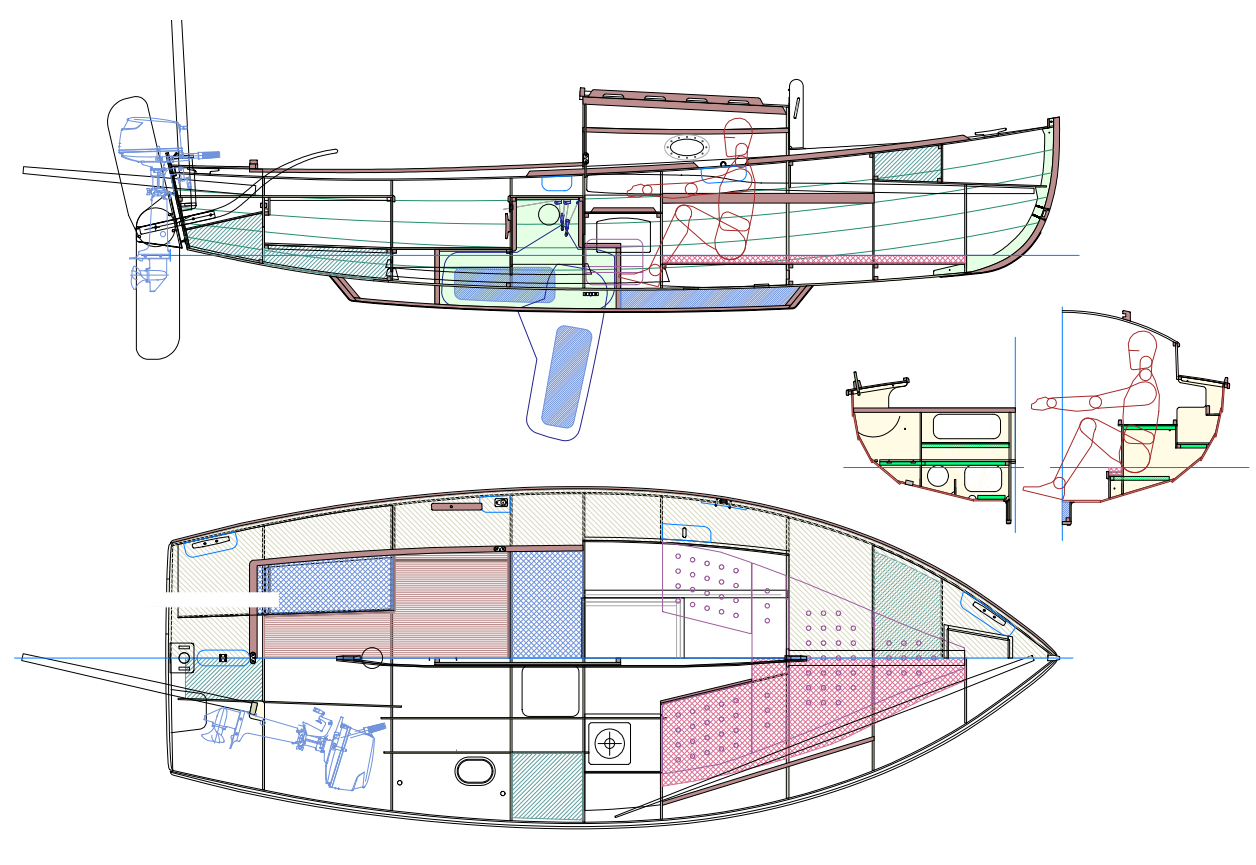
La cabine est conçue pour donner le confort minimal à un raid de quelques jours. On s’y tient assis, y compris sur le WC chimique placé à l’endroit le plus creux du bateau. Les couchettes sont extra-longues. Le coin cuisine peut être aménagé au choix de chacun. Le bateau dispose de vastes volumes de rangements, tant dans la cabine que des les coffres de cockpit.
Pour les curieux, sachez que Jewell est le nom d’une ile dans la baie de Portland, Maine. Je reste fidèle à l’utilisation de noms géographiques mais je suis passé de l’autre côté de la grande mare !
Plusieurs exemplaires ont été construits en Allemagne, Australie, Canada, Angleterre, USA, France, et d’autres sont en chantier.
Voir une video d’un Jewell construit aux USA.

Image already added
Reviews
- Study plans are extracts from the plans allowing the buyer to have a more precise knowledge of the plan content. If you are ordering the building plan, you do not need to order the study plan.
- The Building plan is the basic document to build the boat. It includes a free telephone or e-mail assistance.
- Attention: building this boat requires a numerically cut plywood kit.
- You may also buy the CNC cutting files allowing you sub-contracting the kit to a local company
- The kit is to be ordered from one of my partners.
- Postage and VAT, if applicable, are included in the shown prices.
Image already added
6 m trailerable yawl for day-sailing and raid
| Hull length / waterline | 5.99 / 5.40 m | Sail area | 22 m² |
| Breadth / waterline | 2.22 / 1.82 m | Outboard | 3 to 6 hp |
| Draught | 0.38 / 1.24 m | Design category / Crew | C4 / D6 |
| Light weight (including motor) / ballast | 690 / 150 kg | Building time (with kit) | 800 hours |
Jewell came from a discussion with Clint Chase, a boat-building partner in North America. As a family friendly day boat, she has to meet the following main requirements:
- To be trailerable by an ordinary car, and therefore light, and be able to beach temporarily for loading/unloading.
- To have a large, wide and deep cockpit, comfortable, allowing for fishing and a place where children could be safe.
- To have a stable hull for family sailing but give excellent performance for weekend sails “with the guys”.
- To have a cuddy cabin, with a toilet for women and children, a small galley to heat some meals and two berths to spend a night or two on board, or for napping.
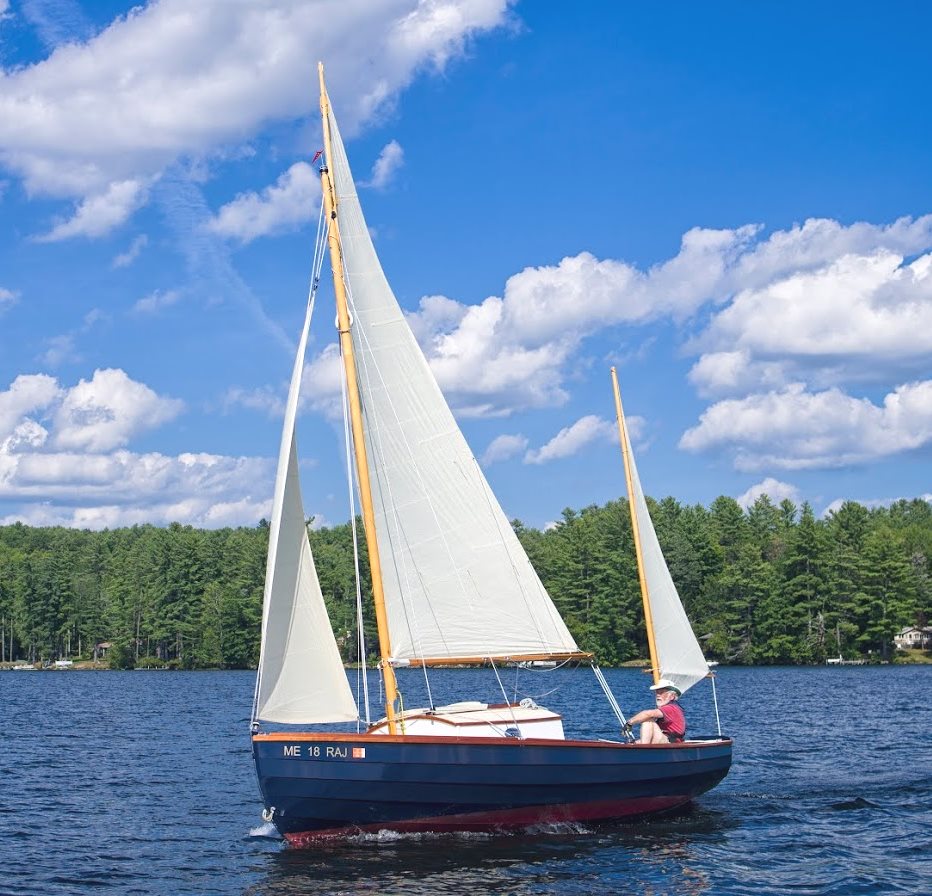
We also made the choice of a yawl rig, because it is beautiful and very convenient to use, it proved to be fast, and also because Americans are fond of yawls. I was happy to make something different than the gaff sloop I generally prefer on such a day-boat (Stir-Ven, Beniguet, Lilou…). The yawl rig is very versatile, allowing one to sail under main only, or under mizzen and jib. The mizzen also allows the boat to safely point into the wind, tending itself while the skipper starts the motor, puts in a reef, or entertains the kids. In Jewell, the main mast is shorter and lighter, so easier to step. In addition, we intend to make the masts hollow-birdsmouth construction and use Dyneema shrouds, both light and easier to handle. The jib has overlap in order to improve pointing ability. It is always a mania for me to design fast boats, especially to windward, as it is also the best for safety. The jib is small, so can be easily tacked even if single-handed. The mizzen is a simple standing lug (stores in the cabin) improved with a foot flexible batten. The long boomkin crosses the transom, under deck, and is easily pulled into the boat for trailering.
Jewell is designed to be made both by home builders or professionals. She is plywood lapstrake-built, over plywood bulkheads. Even the backbone, incorporating the centre-board case, is made of several layers of plywood. A CNC pre-cut kit is available for home builders and is also used, of course, by professionals as it save a lot of working time. The kit includes all moulds and supports, allowing one to erect the hull without the need of a yardstick! All planking features an interlocking zigzag scarf to accurately align the pre-cut planks. Hull construction is kept light: 9 or 12 mm thick Okoume (Gaboon) plywood in order to have a lightweight boat but a sturdy one able to withstand trailering and the hazards of any adventurous sailing along the coast. The cockpit is made of two parts, a classic cockpit aft and an open full width cockpit forward. The cockpit is watertight and self draining. Recesses are fitted on sides to collect water and have it drained through Elvström type bailers in order to allow draining when the boat is heeled under sail. It will be possible to leave out the false cockpit floor in the case an owner did not need the self draining cockpit or wanted the extra cockpit depth and stowage under floorboards. There is an elegant, low and rounded coaming around the cockpit making it is possible to sit comfortably on the side decks. You may also sit on the aft side lockers, on the bridge-deck and also on the cockpit floorboard: very comfortable and well protected! Children and an adult can sit in the fore cockpit area out of the way of the mainsheet.
A 3 to 4 hp motor long shaft motor mounts in a cut-out in the transom. When the motor is stowed into the dedicated locker, a removable shutter (filler piece) drops into place. There is no visible cut-out into the transom and the boat looks unaffected. A Torqeedo 1003 electric motor is an excellent alternative to a gasoline motor. As usual on my designs, there is a scull notch into the transom head and 3 m long oars may be stowed inside. It is possible to row from the bridge deck (two rowers side by side) as on Stir-Ven.
The cabin has been drawn to give a enough comfort for short overnight jaunts and day-long excursions. In particular, there is sitting headroom, including the porta-potti toilet which is located at the deepest place. The berths are very long for comfort. The galley corner may be arranged as you like with a small stove. As there is no water ballast, you will find a lot of stowage space, including space for a cooler under the bridge-deck. Jewell is designed according to the EC and ISO safety rules in design category C (coastal sailing). She is unsinkable and complies with the wind stiffness test. After the first unit built by French & Webb is the USA, several Jewell have been built in Germany, Australia, Canada, UK, USA and France, and others are being built.
See a video of Jewell built by Geoff Kerr.
Image already added
Reviews
-
John Hartmann –
I built a Jewell at home over a little under two years. The boat was launched in 2021, and has been sailed on the St. Lawrence River, Lake Champlain and the Maine coast’s Penobscot Bay. She is a well mannered boat, easy to single hand even when the weather breezes up. I have cruised for as long as 10 days at a stretch very comfortably. As a day boat she accommodates four adults easily.
Rigging time from over the road to launch ready takes about 45 minutes; the boat tows beautifully with a small 4 cylinder vehicle. She was an extremely satisfying build, and is a superb choice for coast-wise cruising.


Francois Vivier –
There are two versions of the coachroof, the original one as shown on the drawings, and another one with a lowered fore end. If you order CNC files, you need to specify your choice.
Serg –
Do I understand correctly that the project is now offered with an updated design of the wheelhouse and the diagram on the site is already outdated?