From the British flag to the French flag: Sheila.
- Post author:Francois Vivier
- Post published:29 August 2026
- Post category:News / Regulations assessments / News / Regulations assessments
- Post comments:0 Comments

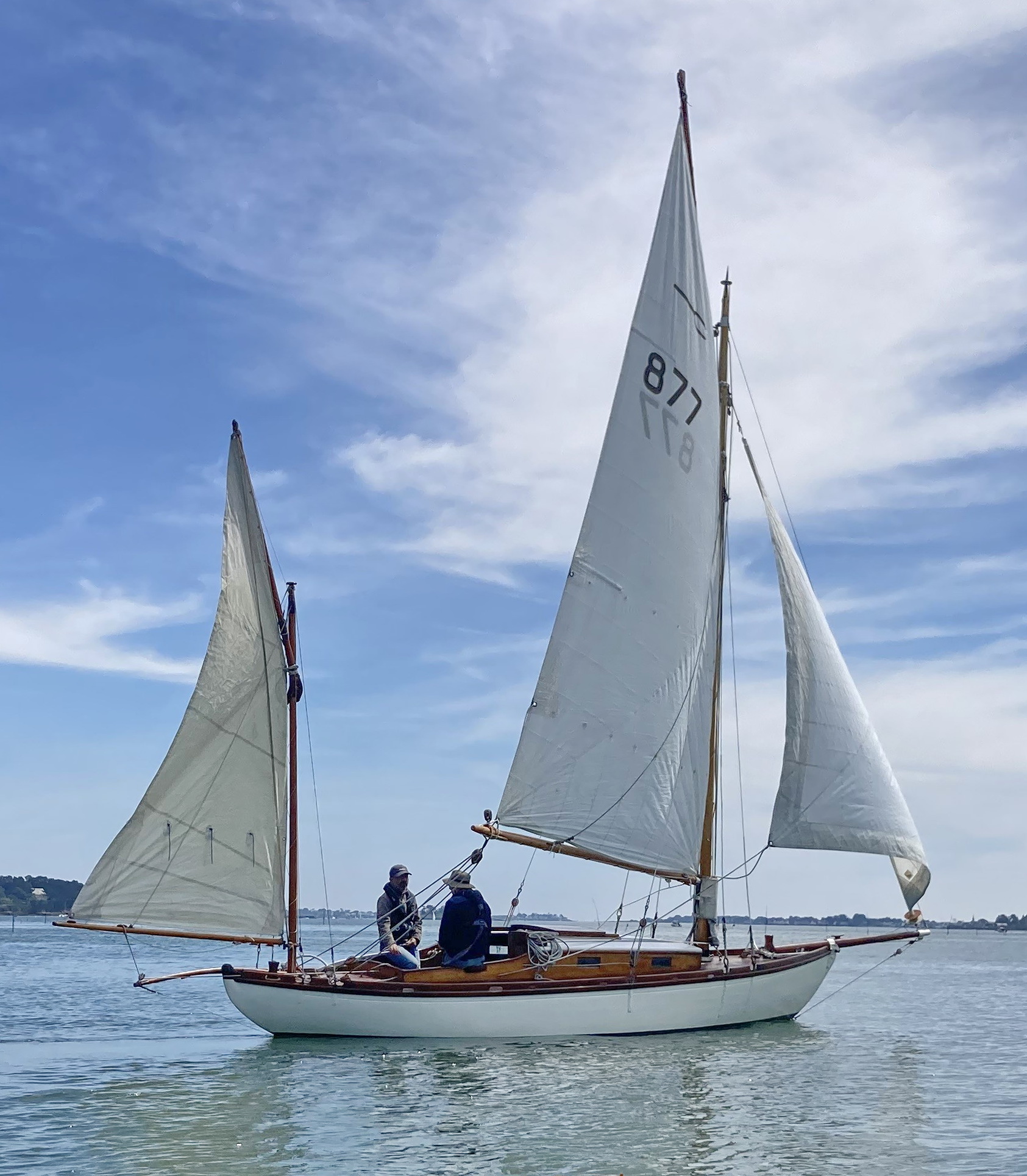
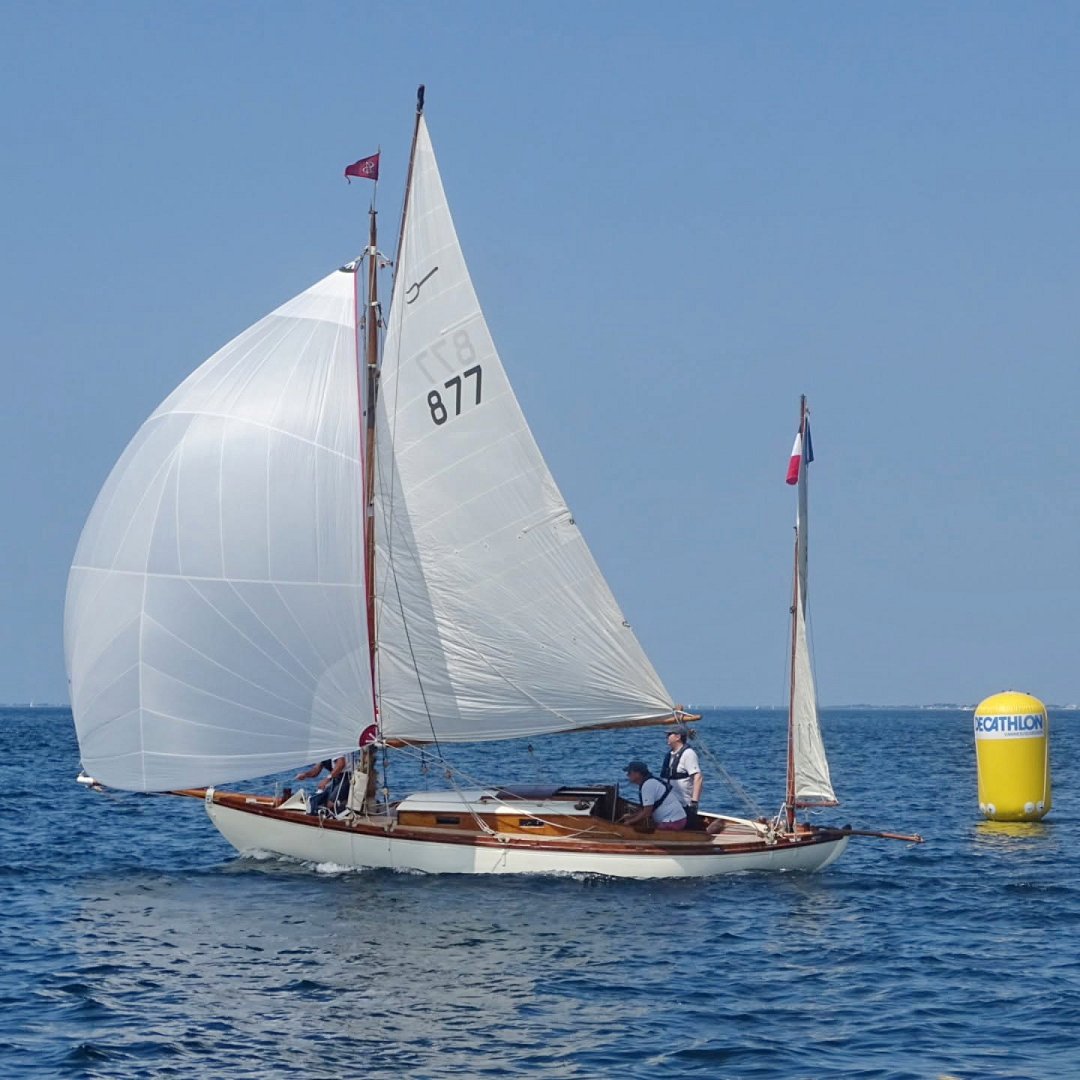
Sheila is a small yacht, built in 1905 to an Albert Strange design. In 2024, she was awarded the French ‘Bateau d’Intérêt Patrimonial’ label (Boat of Heritage Interest), and details of her history can be found on the Patrimoine Maritime et Fluvial website. She also won the PMF-Shift Capital Maritime Heritage Award in 2026.
Successive owners have preserved the boat in its original configuration without an engine or electronic equipment. In 2024, she was acquired by Eric Philippot and based on the Auray River in France. To this end, she was re-registered under the French flag.
The European Recreational Craft Directive does not require older boats to be checked for compliance with current ISO standards. They are permitted to sail as they are.
However, since the United Kingdom left the European Union, the French authorities have required Sheila to comply with ISO standards, primarily European Standard 12217-2 on stability. If she fails to do so, the boat will only be authorised for design category D, which is for navigation in sheltered waters. This is highly ironic for a sailing yacht that has been sailing around the British Isles for 120 years!
Eric Philippot then contacted me to ensure that his boat could be classified in Category C (maximum wind force 6). I suggested carrying out a stability test to verify the boat’s compliance. This is a service I routinely provide for new boats and, less frequently, for older boats (it is required in France if a boat has undergone substantial modifications).
In this particular case, here is what the process actually involves:
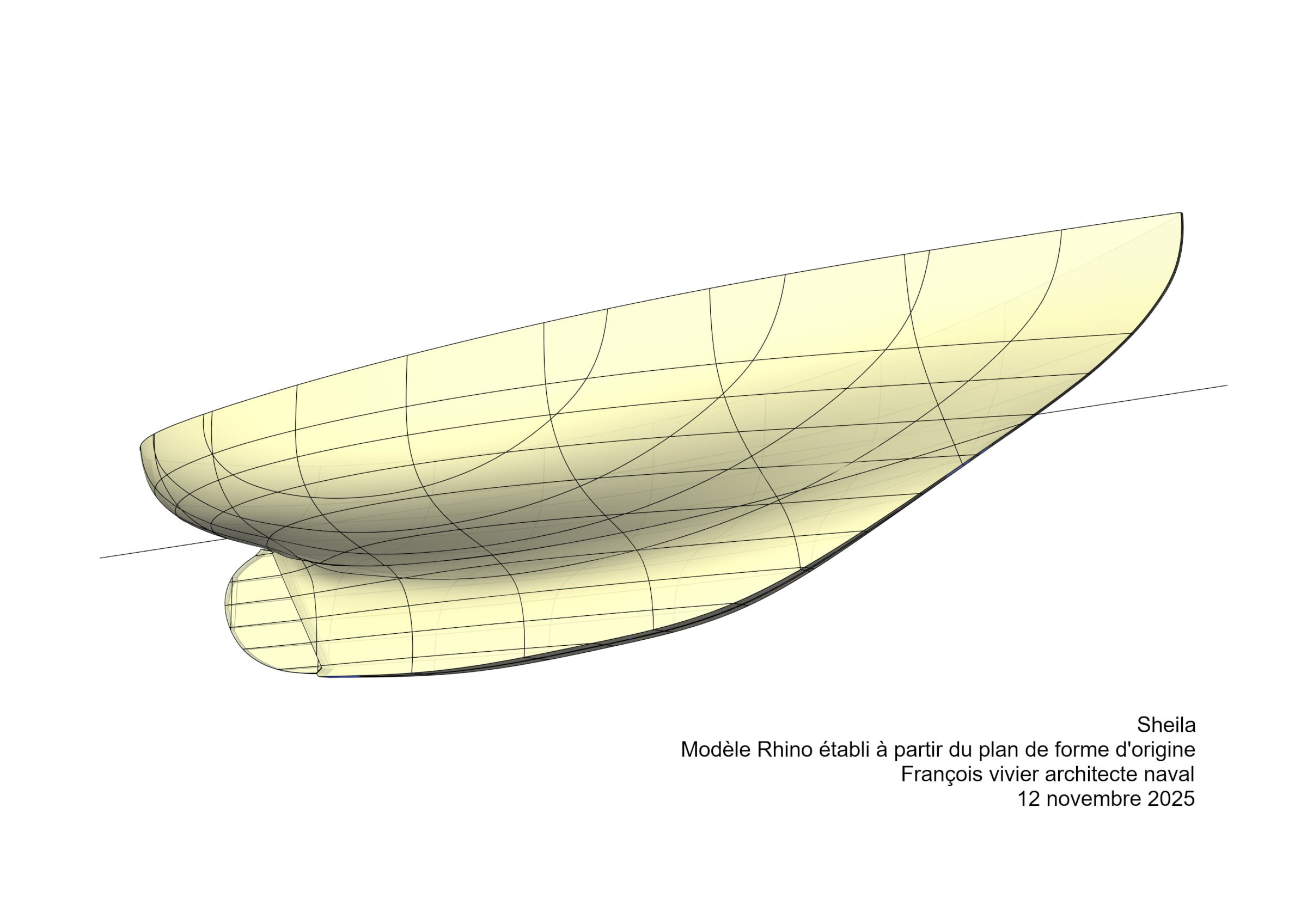
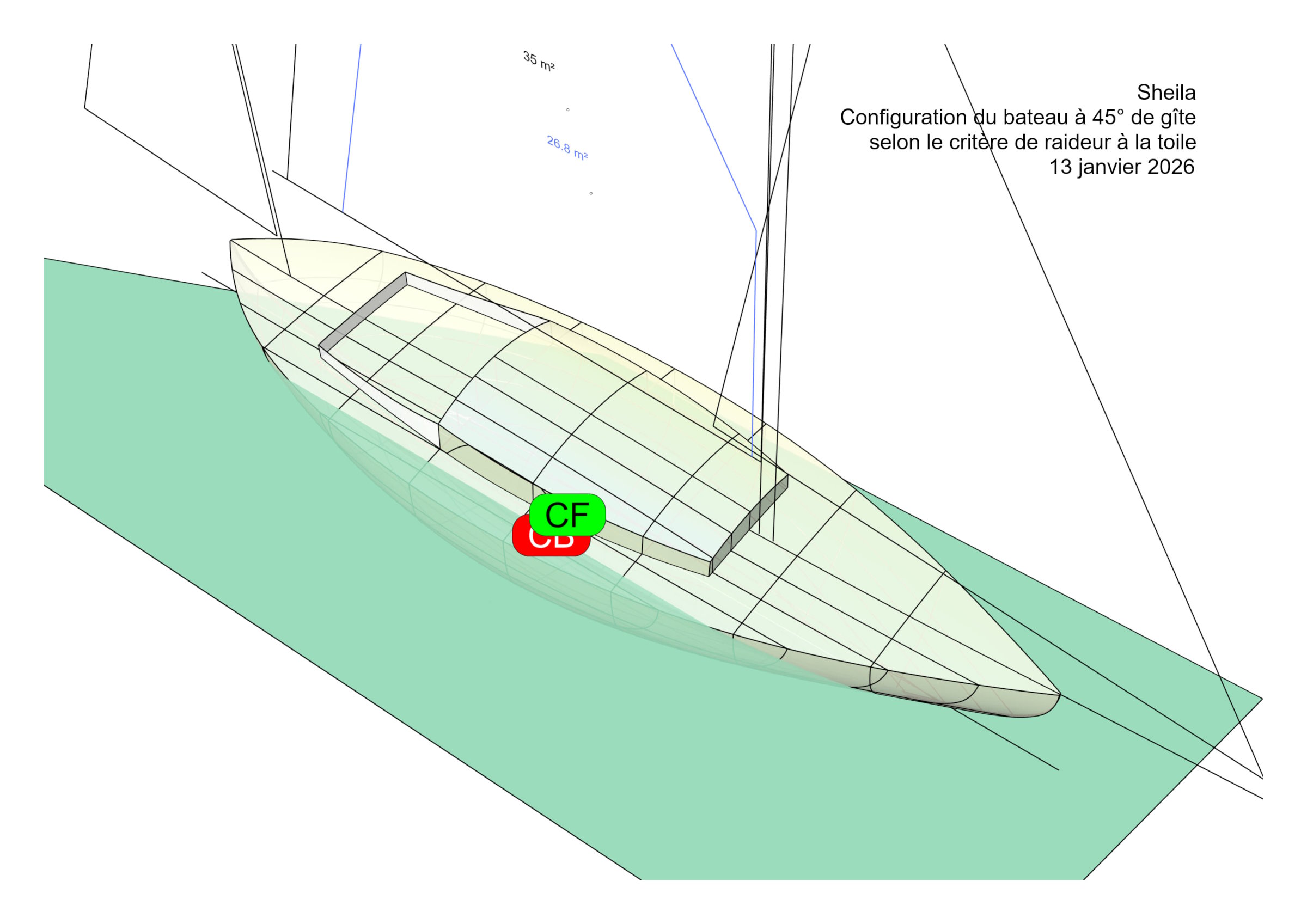
- Create a numerical model of the hull shape based on the original lines plan to carry out calculations.
- Determining the current sail area of the boat by measuring the sails.
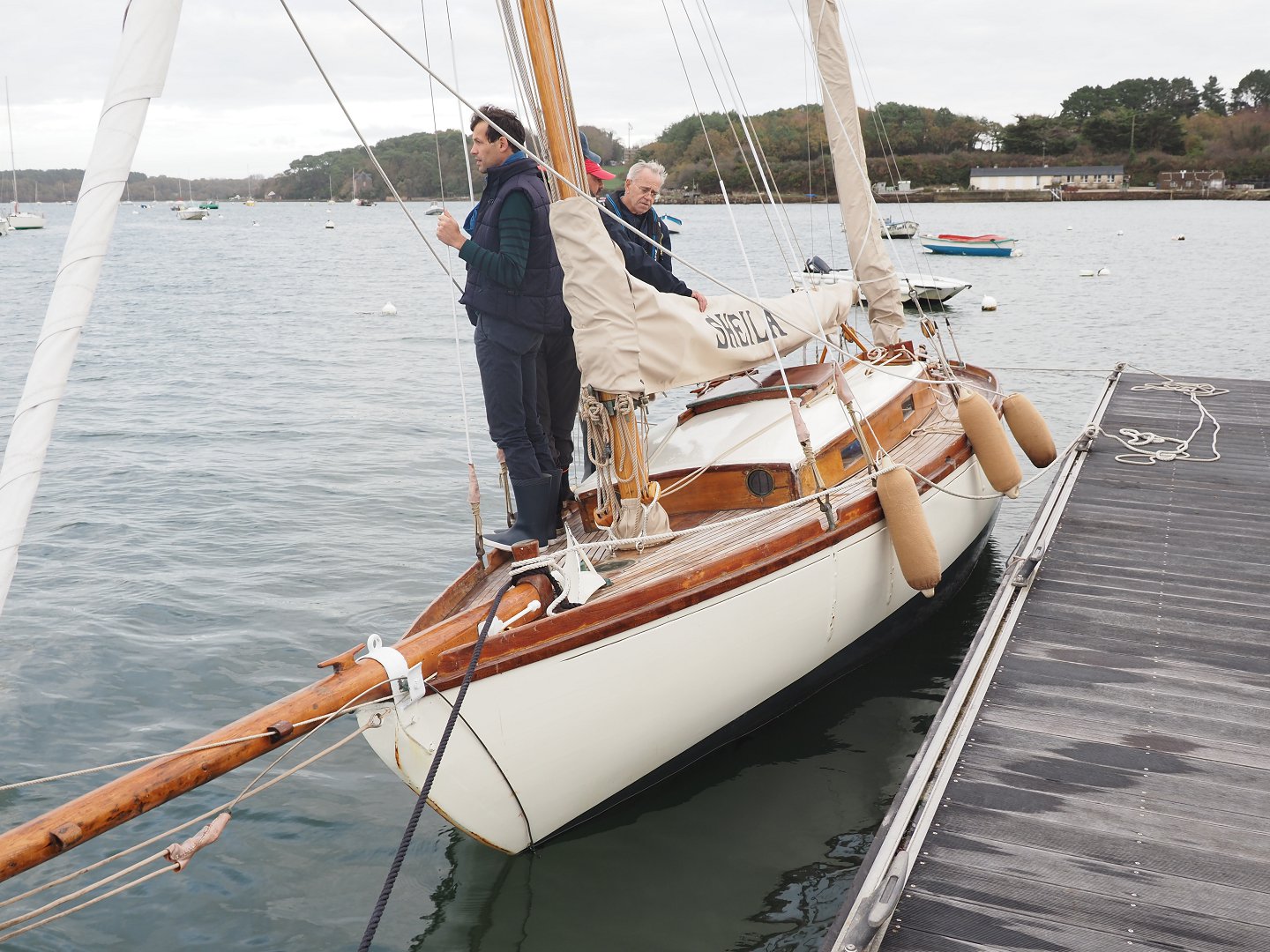
- ‘Hydrostatic weighing’, which involves measuring the freeboard at the bow and stern, is used to calculate the boat’s actual weight, which is required for the next stage.
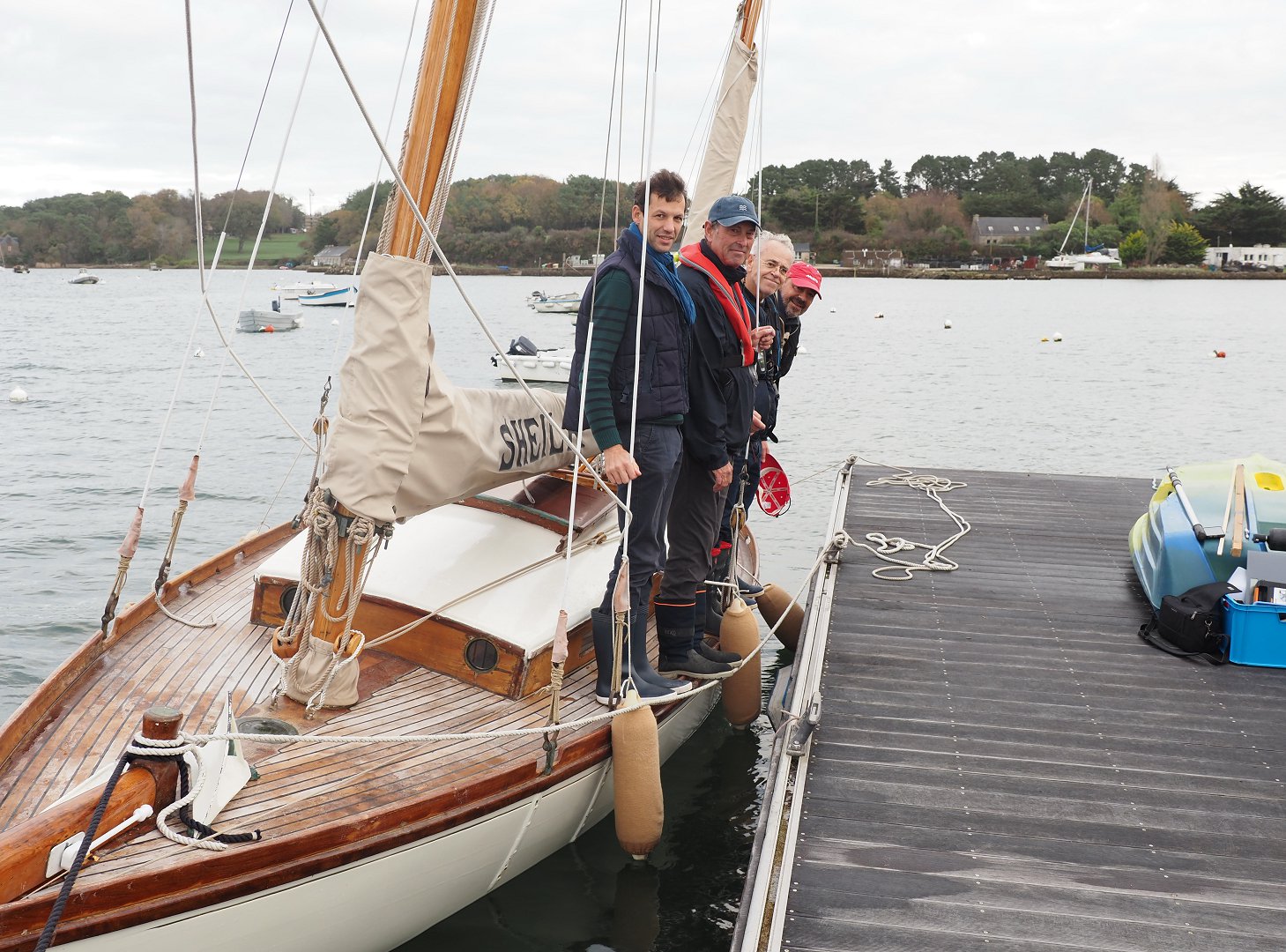
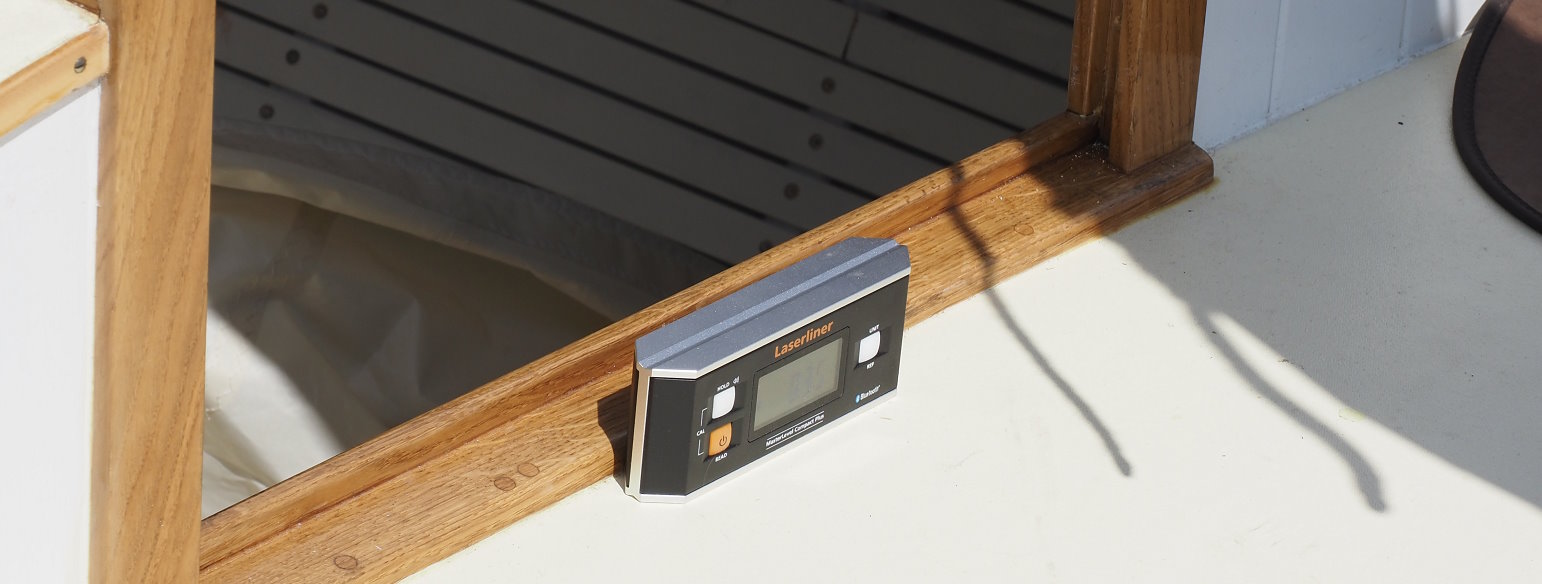
- A stability test involving heeling the boat with several people (who have been weighed beforehand) positioned on one side and then the other, measuring the resulting heel.
- Based on this experiment, the vertical position of the centre of gravity is determined, as well as the curve showing the righting moment as a function of the angle of heel. The downflooding angle at which the boat begins to take on water is also determined, since its cockpit is neither watertight nor self-draining.
- Implementation of the standard option known as the ‘wind stiffness test’, which involves comparing the heeling moment due to the sails with the righting moment at a theoretical wind speed of 13 m/s. le moment inclinant (dû à la voilure et un vent théorique de 13 m/s) avec le moment de redressement.
This resulted in a detailed report being sent to the ministry in Paris. Numerous email and telephone exchanges followed with a civil servant who asked for each paragraph of the report to be explained to him.
After many weeks, Sheila finally obtained her registration certificate, allowing her to sail as she always had.
Let us set aside the shortcomings of an excessively bureaucratic administration and focus on the essential points. Since the European Directive on Recreational Craft came into force in 1998, VivierBoats has applied its standards to a vast number of traditional or classic sail and motor boats, and satisfactory solutions have always been found without compromising the character of the boat. The most restrictive standard concerns stability and buoyancy. This standard (12217-1-to-3) comprises 300 pages of dense text and applies to all boats between 2.5 and 24 metres in length. It is a highly technical document, and only a naval architect — and VivierBoats in particular — can verify a boat design’s compliance at an early stage and identify the best technical solutions.