Petit Treho, built by Skol ar Mor for the architect
- Post author:Francois Vivier
- Post published:11 August 2026
- Post category:News
- Post comments:0 Comments
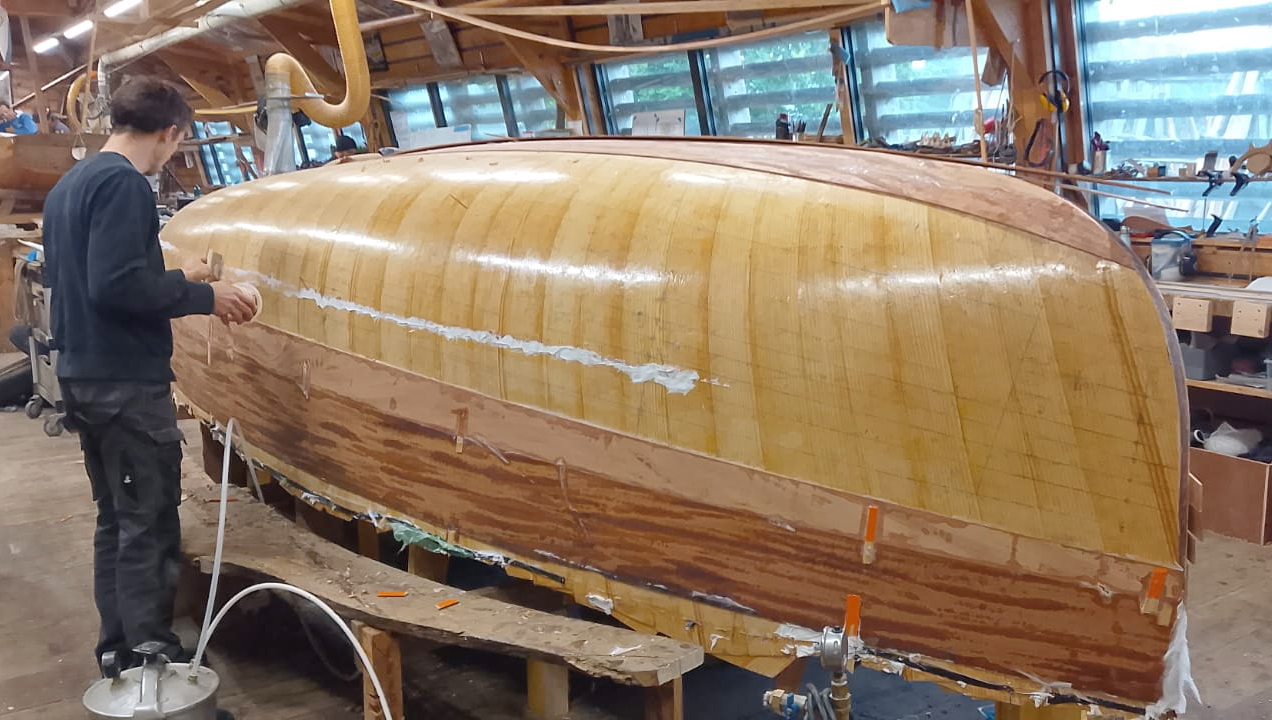
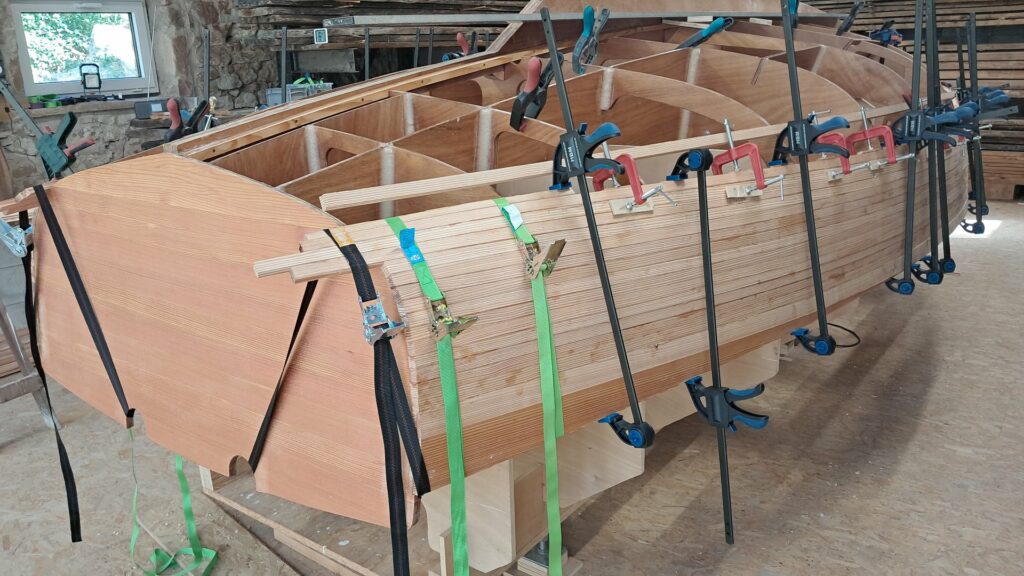
Petit Treho is the first boat of a new desing that will be available soon in either a plywood clinker-built version or a strip-planked version. A strip-planked Treho is already under construction by an amateur boatbuilder in eastern France. Petit Treho was built by Skol ar Mor. As a traditional boatbuilding school, there was no question of building it from a CNC cut plywood kit. The method chosen was therefore a cold molded hull, as was commonly practised in the 1950s and 1960s. The frames are laminated. Plywood is, however, used for the bulkheads, the deck, the centreboard case, the water-ballast tanks and the motor well.
Whenever I have had a new boat built for myself, I have wanted to try out new concepts and solutions. Consequently, Petit Treho is fitted with a 250-litre water-ballast tank to make it a very stable boat that can also be moved on an unbraked trailer. The centreboard case uses a winch design that has significantly reduced its bulk, resulting in a very spacious cockpit in which five people can stay comfortably without getting in each other’s way. The mast and gaf are made from standard carbon fibre tubes, which allows me to rig the mast on my own, despite being 77 years old. The shrouds are made of Dyneema, which also makes mast-raising and lowering easier. I have opted for a gaff-rigged sloop with a topsail, which provides extra sail area in light winds, and the sculling oar design has been improved for greater efficiency. Thus, true to my convictions, the use of the electric motor will always be kept to a minimum.
At present, I am in the process of trimming the rig. We’ll come back to that later. Here, I present the construction steps in pictures, noting that the techniques used result largely from the school’s specific educational requirements. For example, the outer cold-molded layer is longitudinal, each plank being spiled as for a carvel boat. All this fine work is ultimately covered in paint, as I was keen to preserve the character of a working boat and, above all, to minimise maintenance work. Varnished surfaces are kept to a minimum.
Thanks to Jean, Arthur, Arnold, Julien and Benoît, who, as part of their training in boatbuilding, did a superb job. They have breathed life into this new boat.
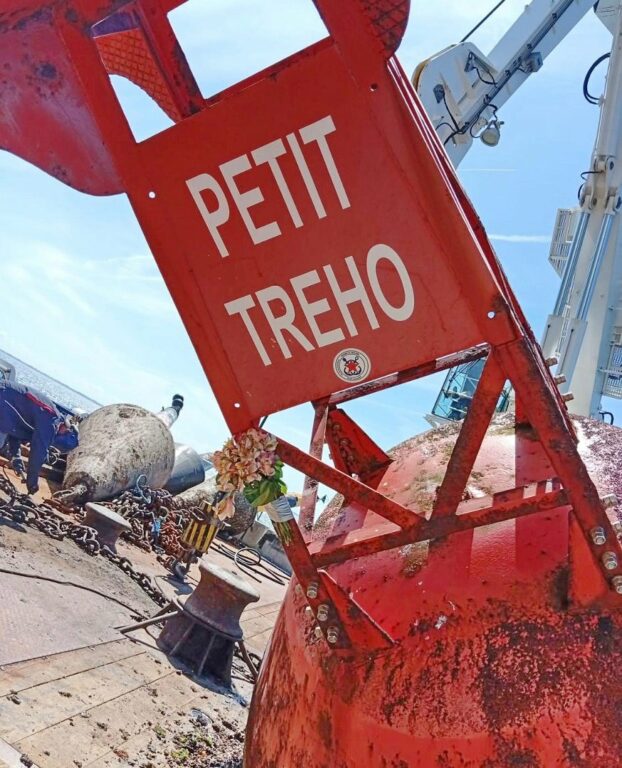
By the way, why this ‘Petit Treho’ name? It was in La Trinité-sur-Mer, in the 1960s, that I first discovered sailing. The Petit Treho is the last buoy in the channel leading out to sea.