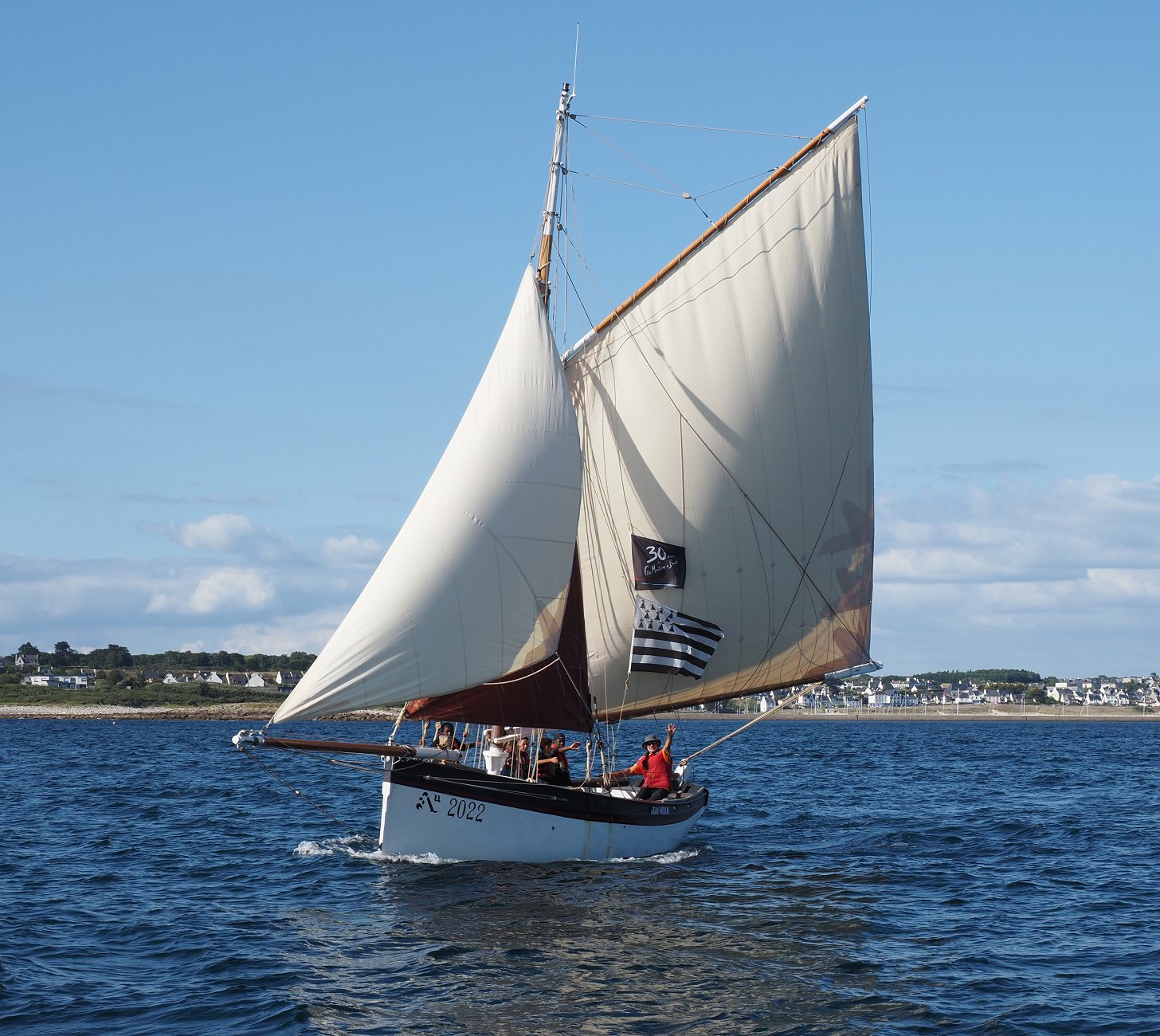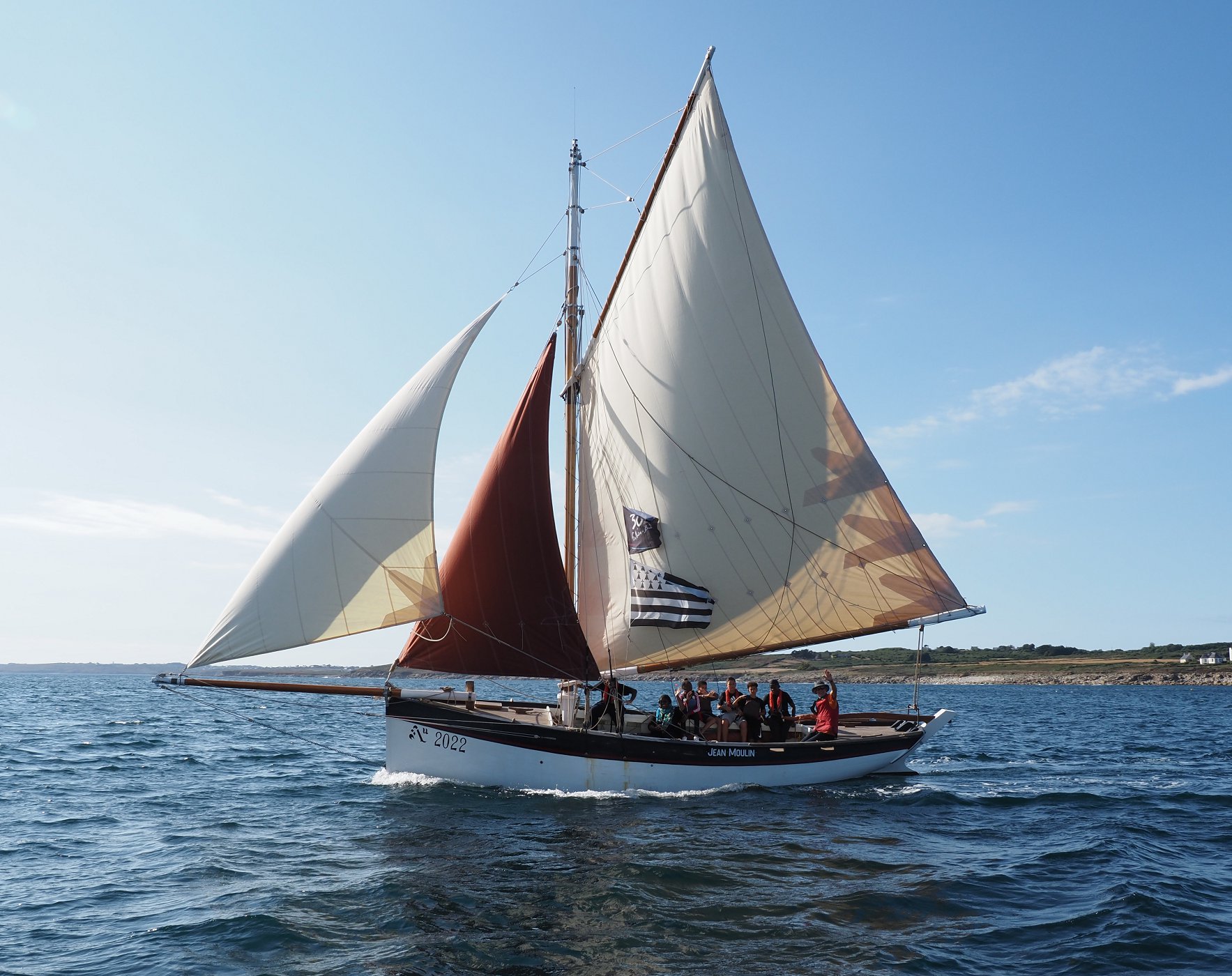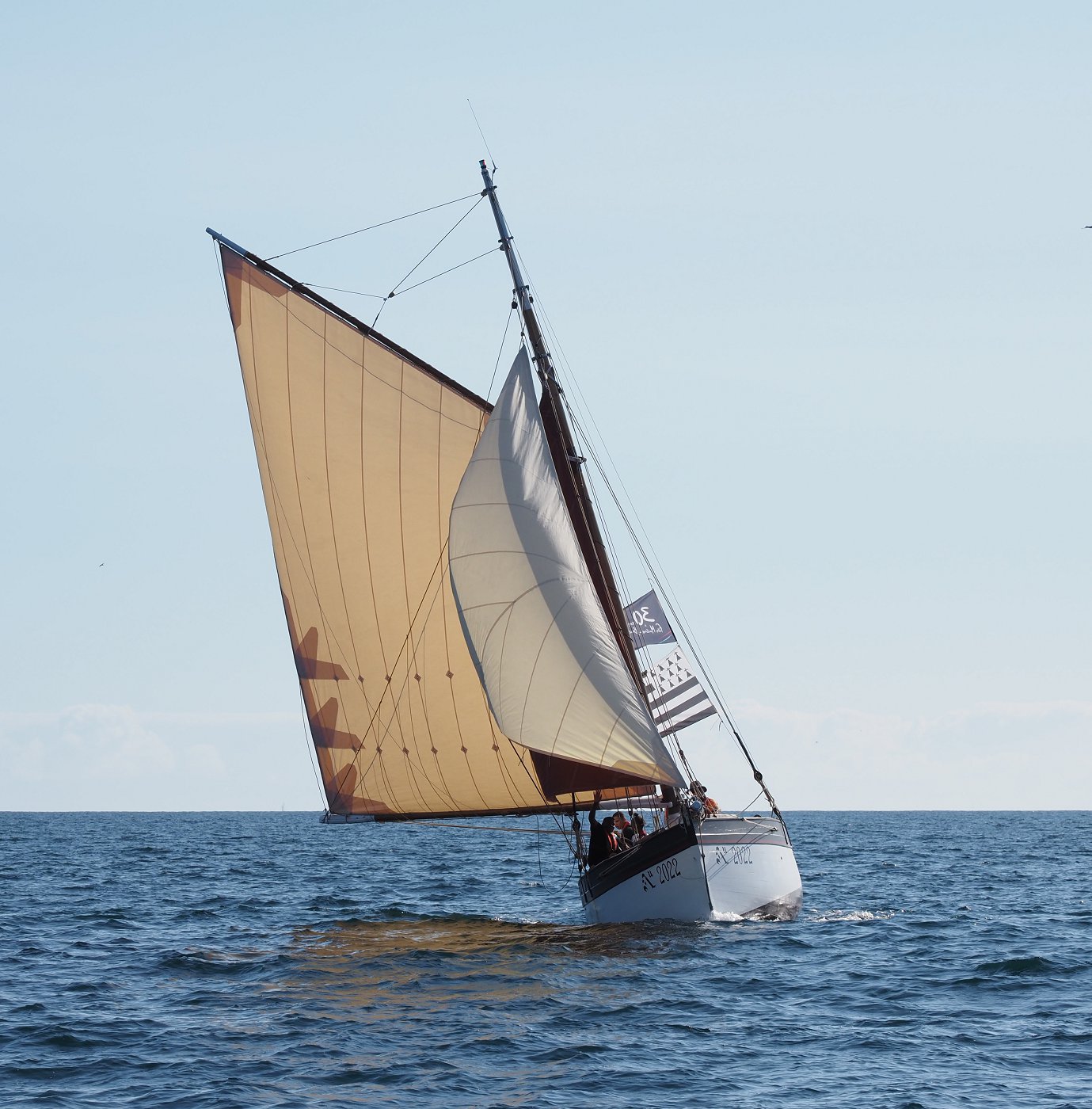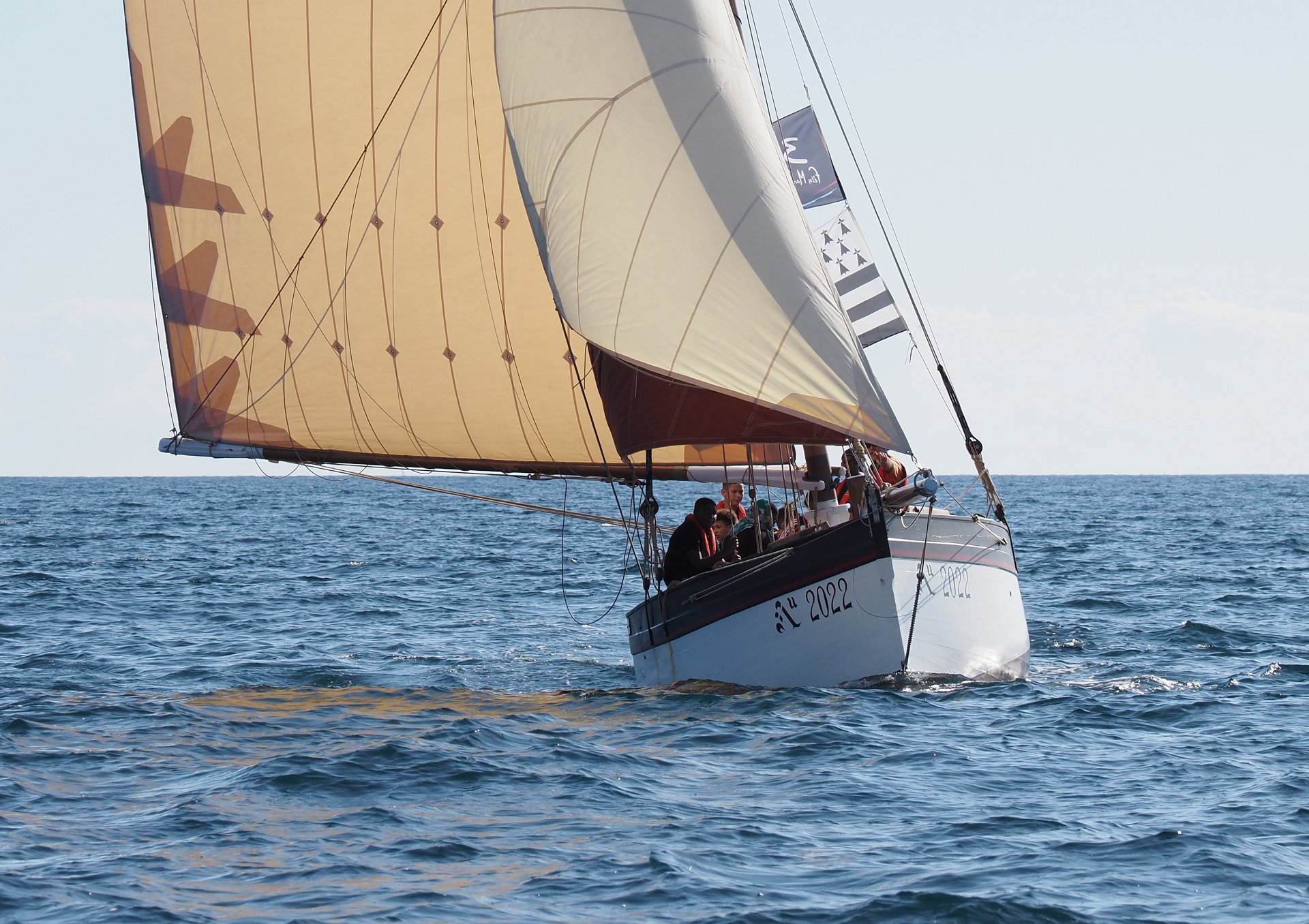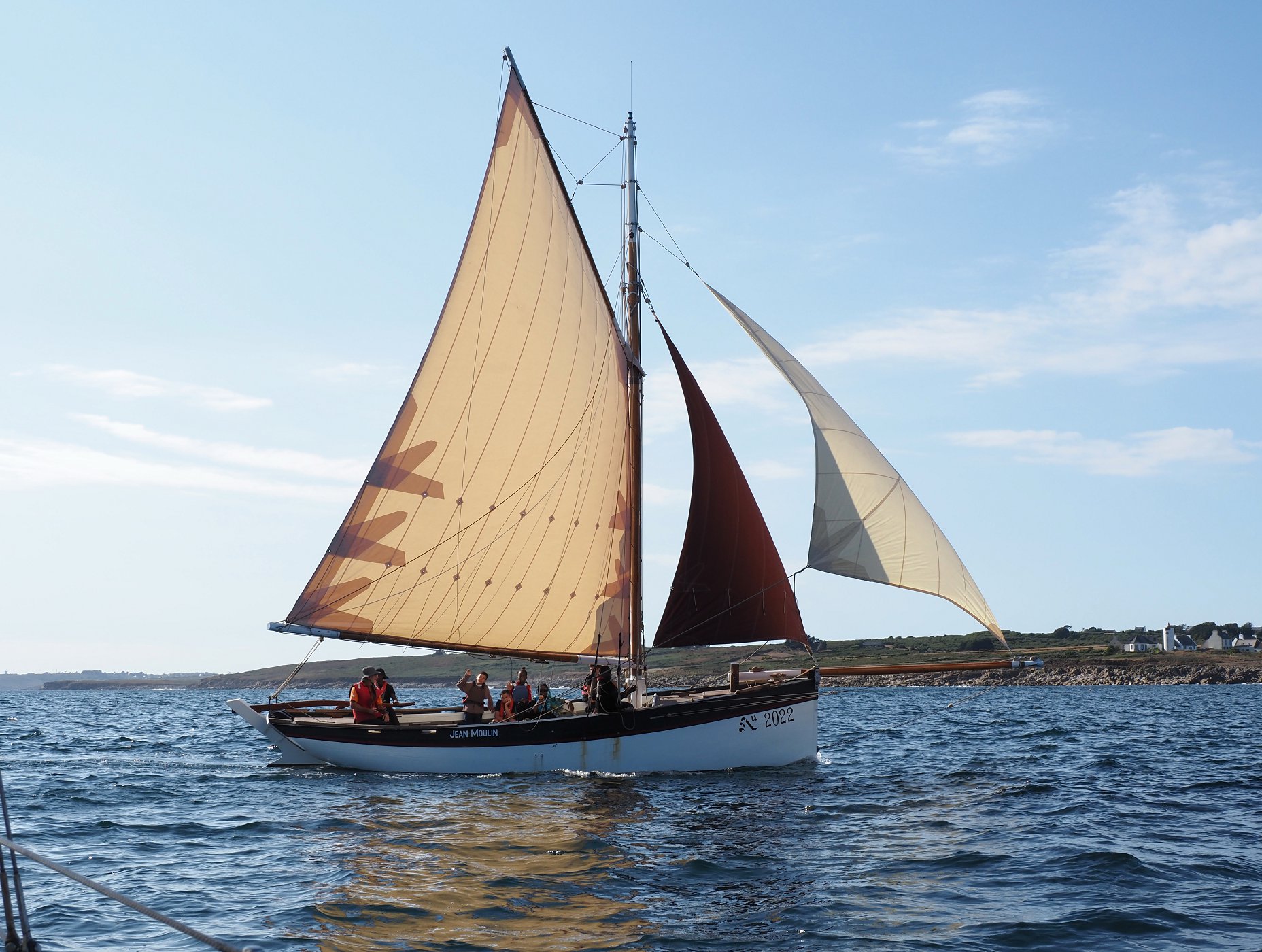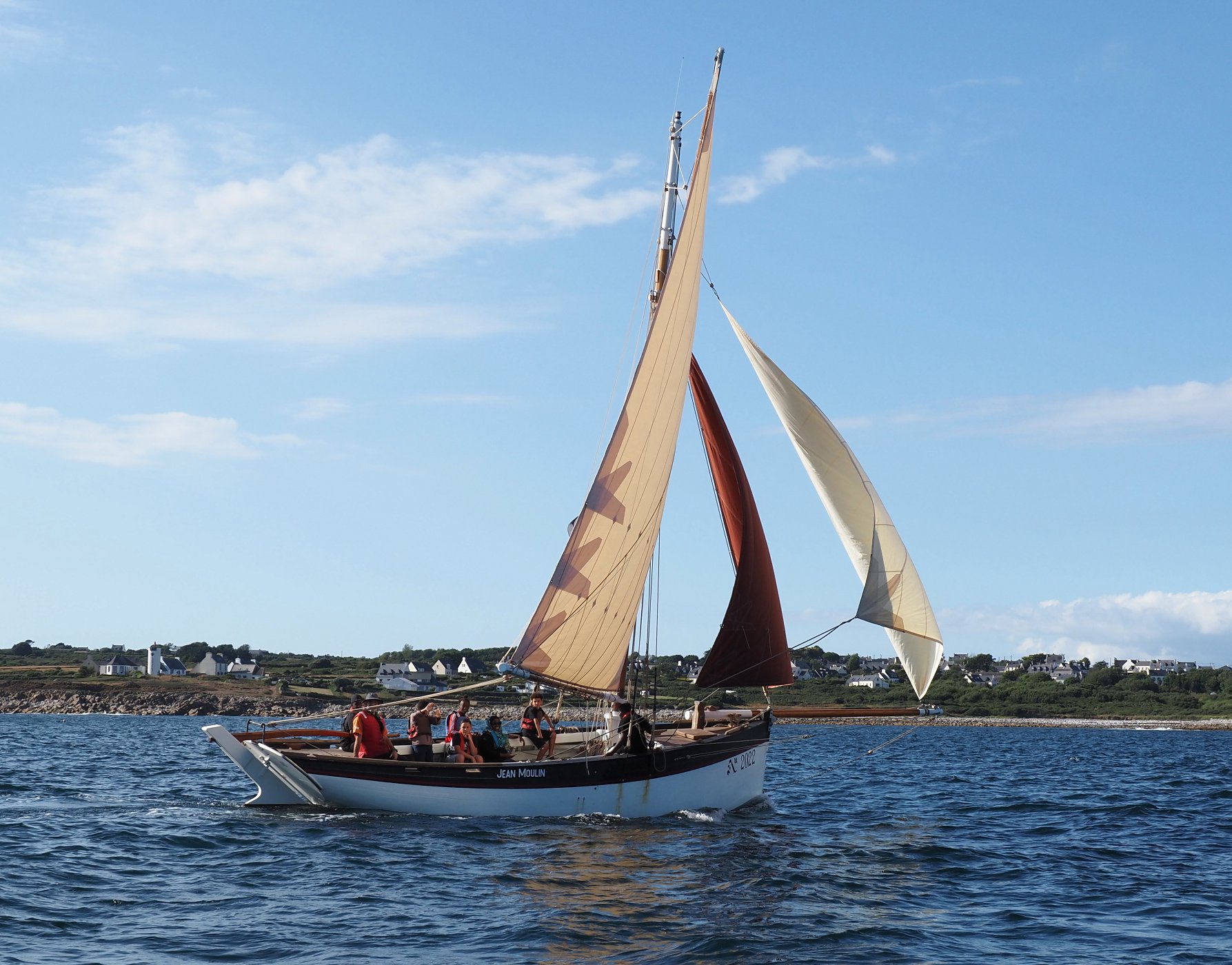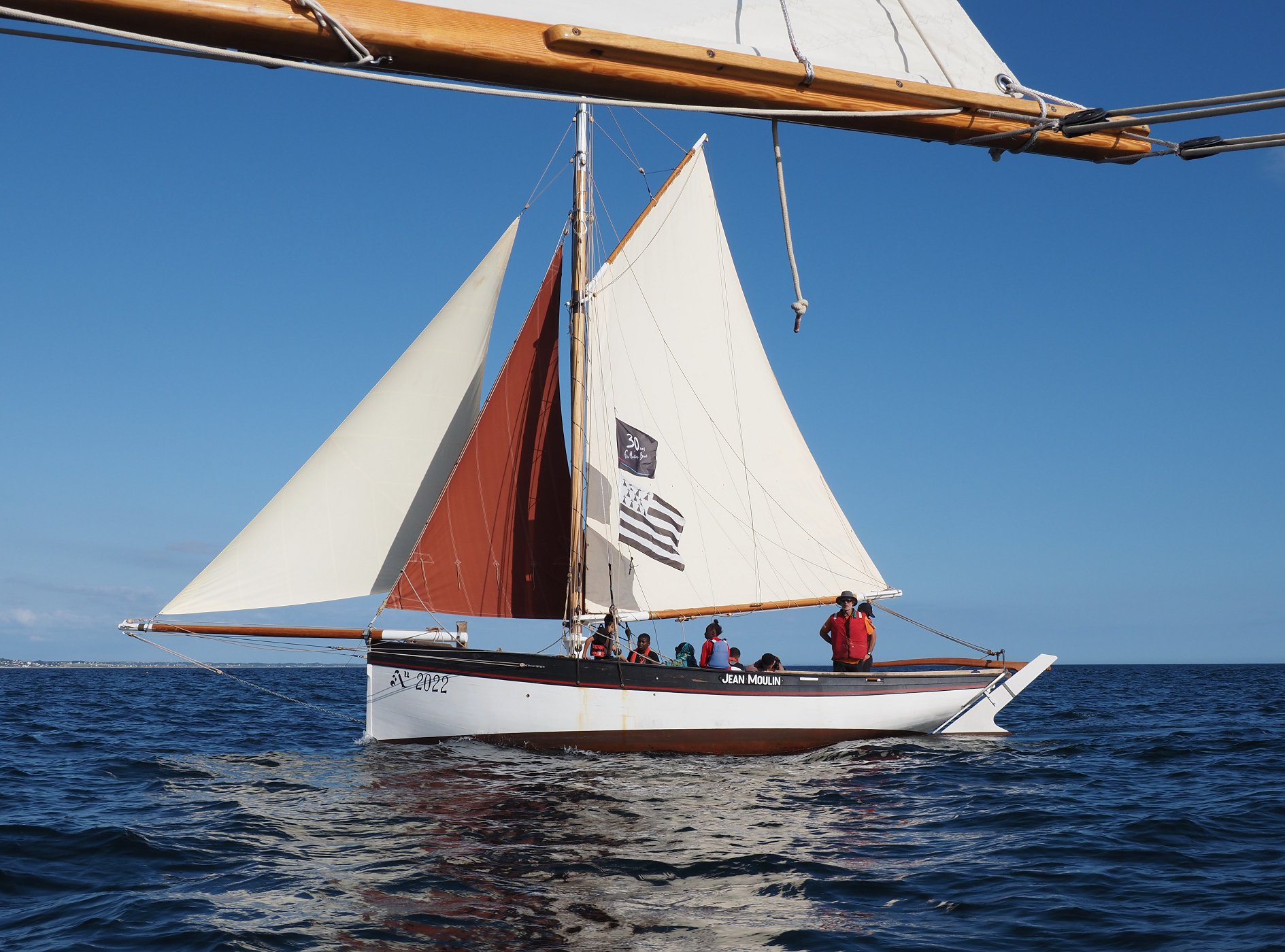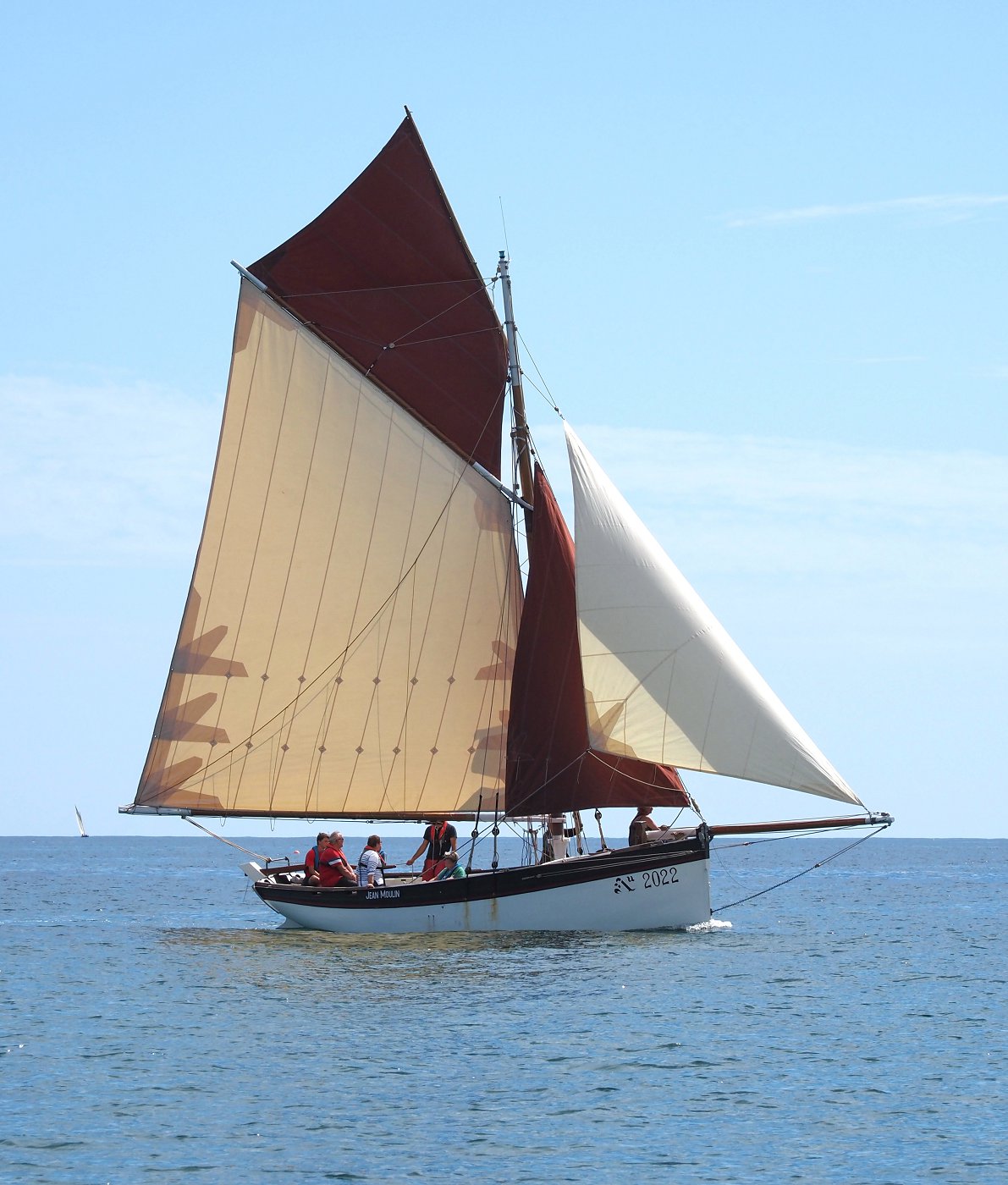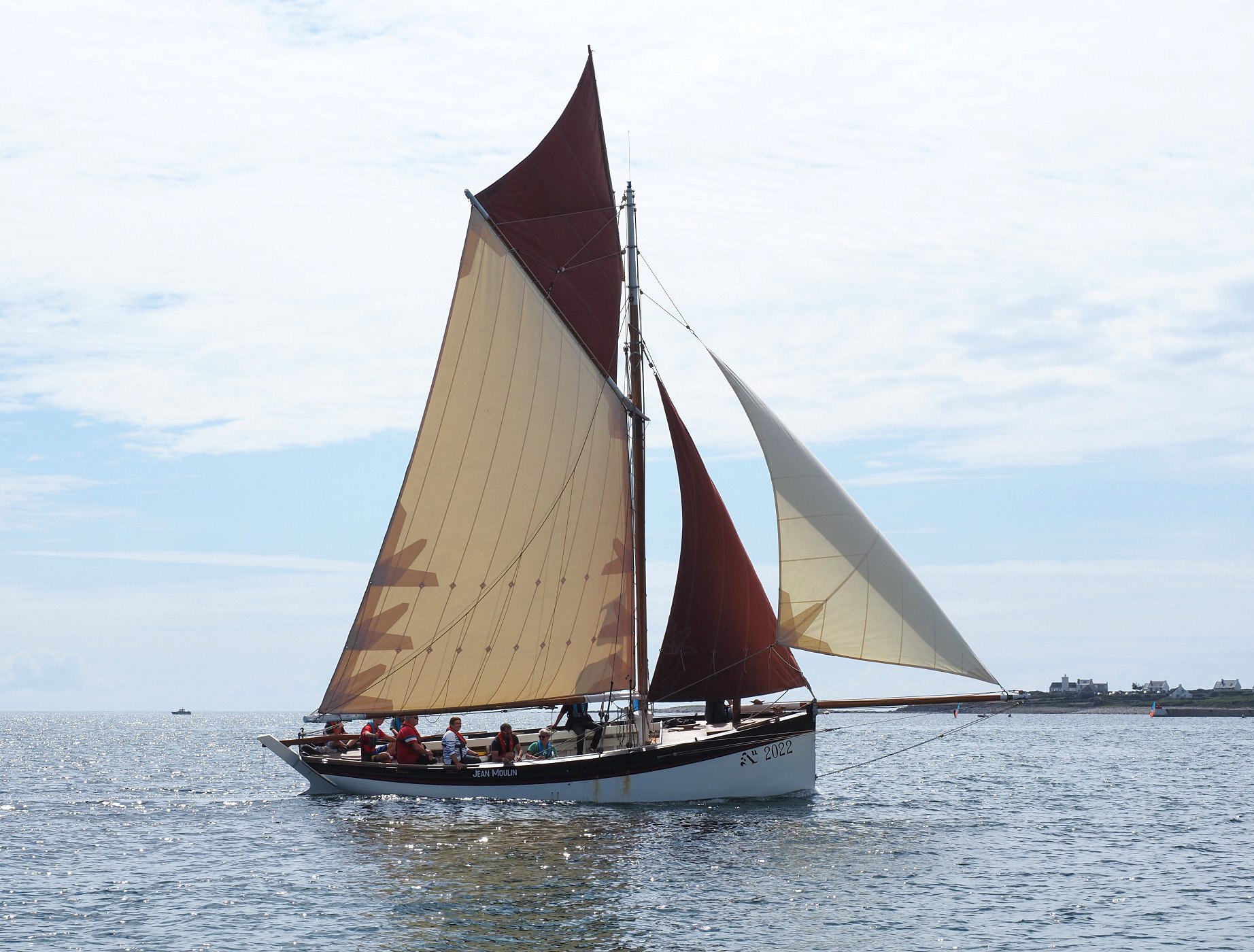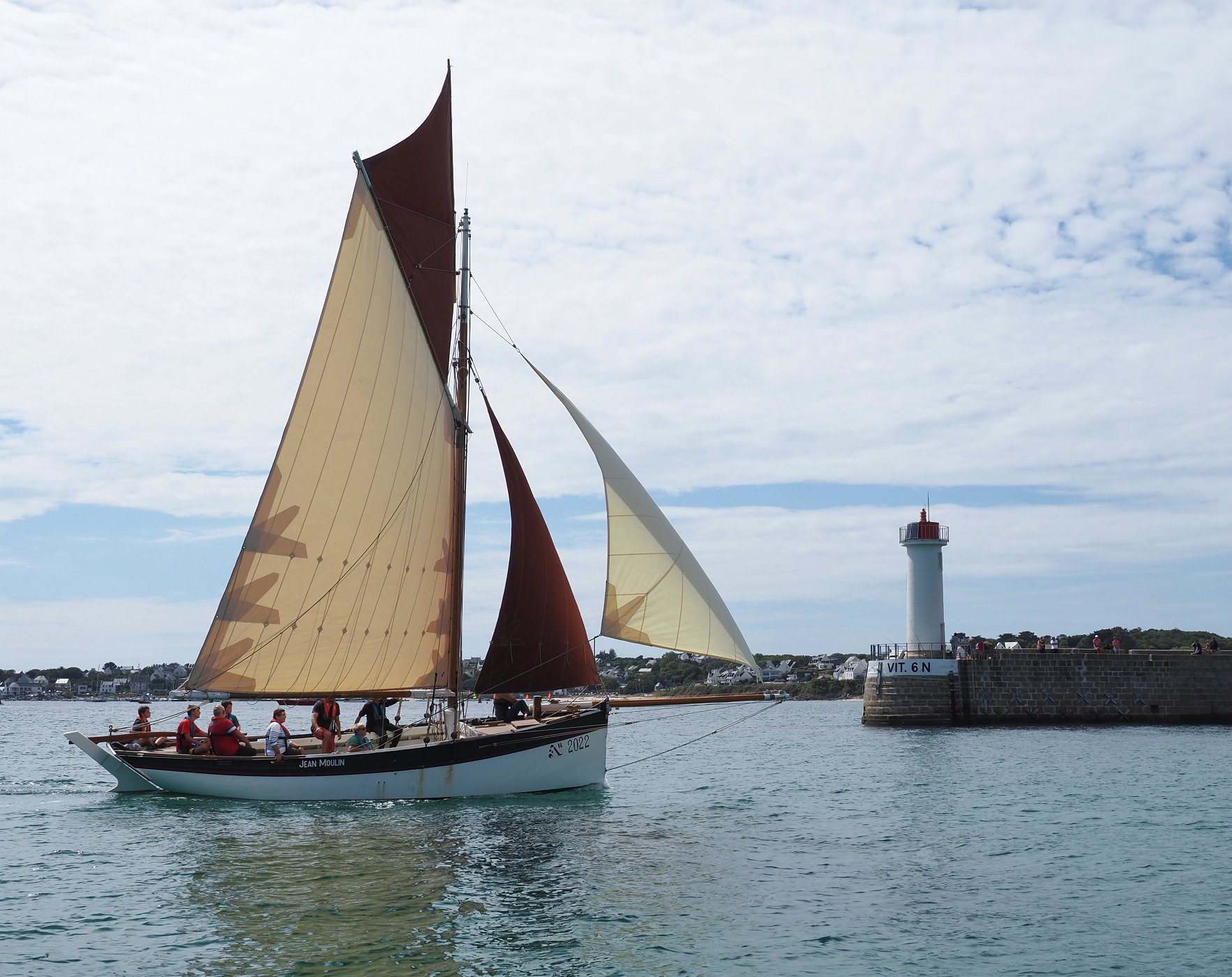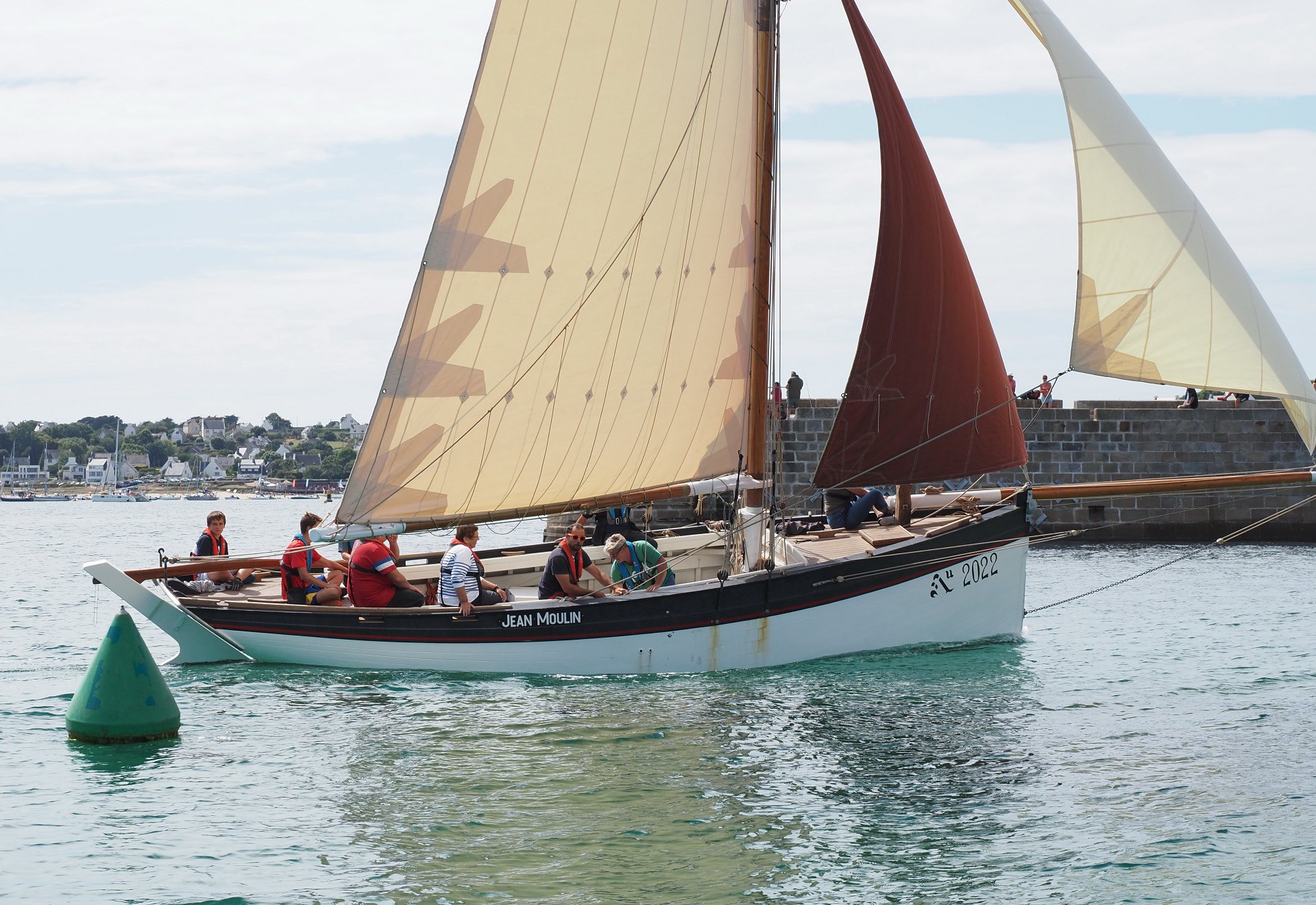
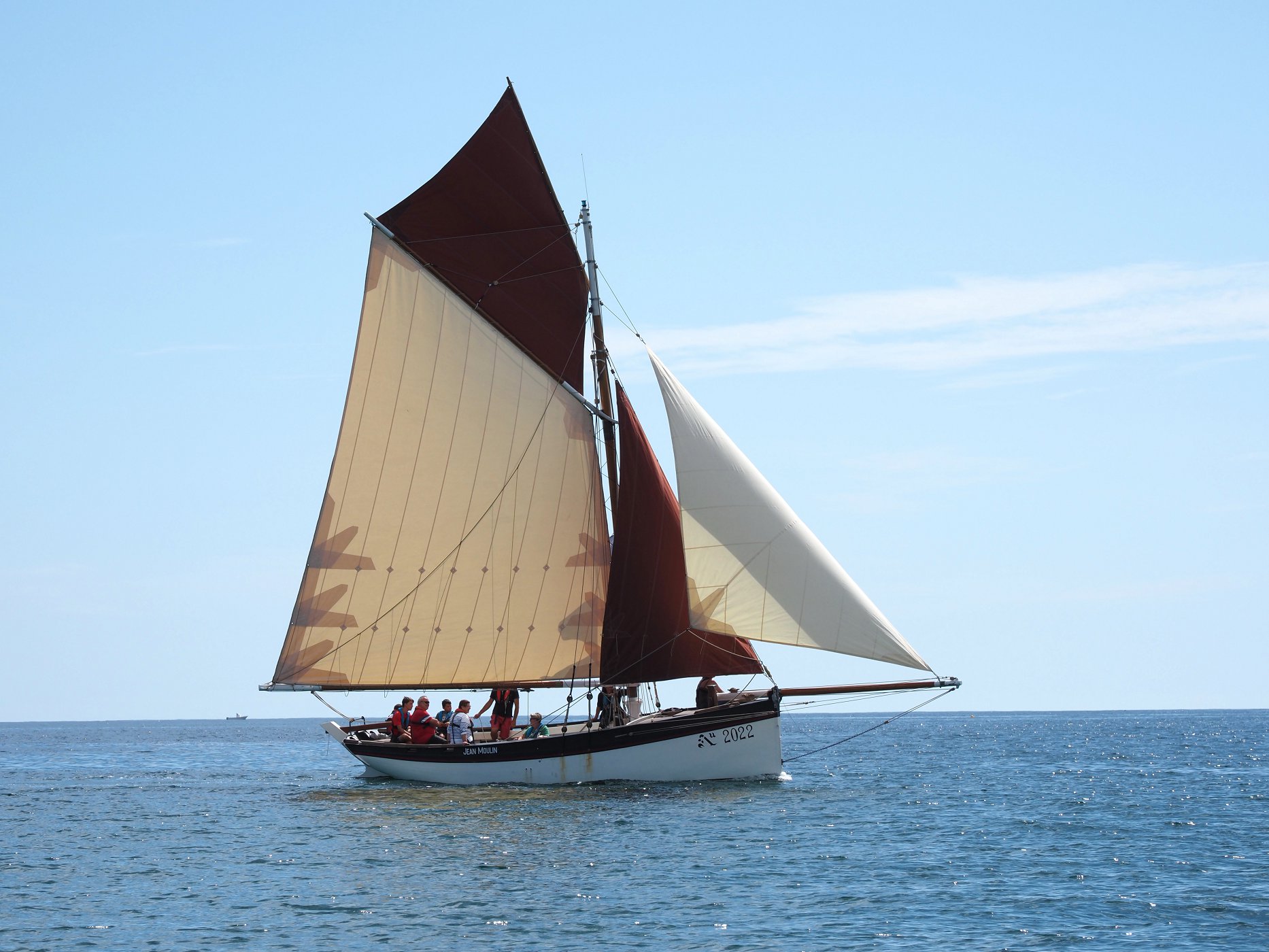
Jean Moulin, a Cap Sizun lobster boat
- Post author:Francois Vivier
- Post published:30 August 2026
- Post category:News / Reconstruction / Regulations assessments / Sail plans
- Post comments:0 Comments
Hull length: 9 m
Waterline length : 7.66 m
Breadth: 3 m
Draught: 1.46 m
Sail area (with topsail): 72 m²
Power: 27 ch
Light weight: 6.5 t
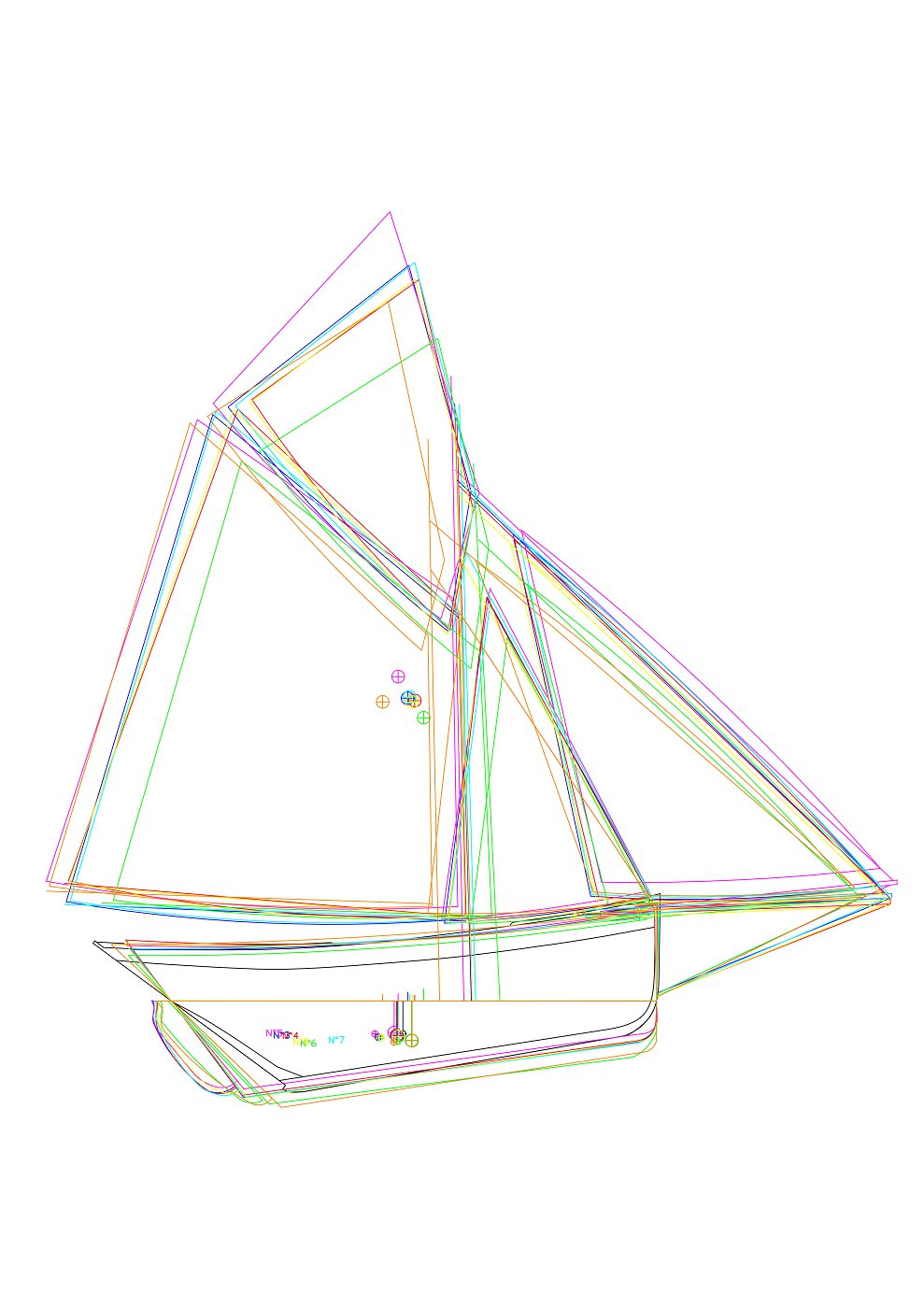
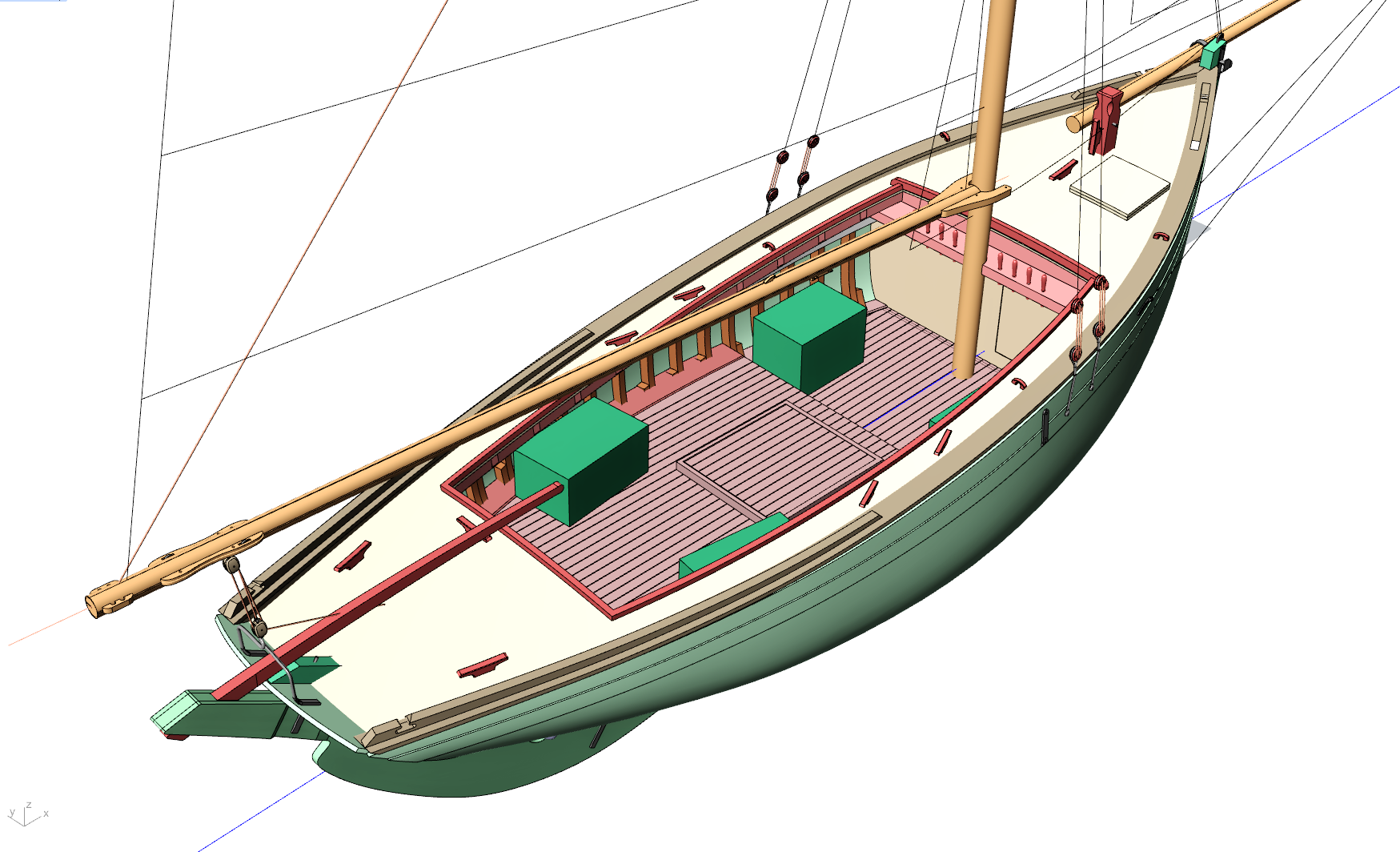
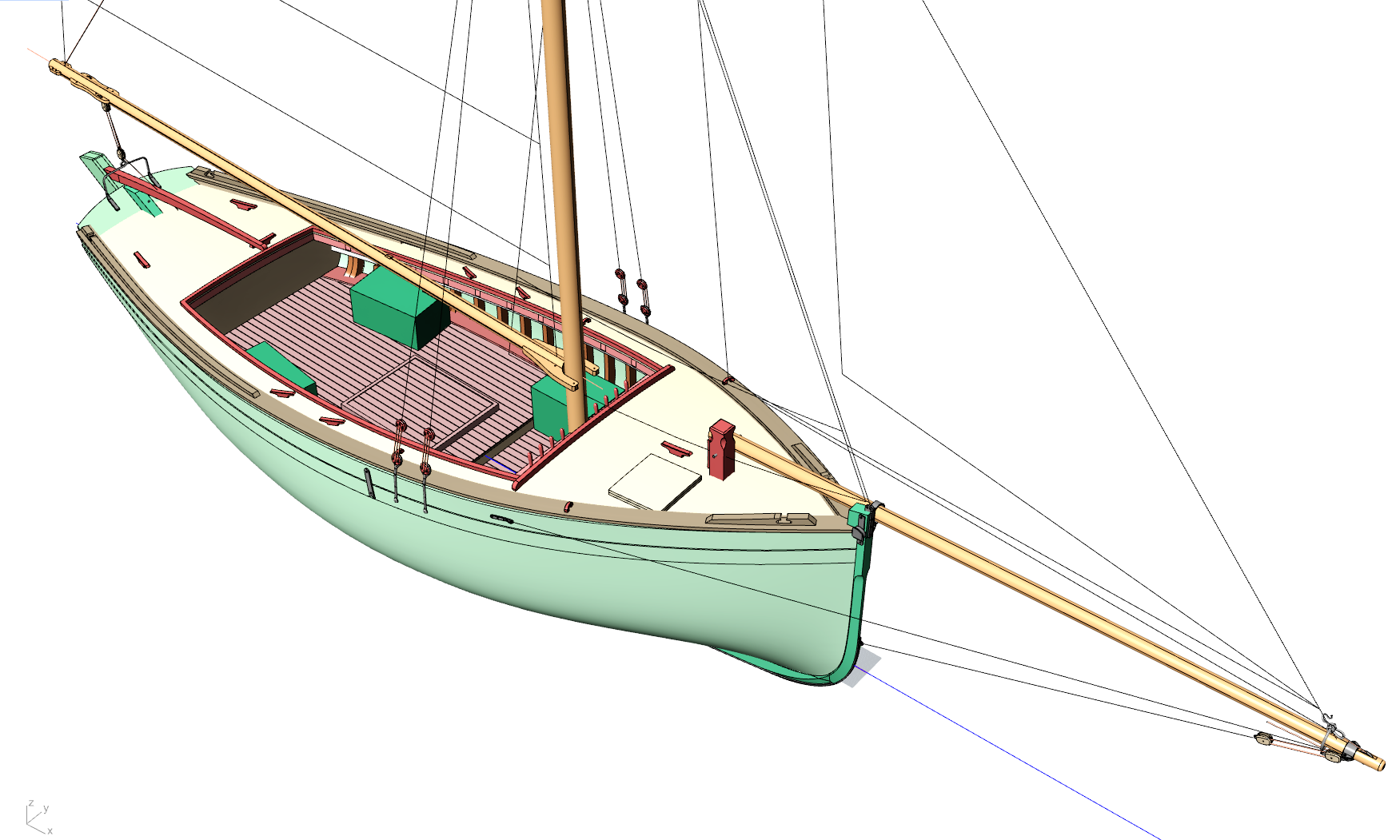
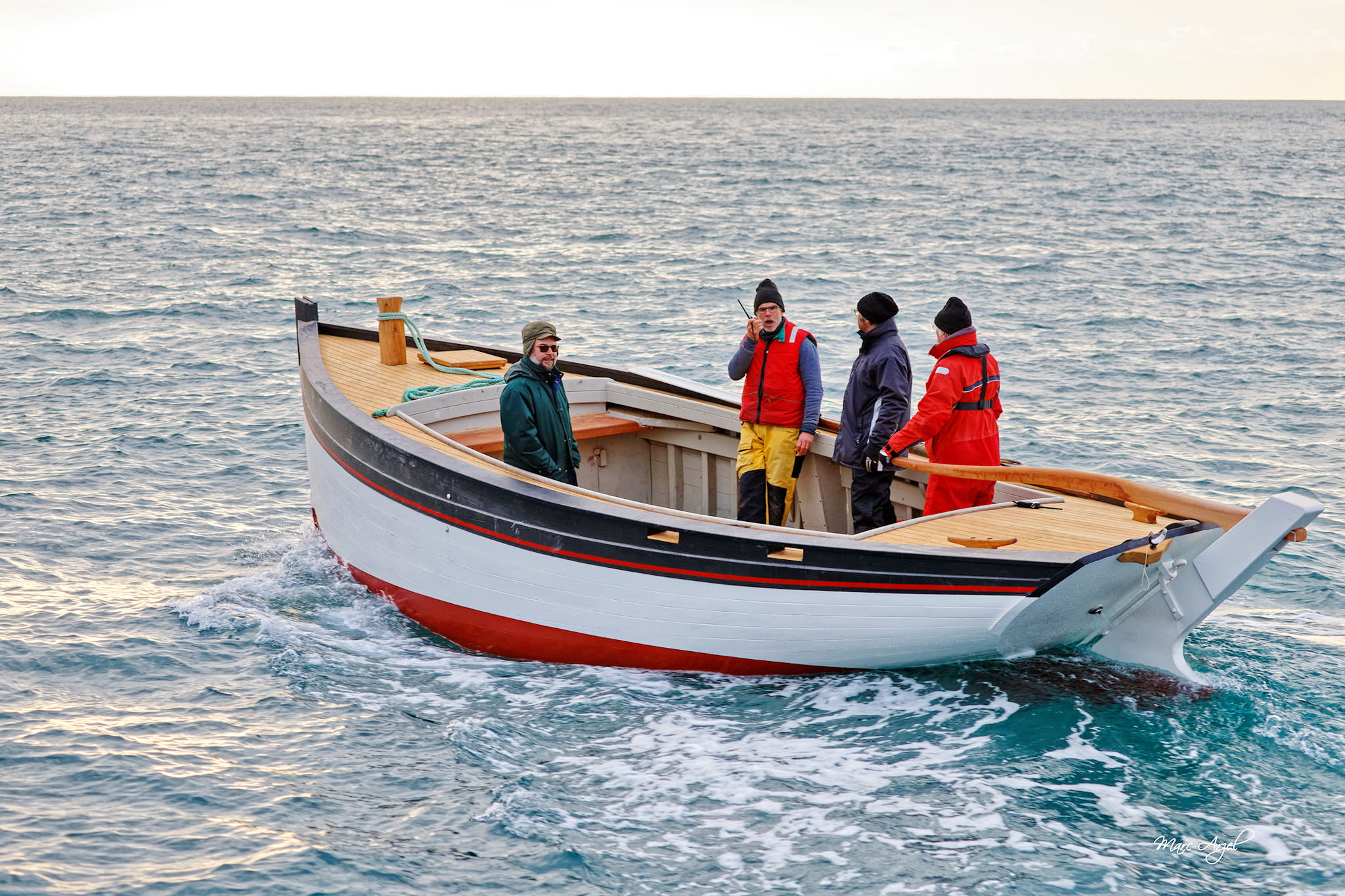
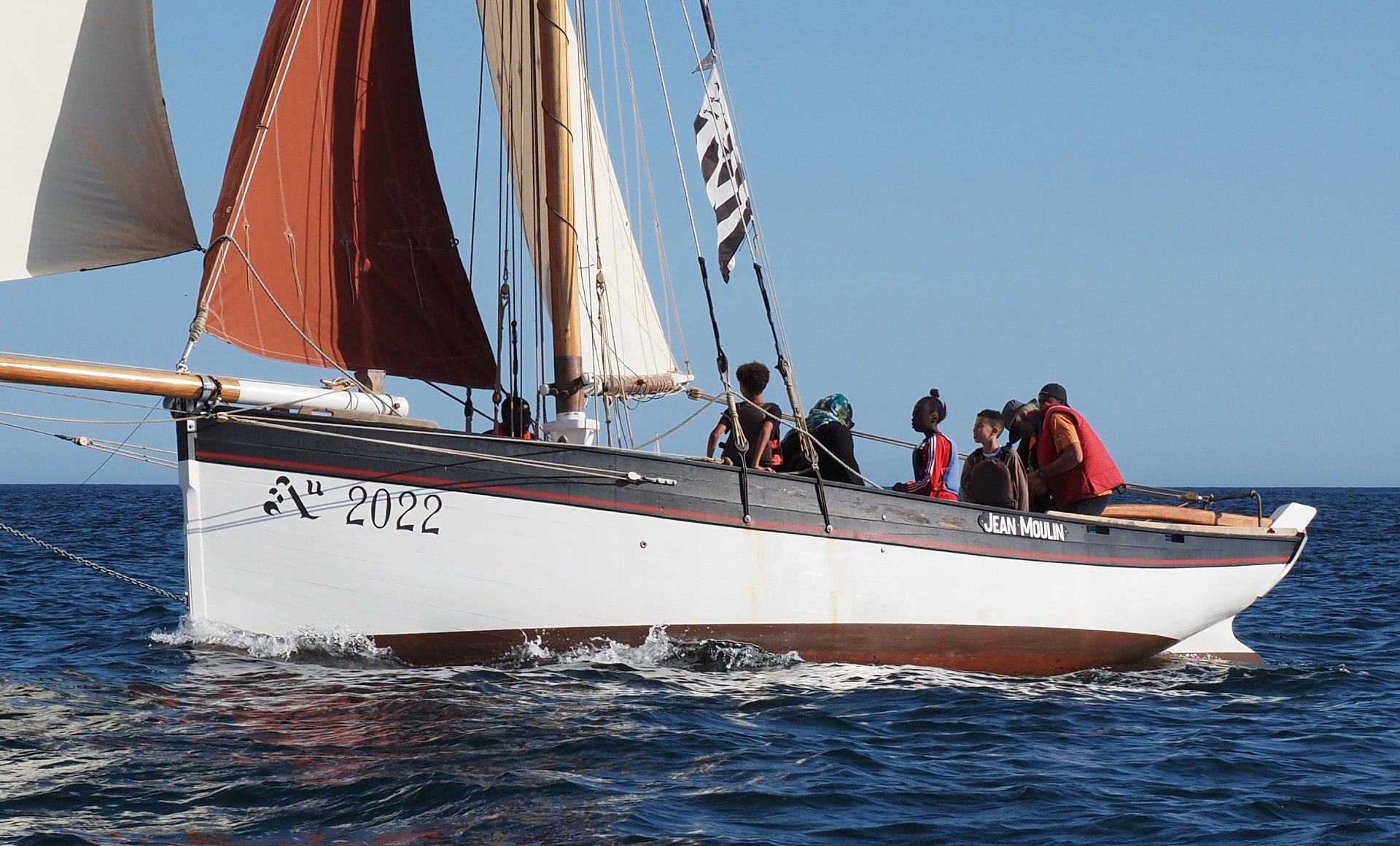
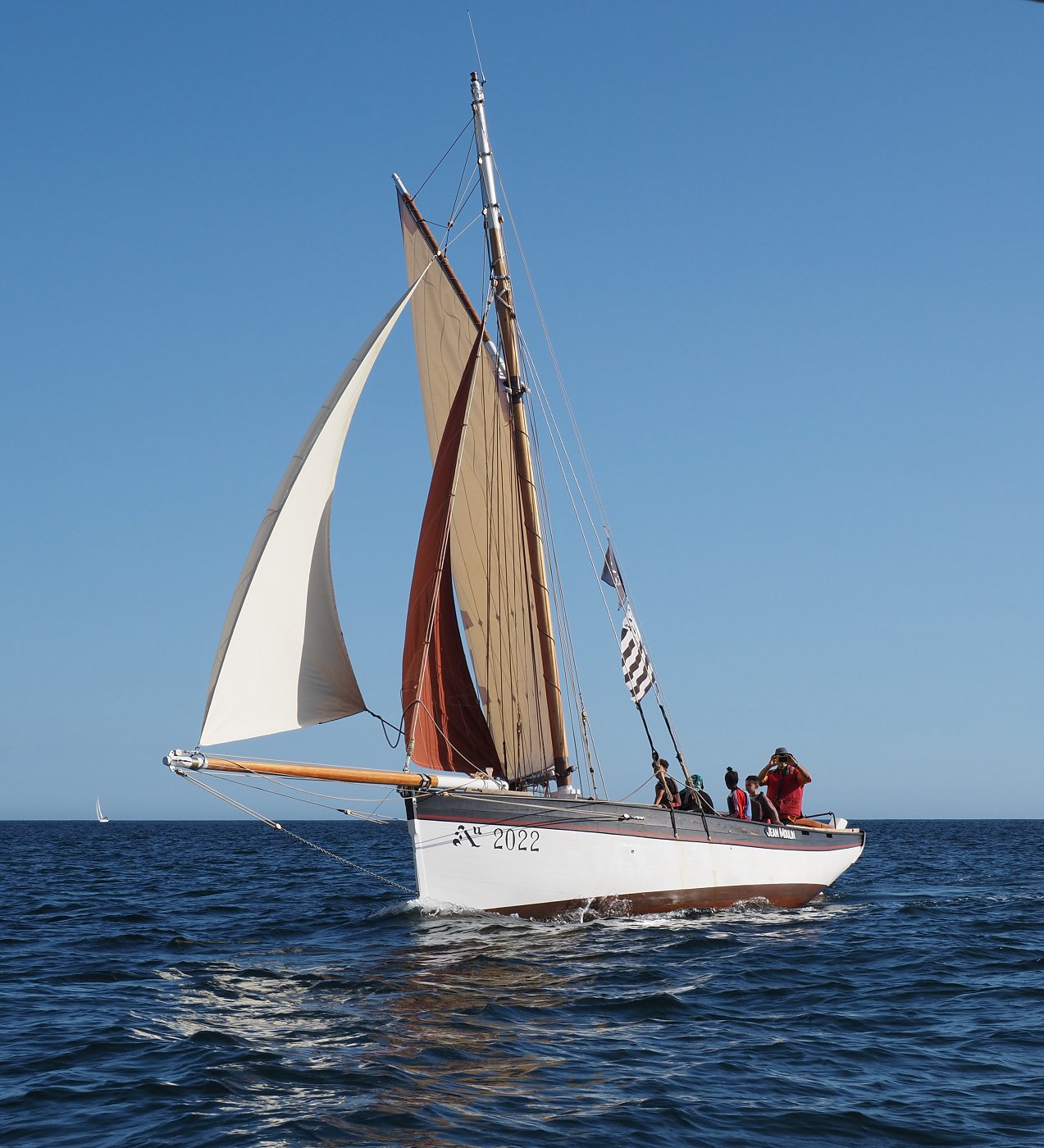
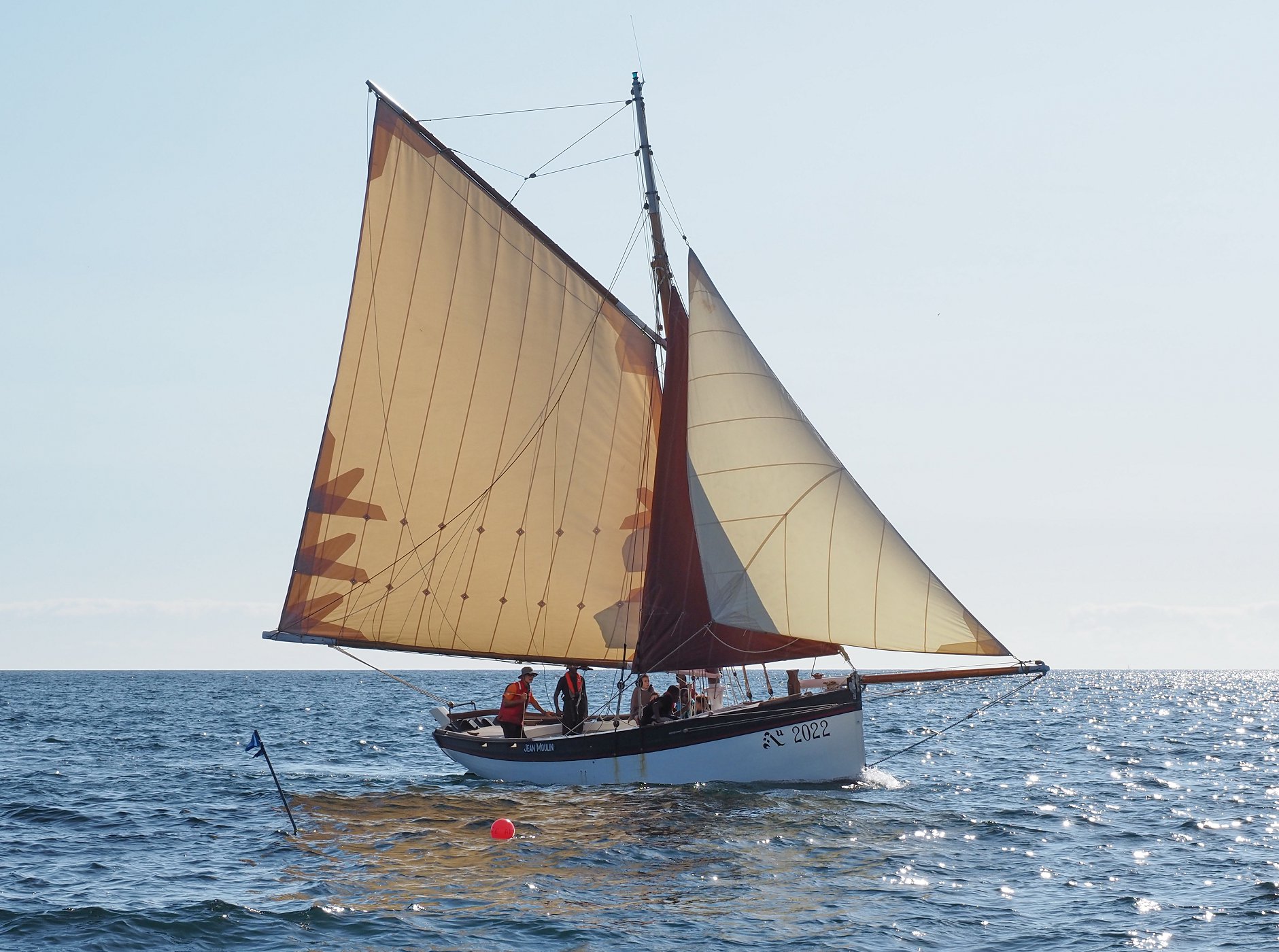
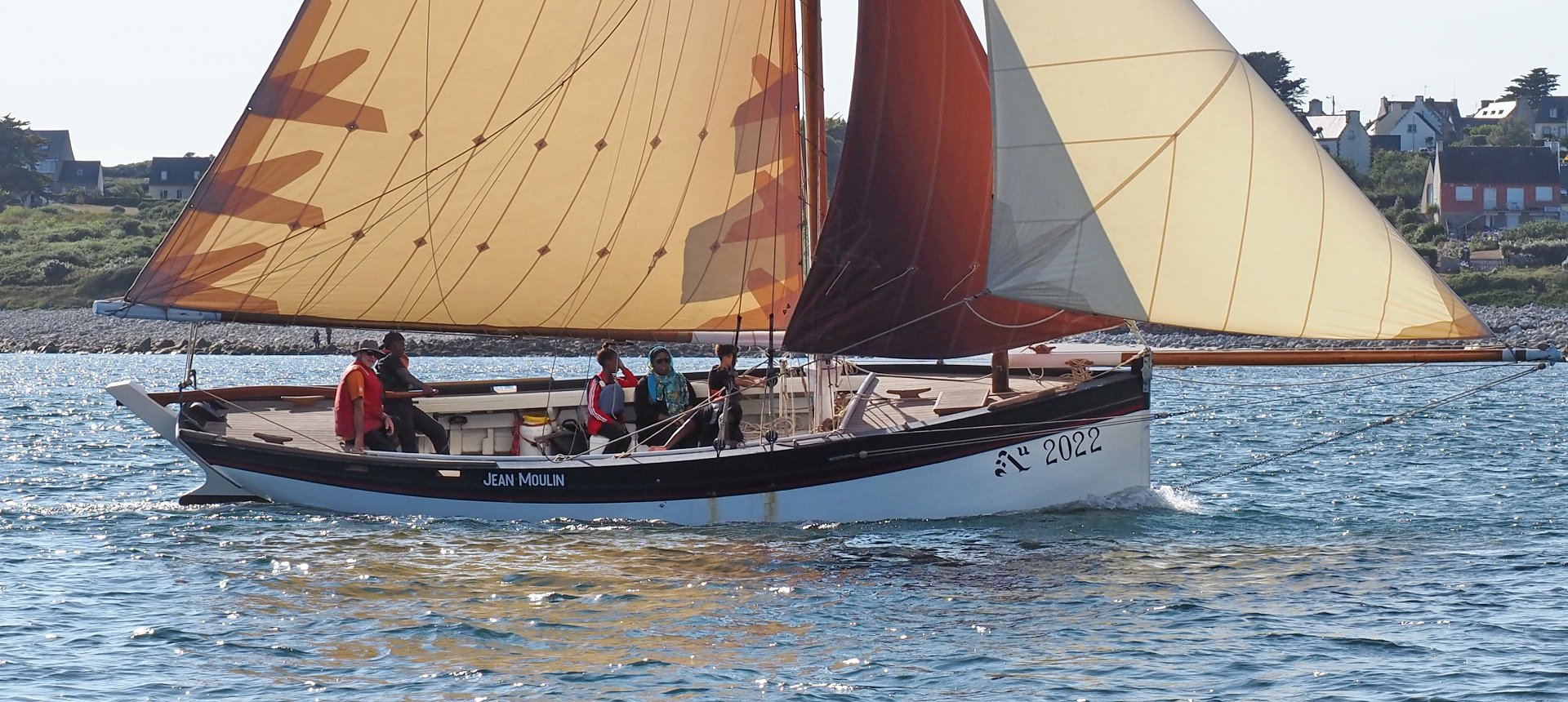
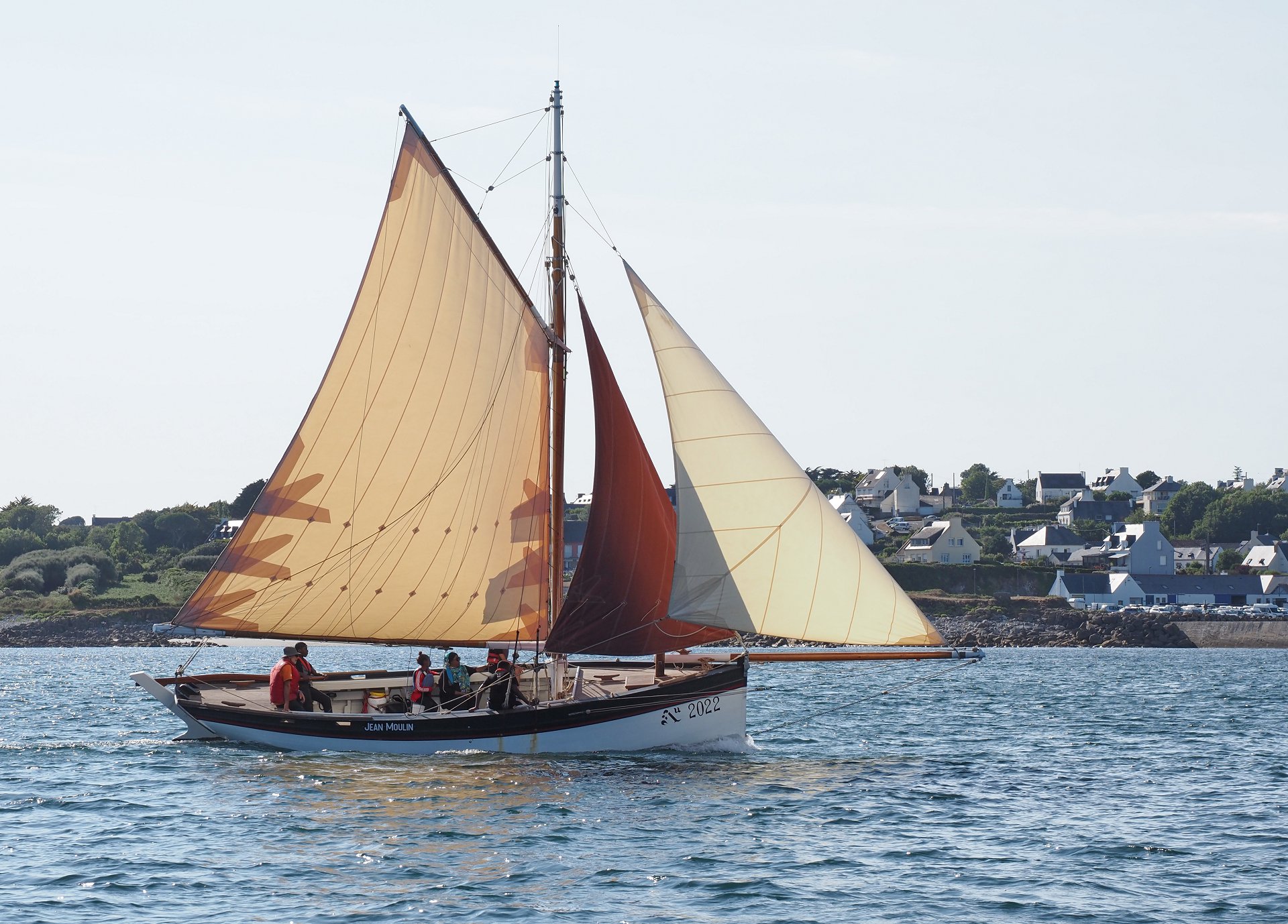
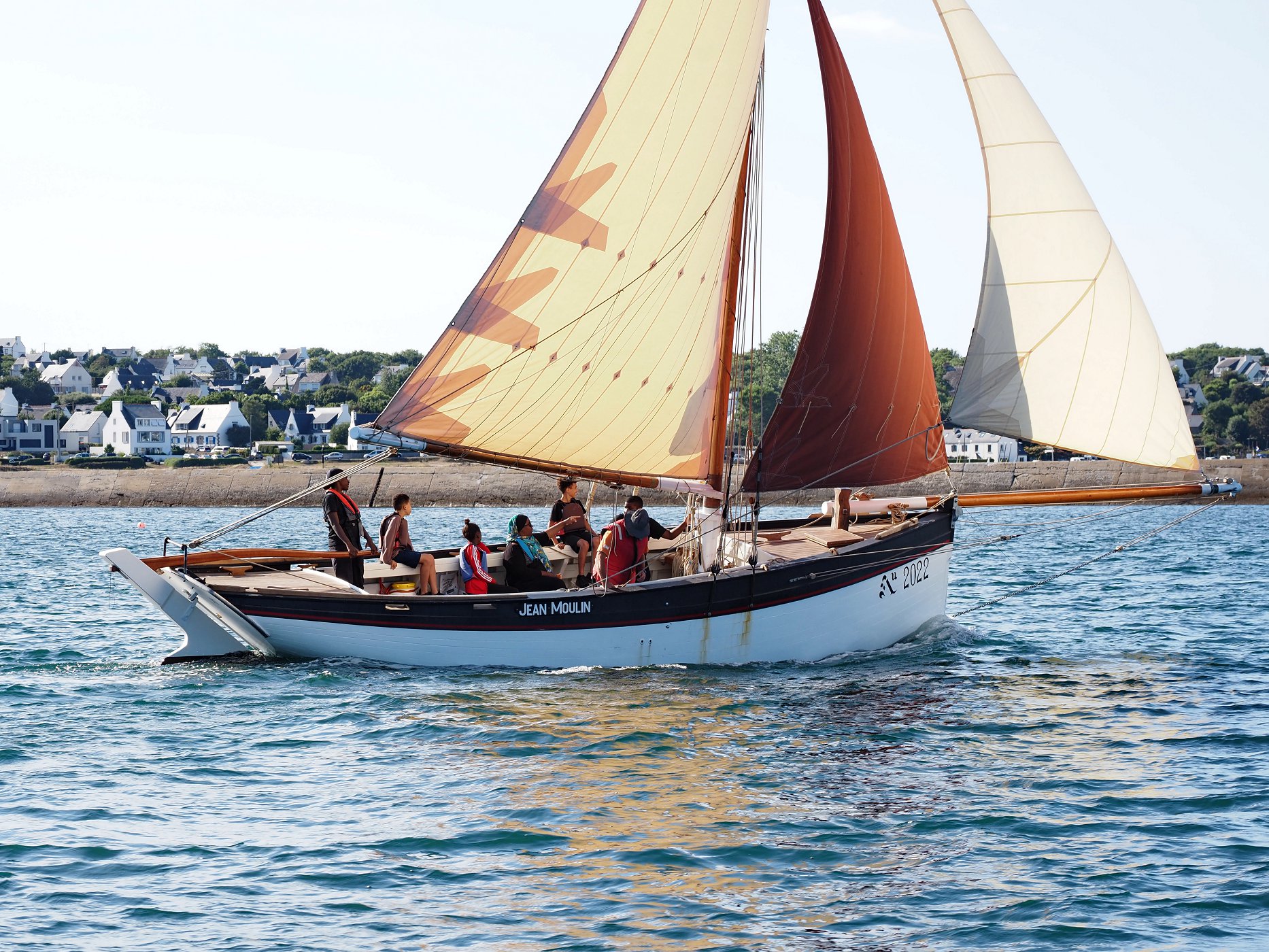
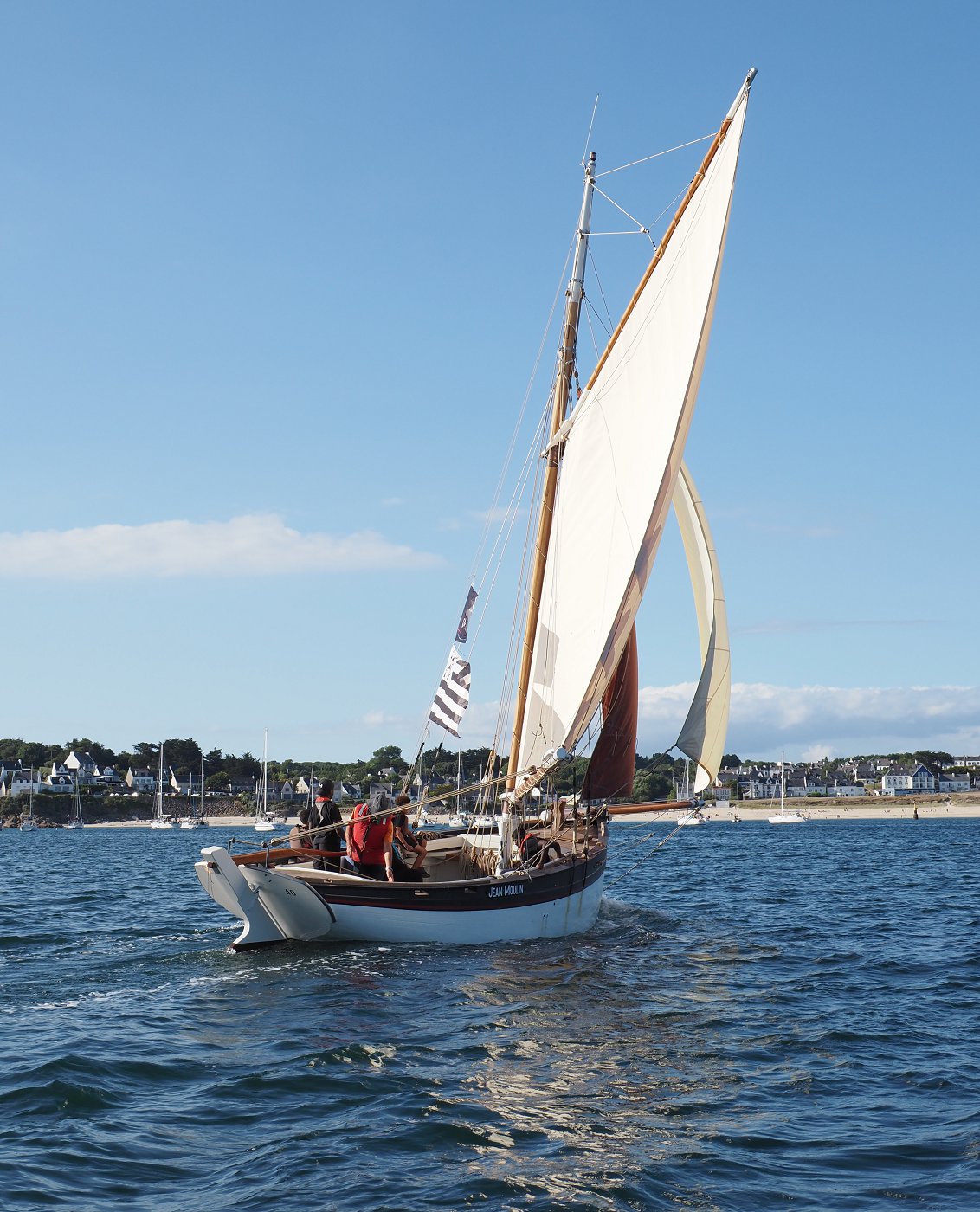
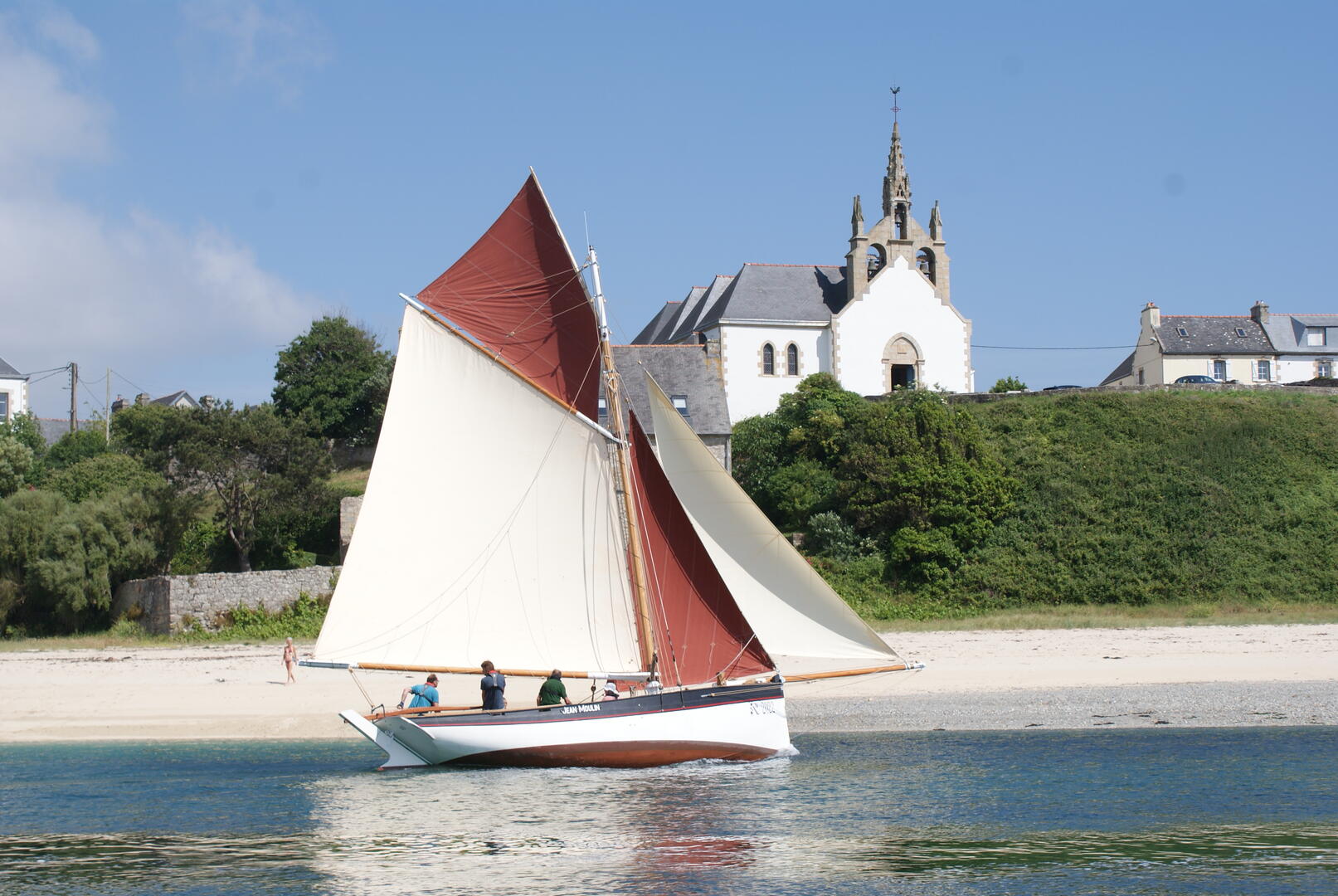
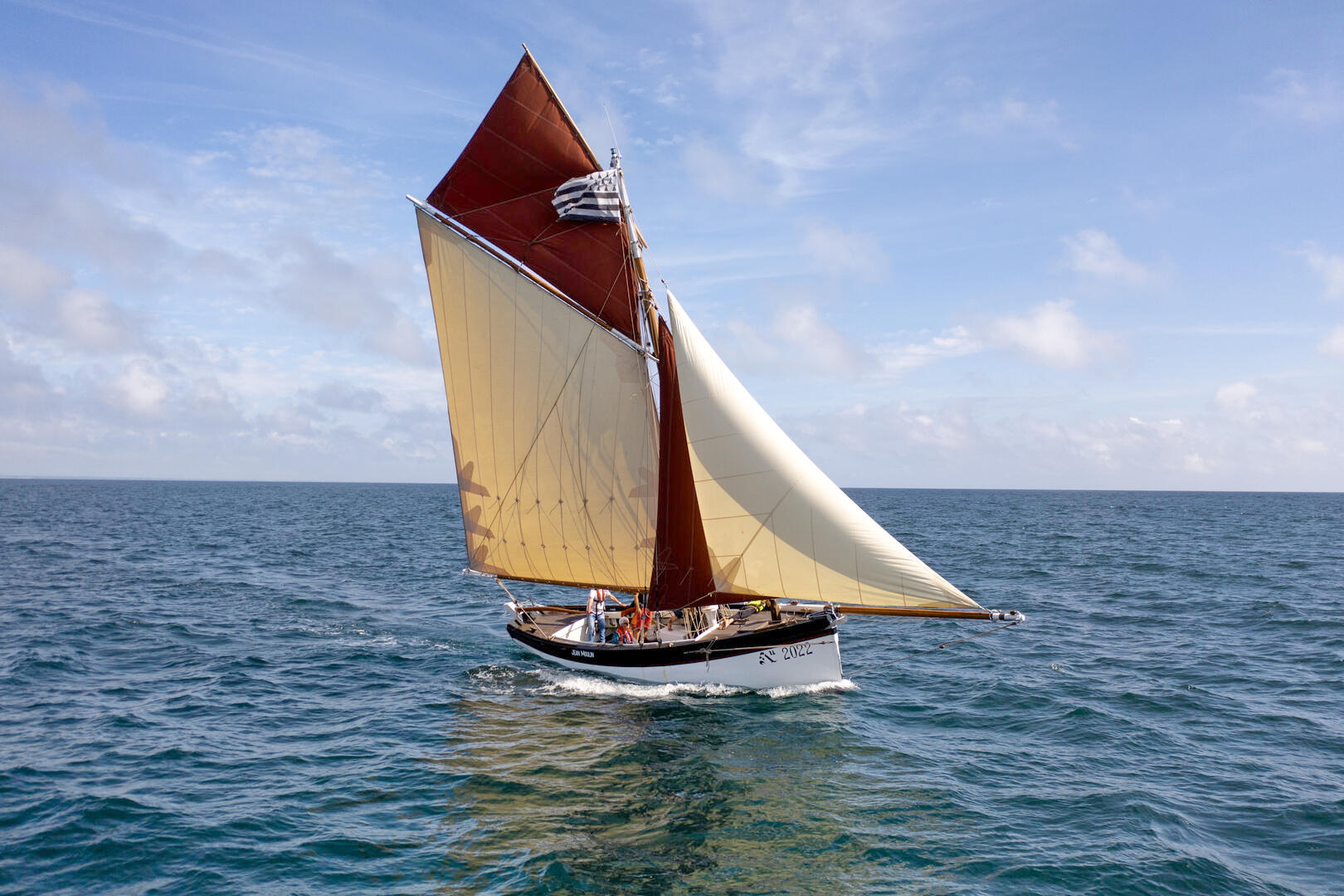
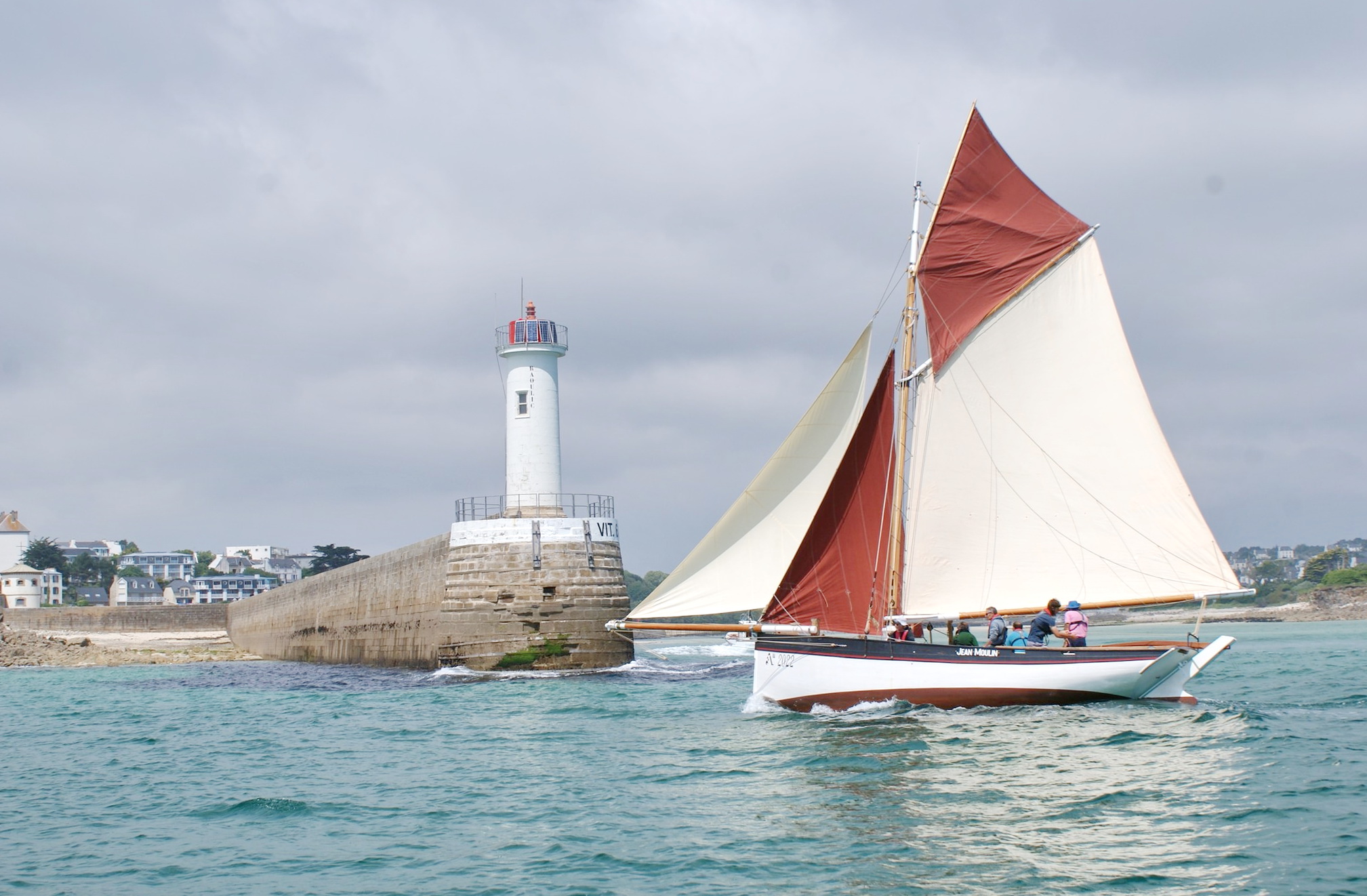
Jean Moulin is a replica of a Cap Sizun lobster sloop. These traditional sailing boats sailed between Audierne Bay and the Isle of Sein from the 1850s onwards. These boats are the subject of an extensive study in volumes 4 and 5 of Bernard Cadoret’s book *Ar Vag*. It is worth noting that in Brittany, the term ‘sloop’ was used rather than ‘cutter’, the latter being reserved for larger vessels, even though the rig includes a jib on the bowsprit and a staysail.
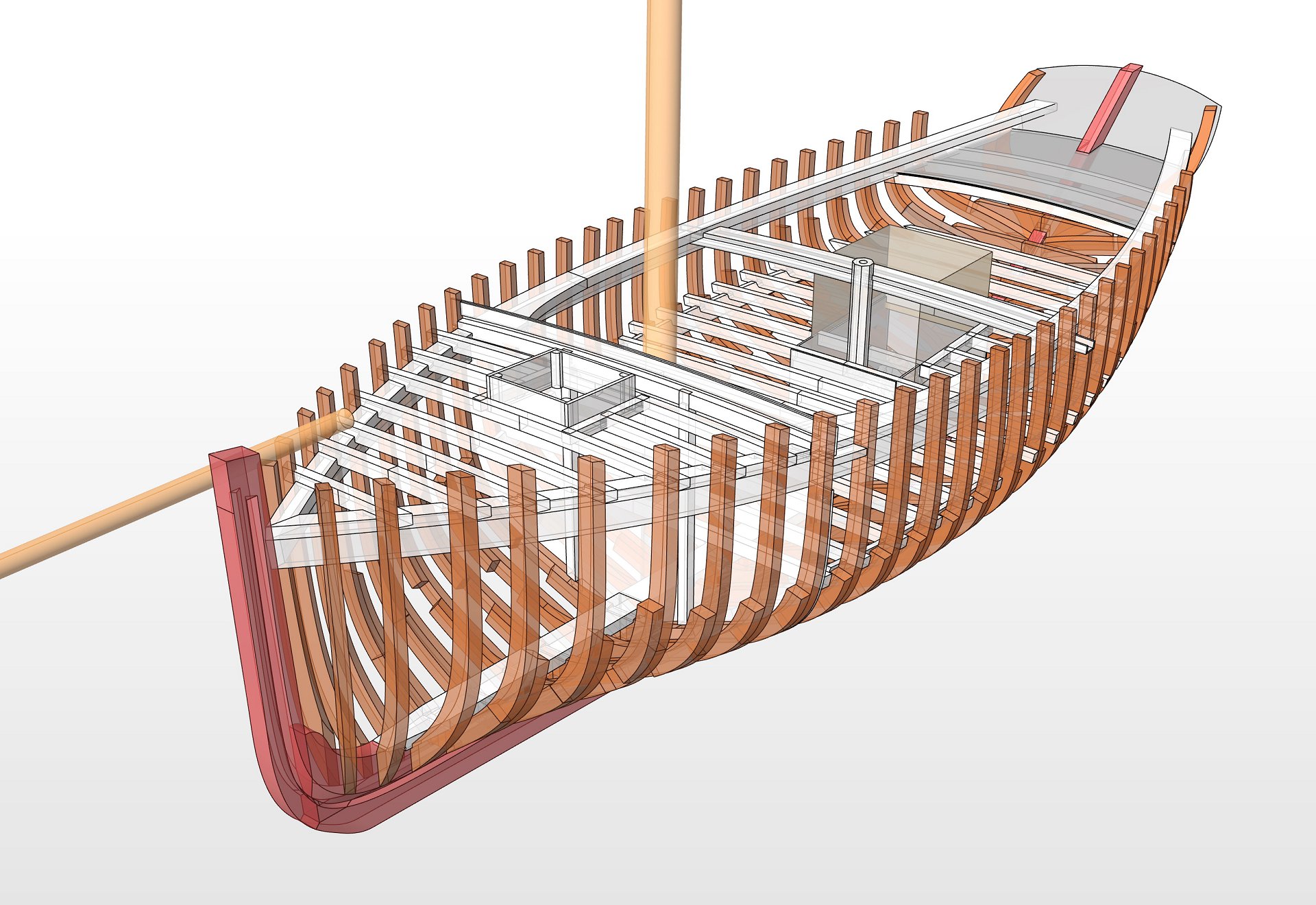
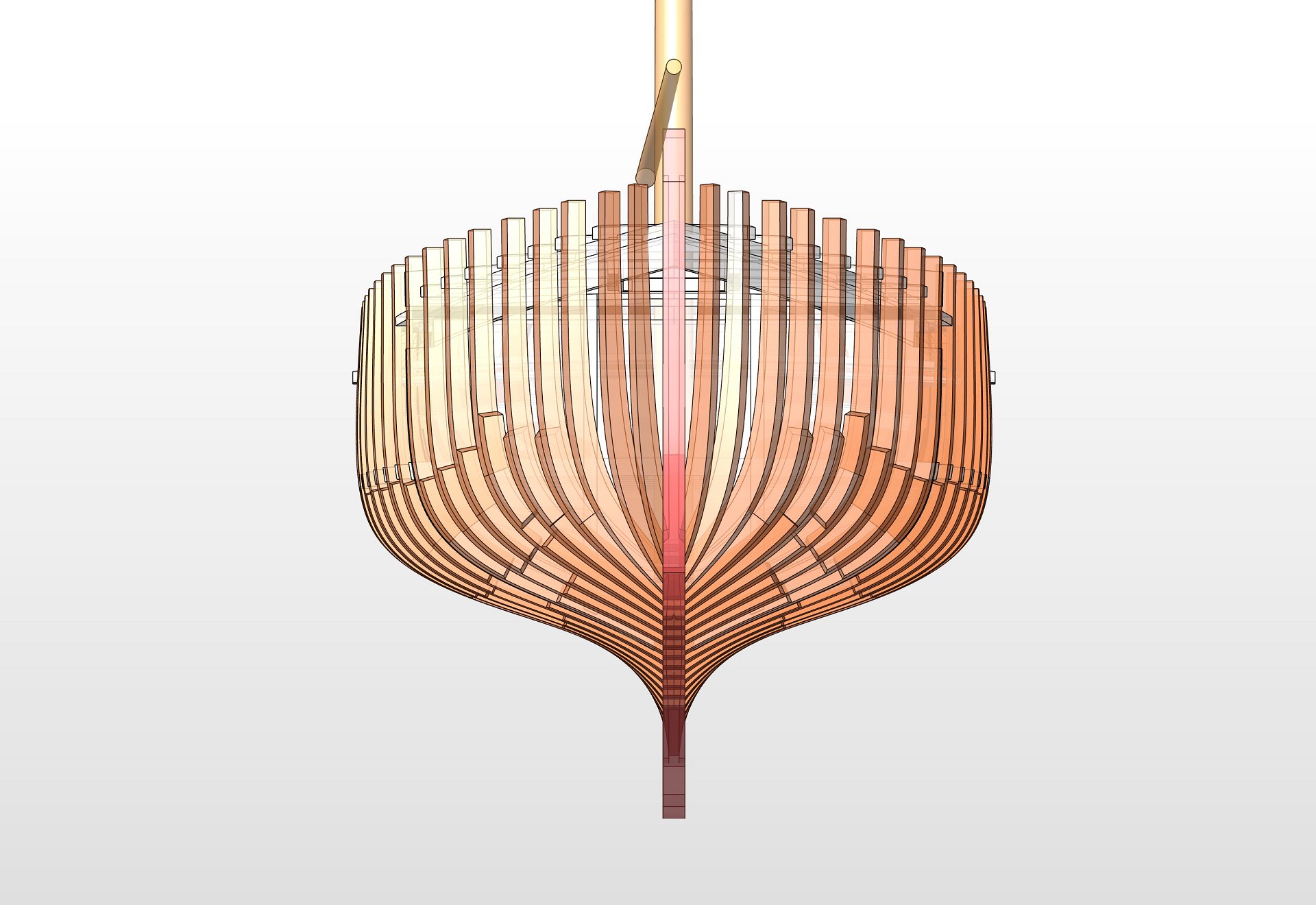
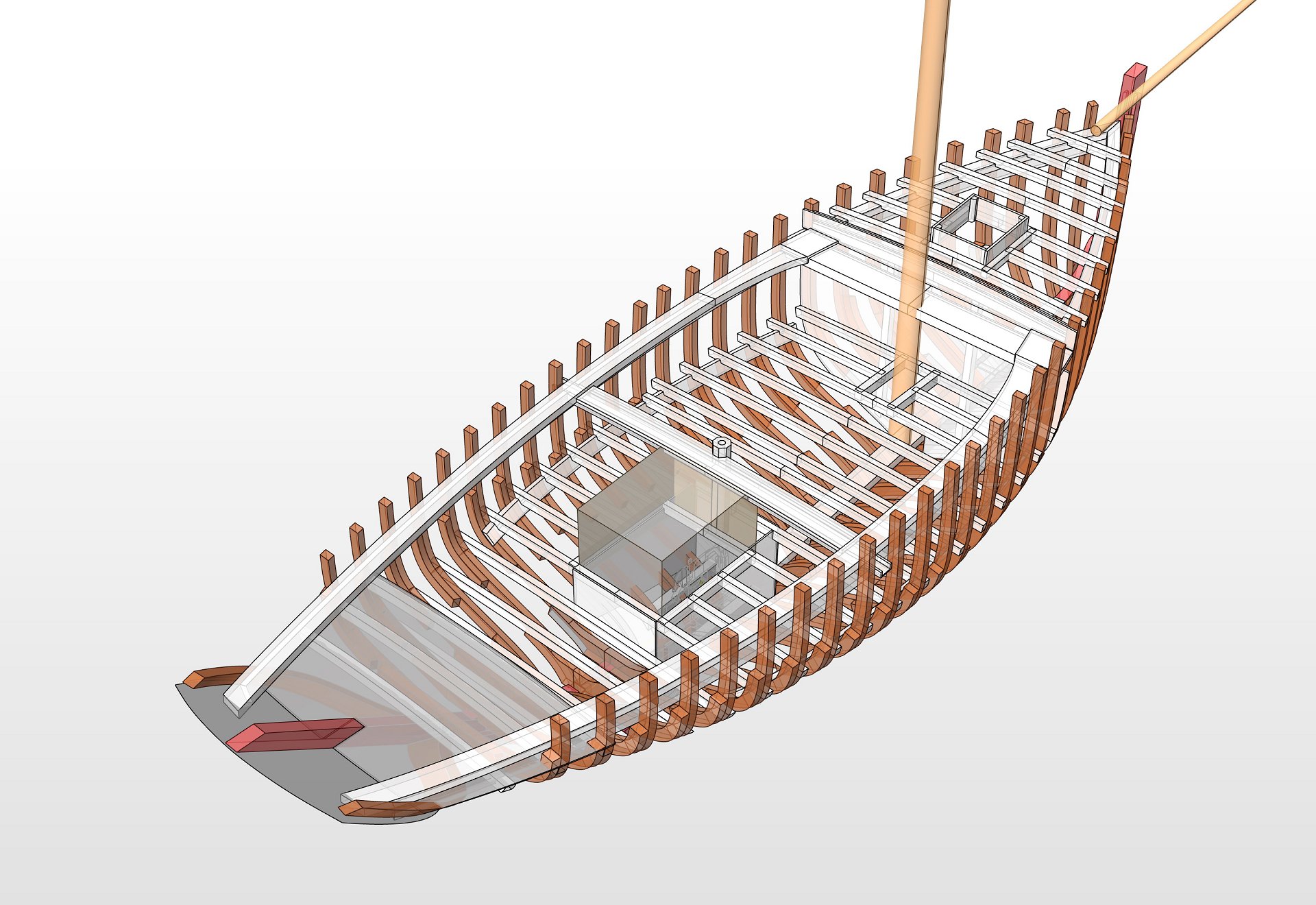
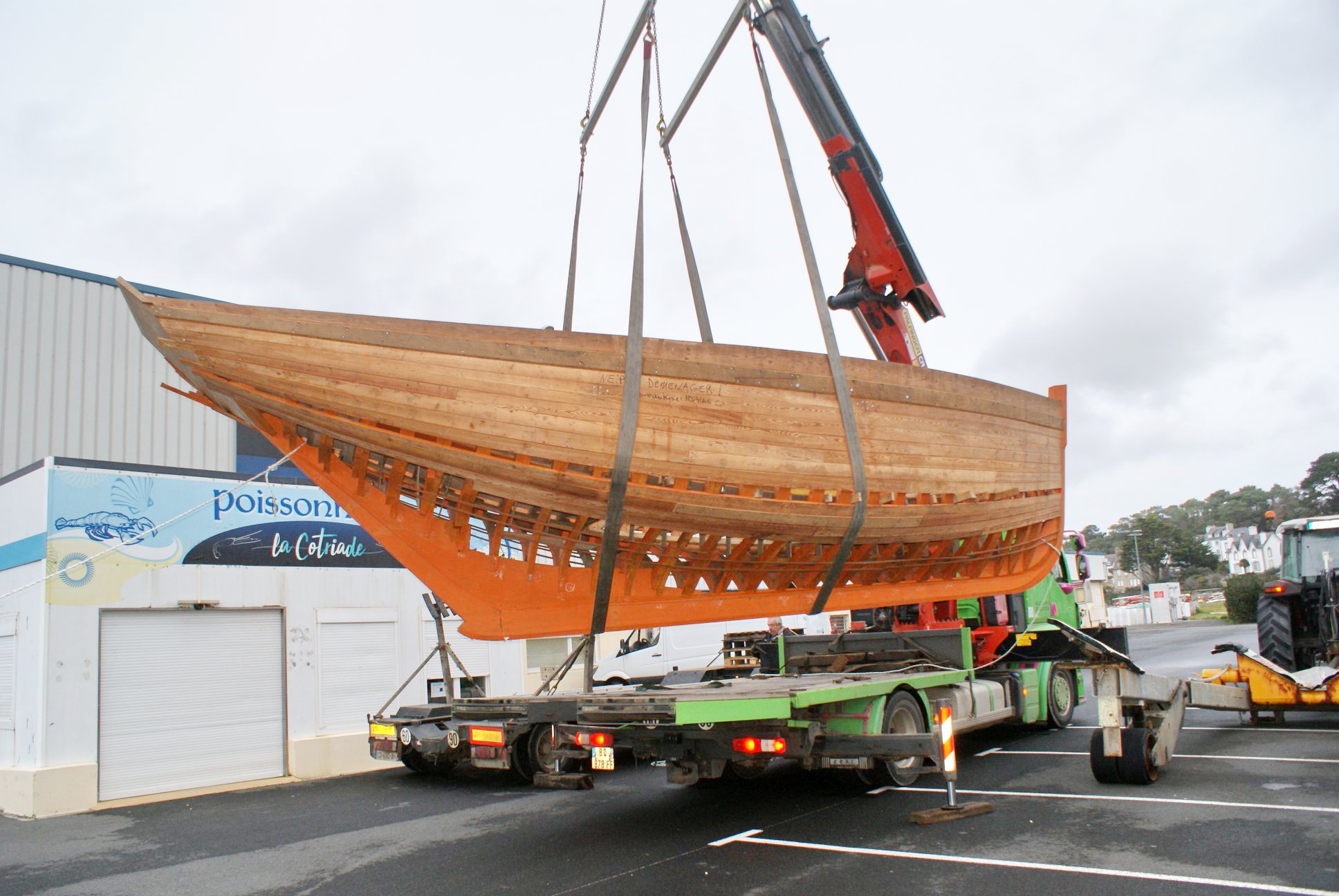
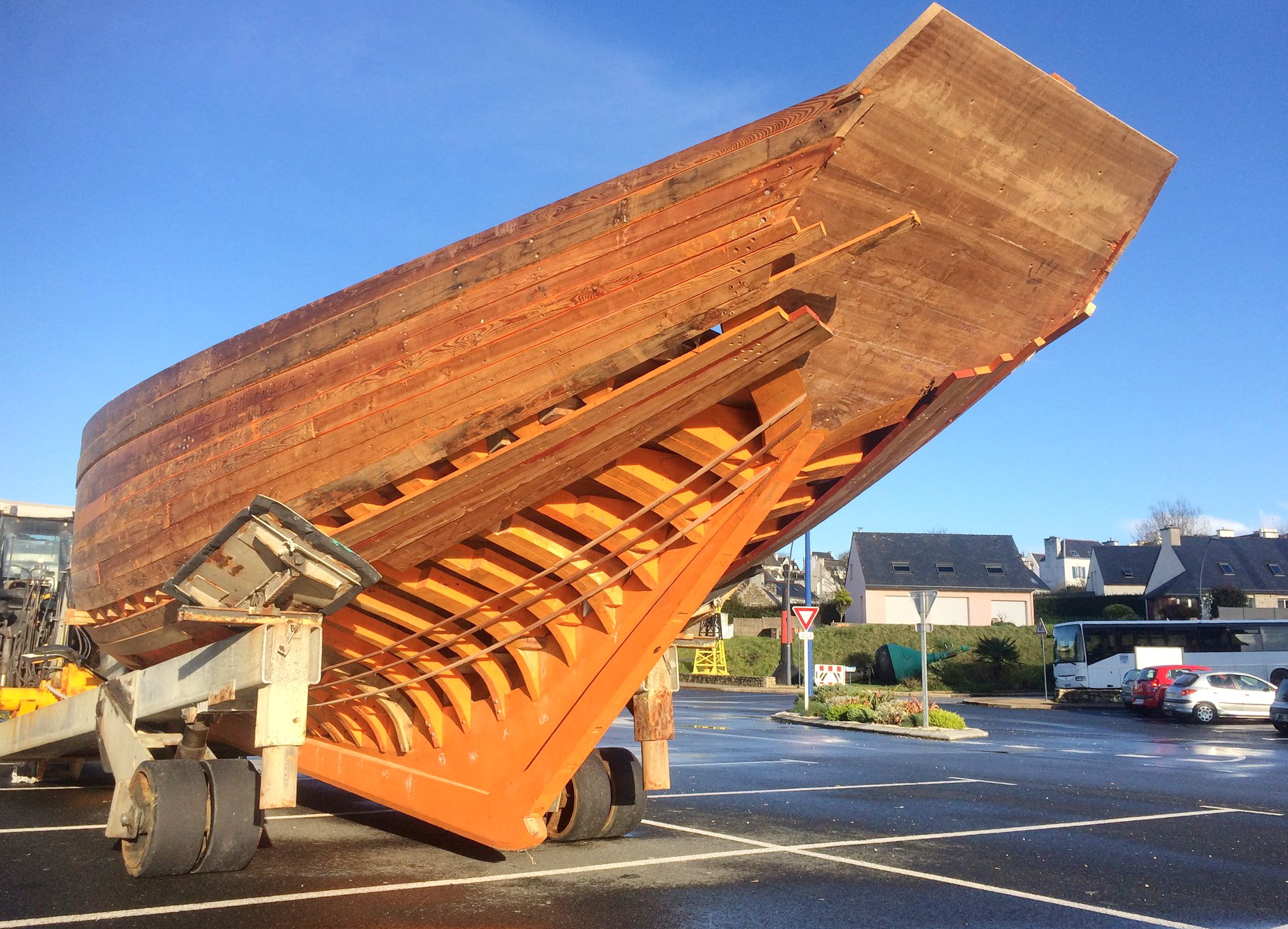
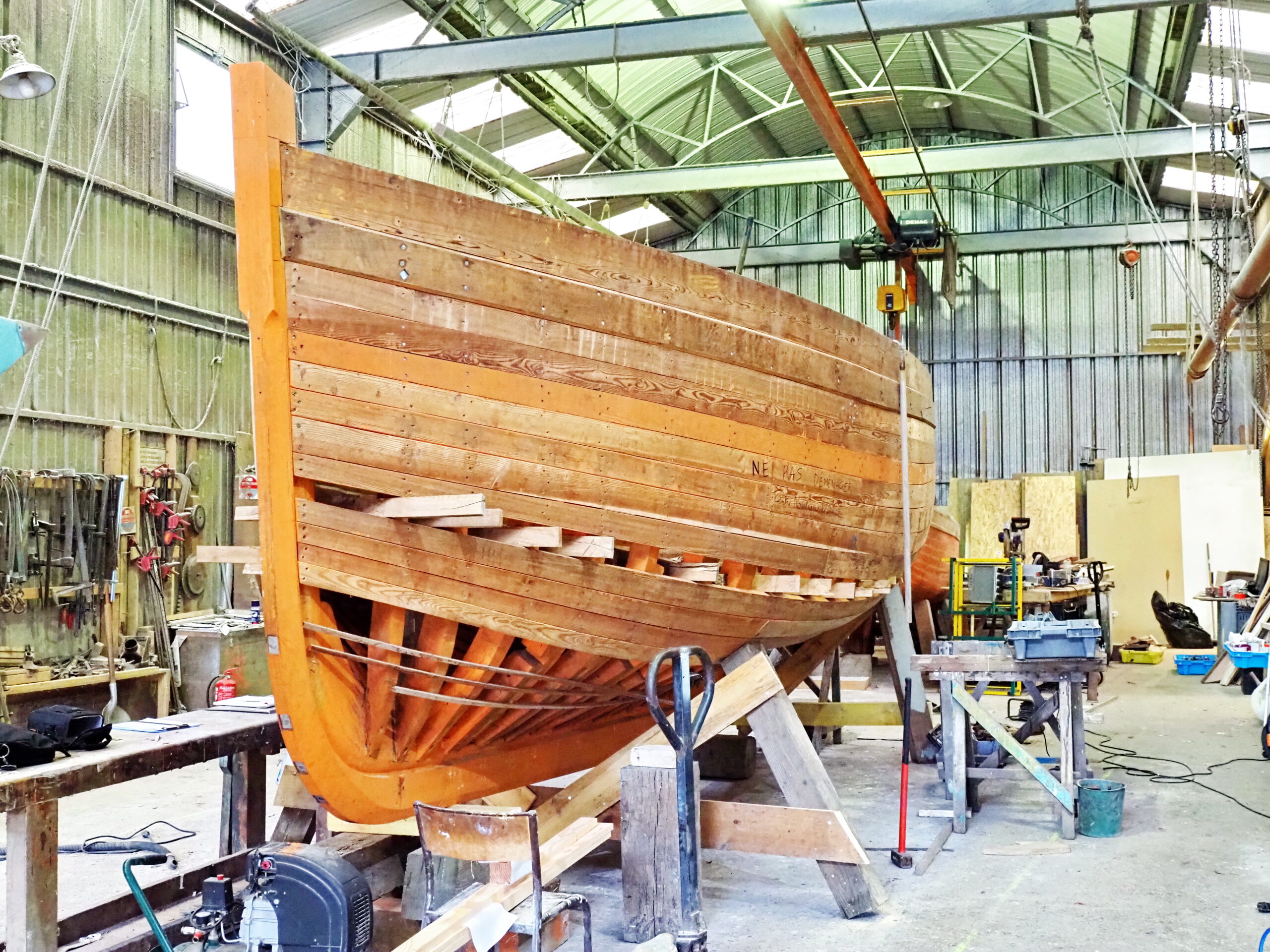
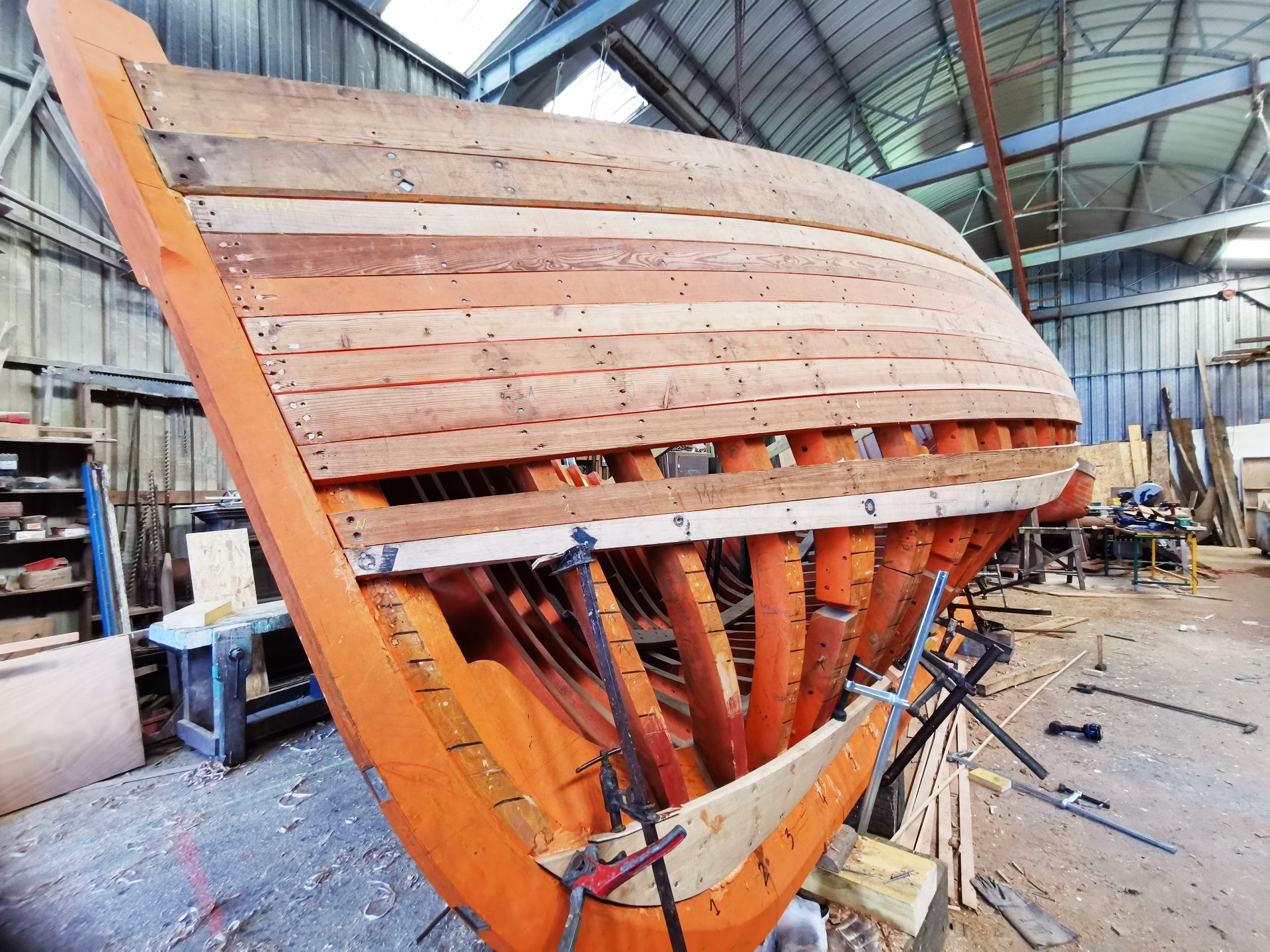
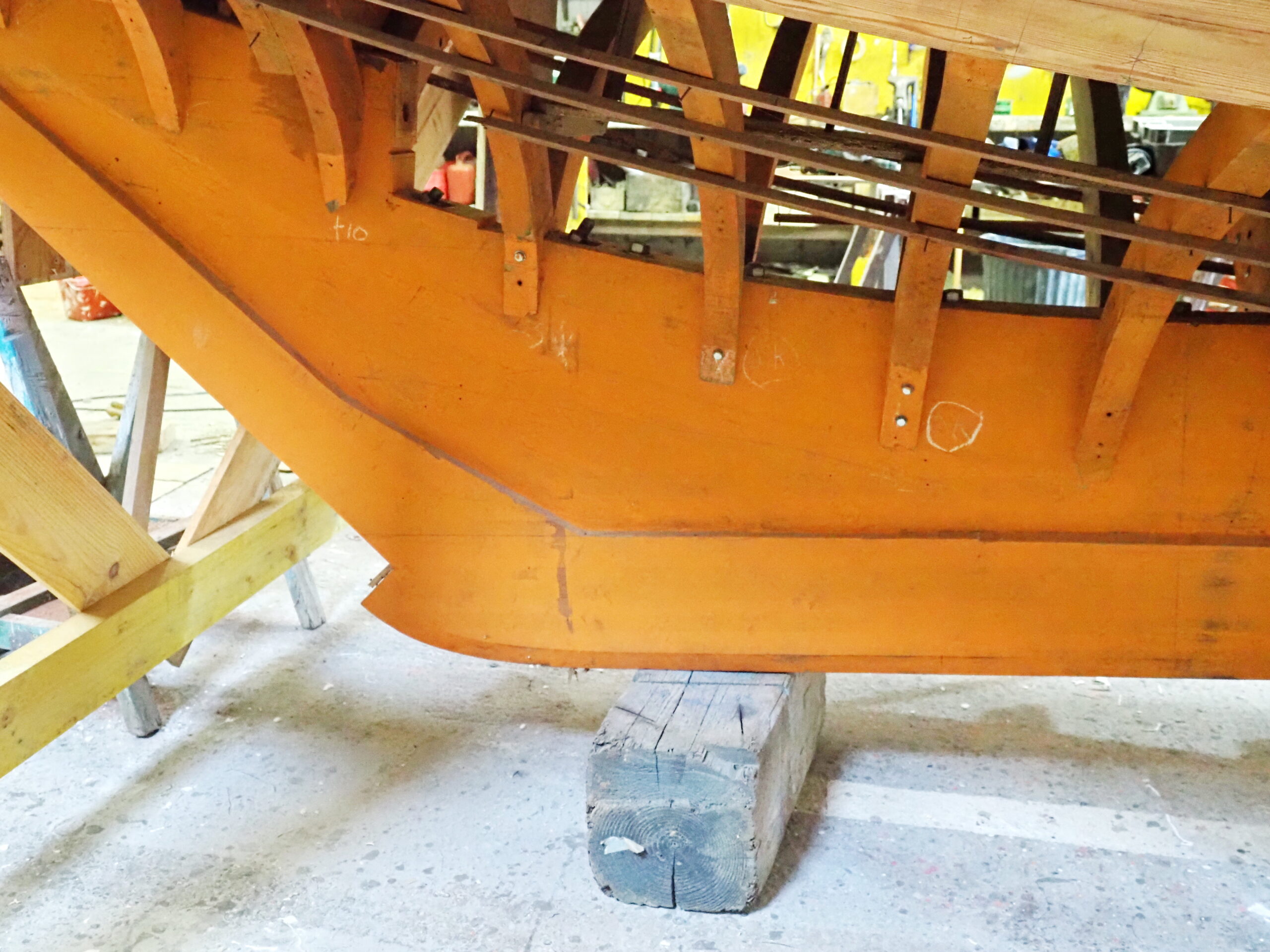
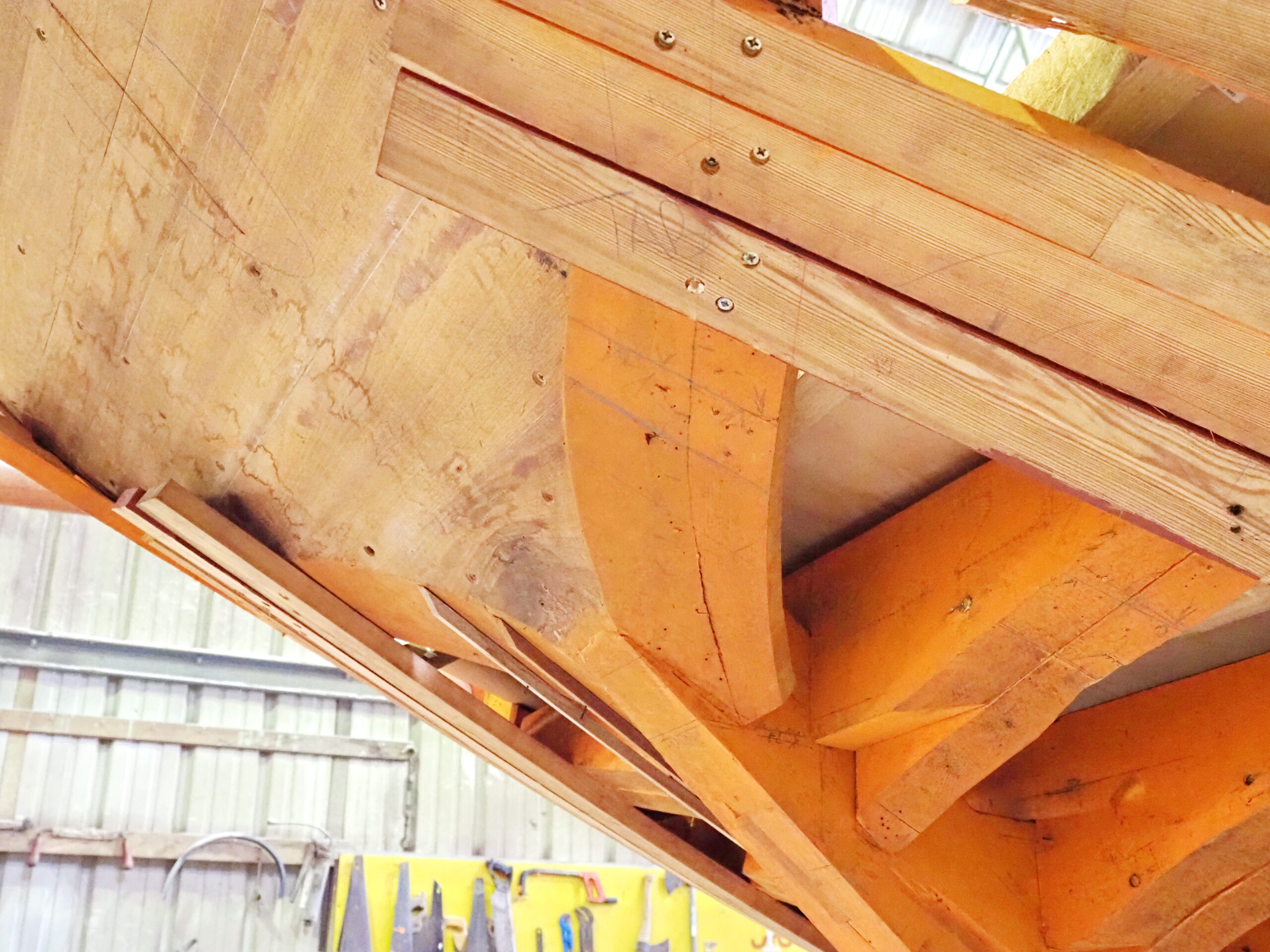
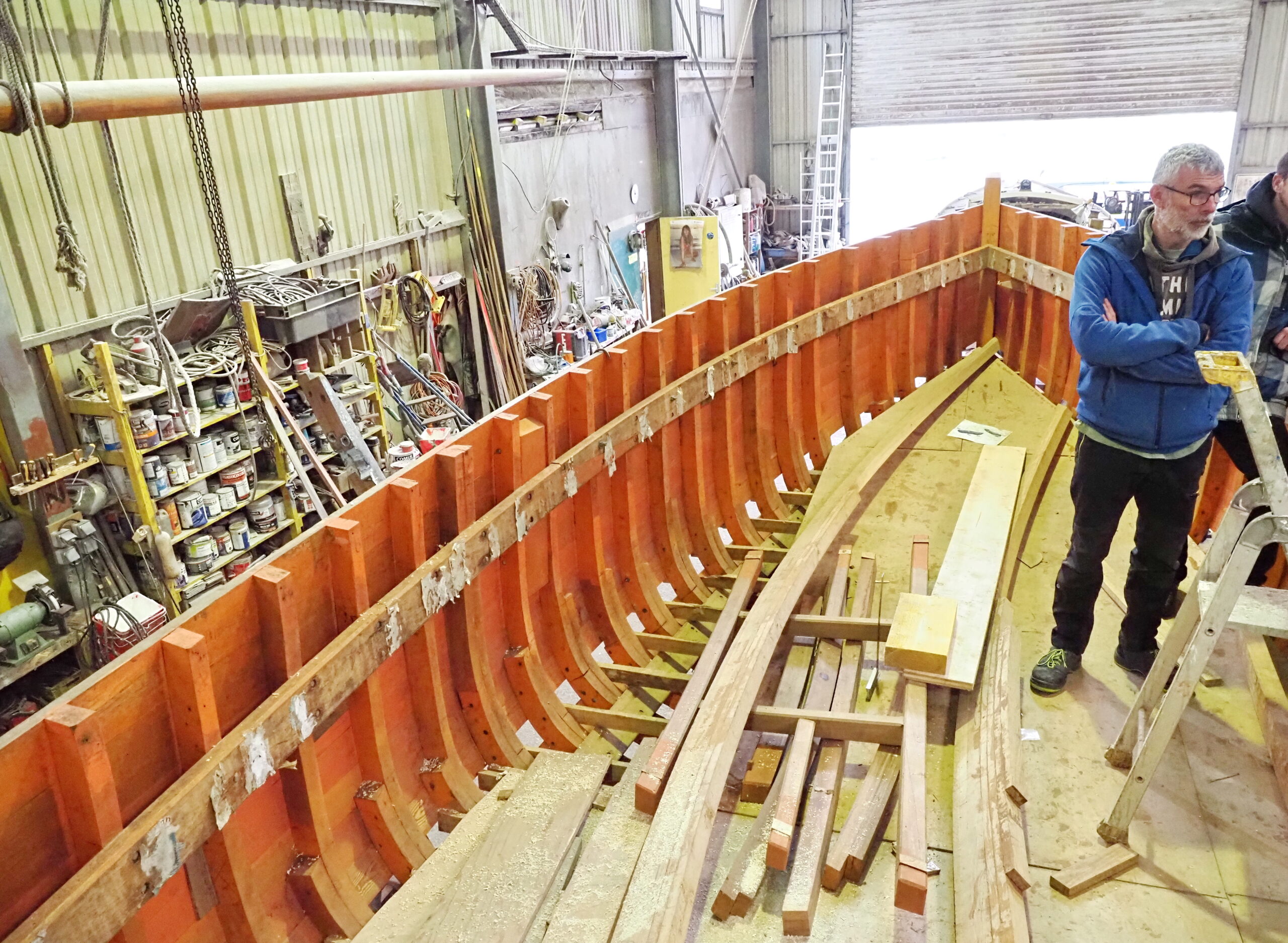
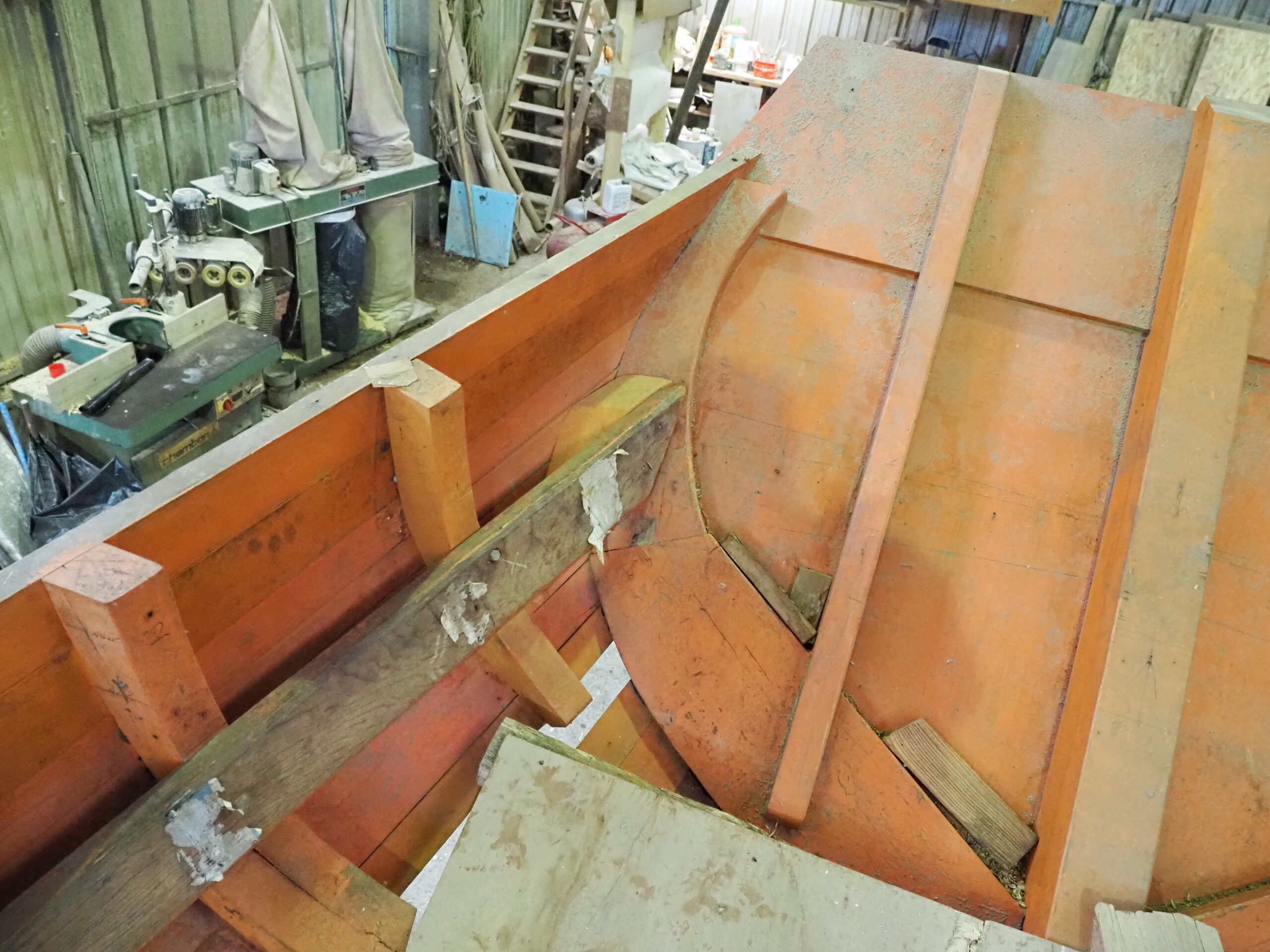
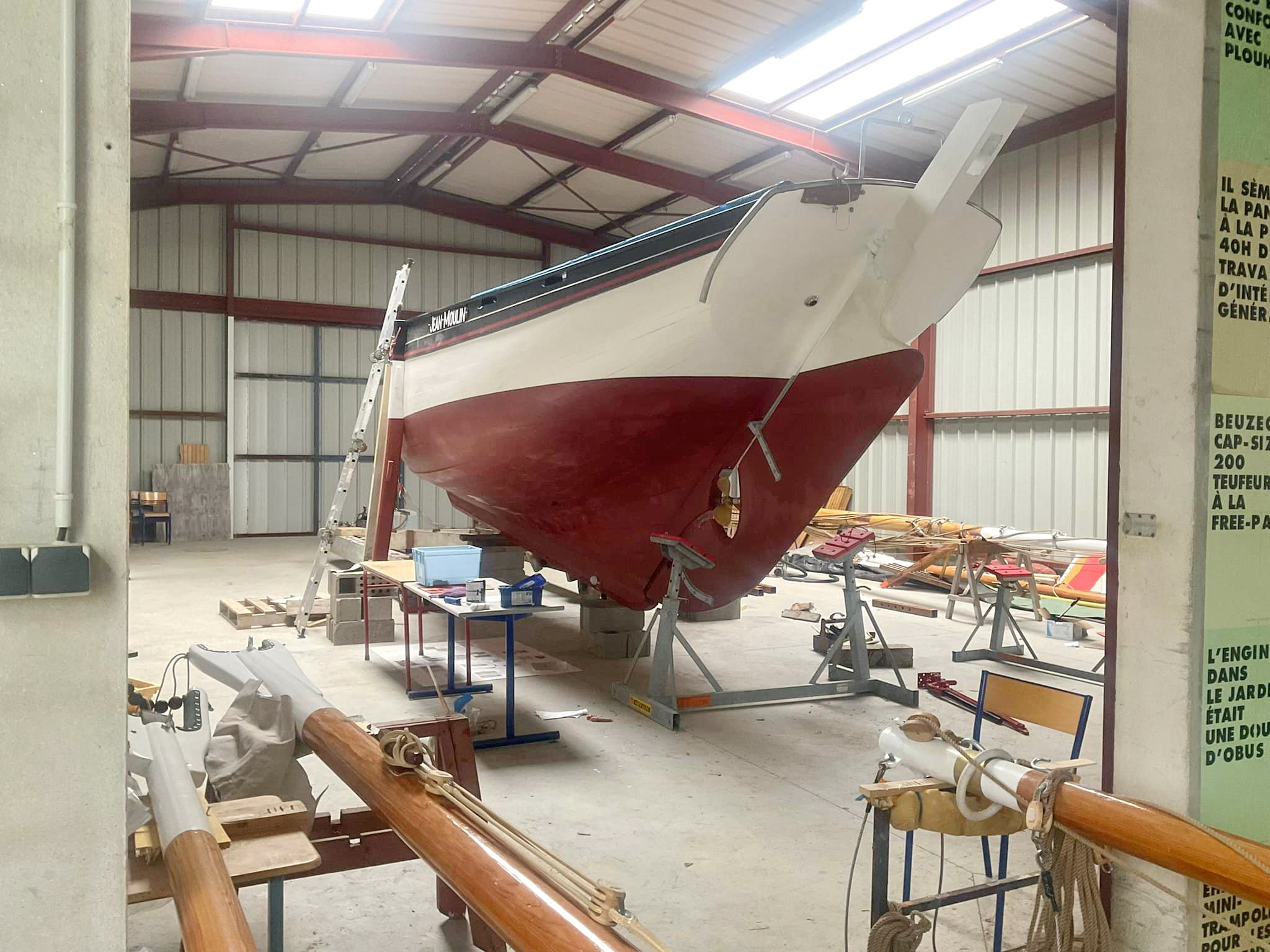
The project was initially launched as part of the Jean-Moulin Technical College in Plouhinec, located on the left bank of the river Goyen, opposite Audierne. Bernard Ficatier, then a marine carpentry instructor, was behind the project and designed the hull form and structure. It is worth noting that Bernard is the author of the book *Concevoir, relever, dessiner, des plans de voiliers* (*Designing, Surveying and Drawing Sailing Boat Plans*), a reference work on what is arguably the most noble aspect of a shipwright’s trade. However, the college closed in 2018 and the langoustier’s hull, which had been partially planked, was left as it was.
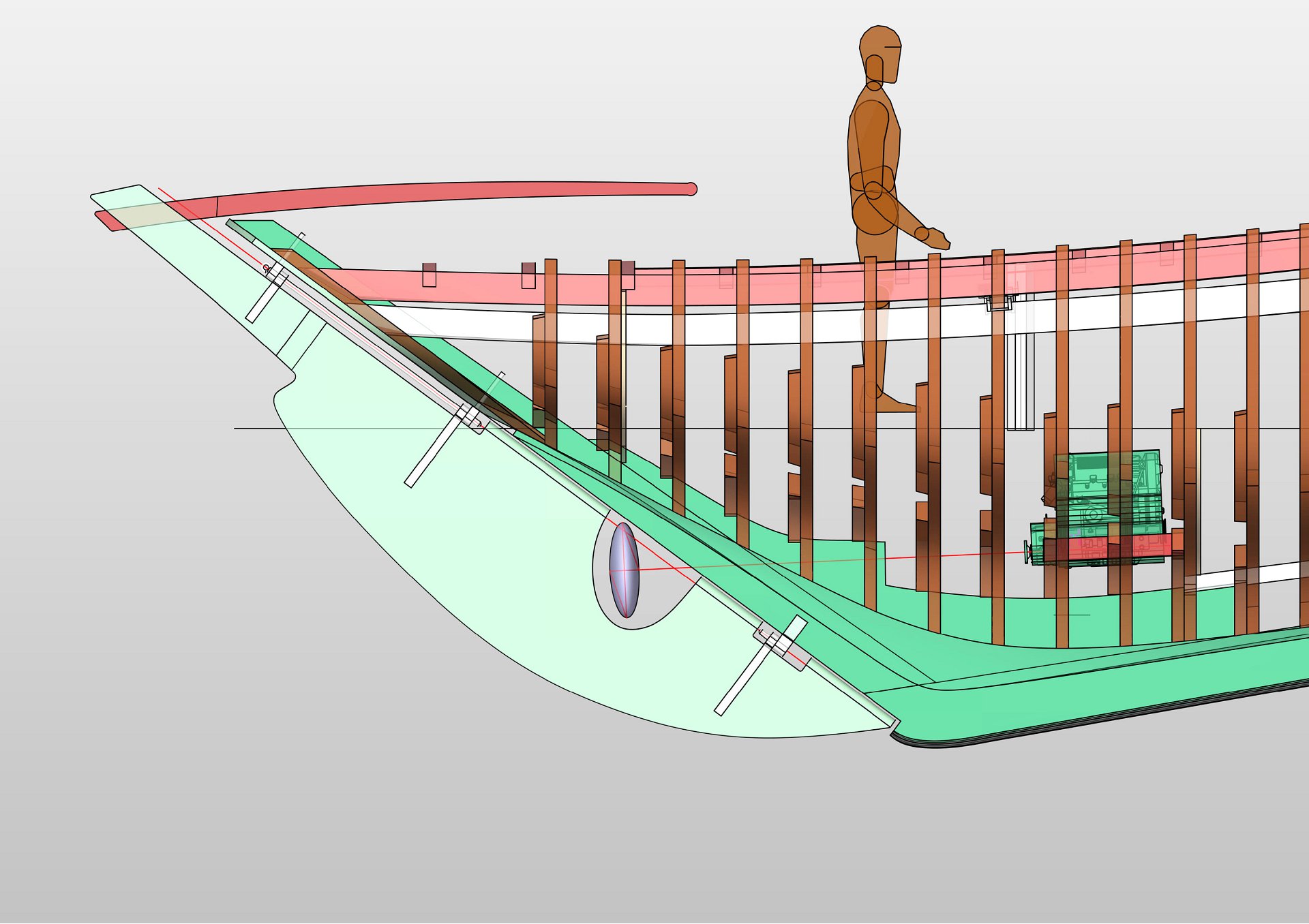
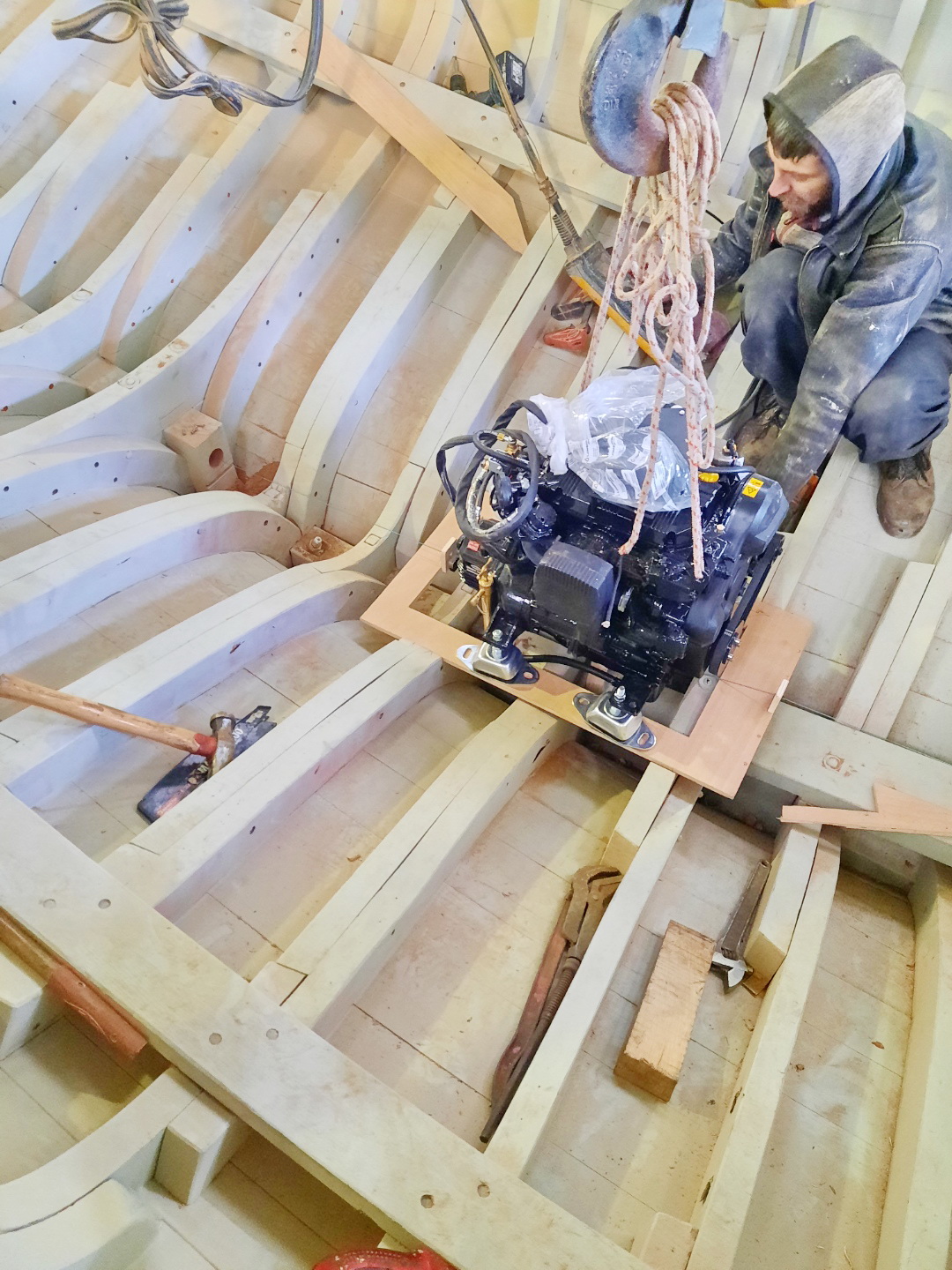
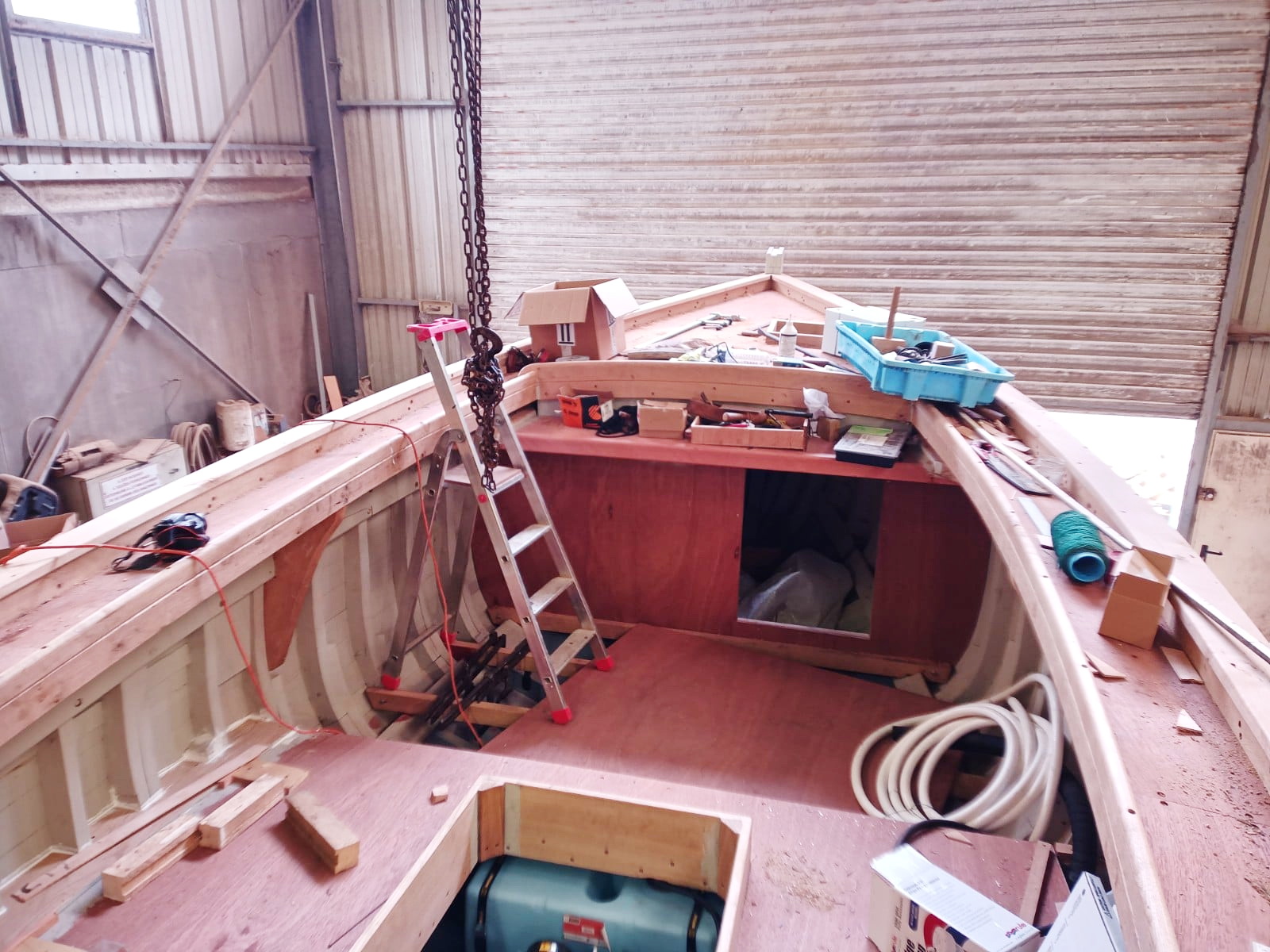
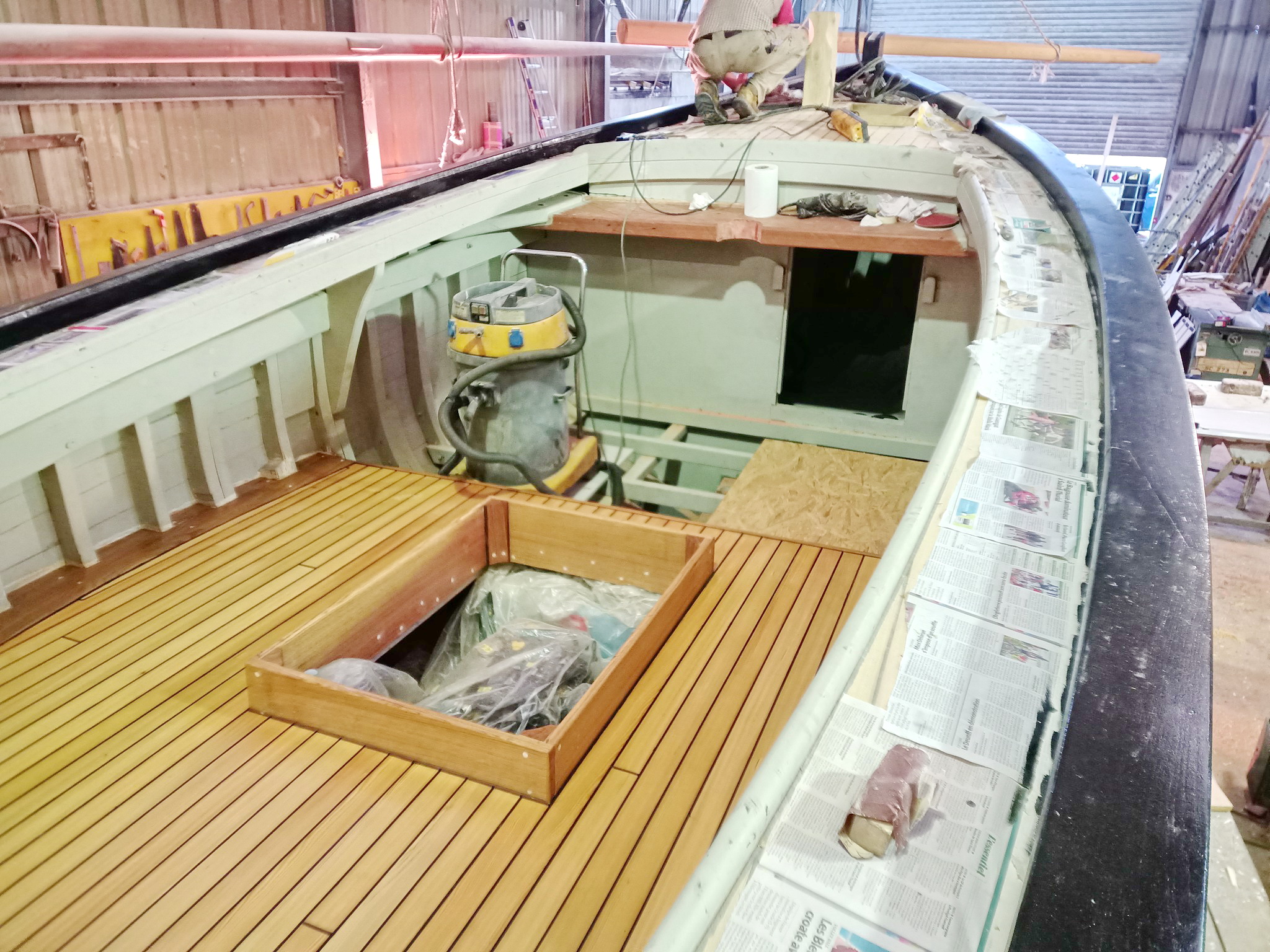
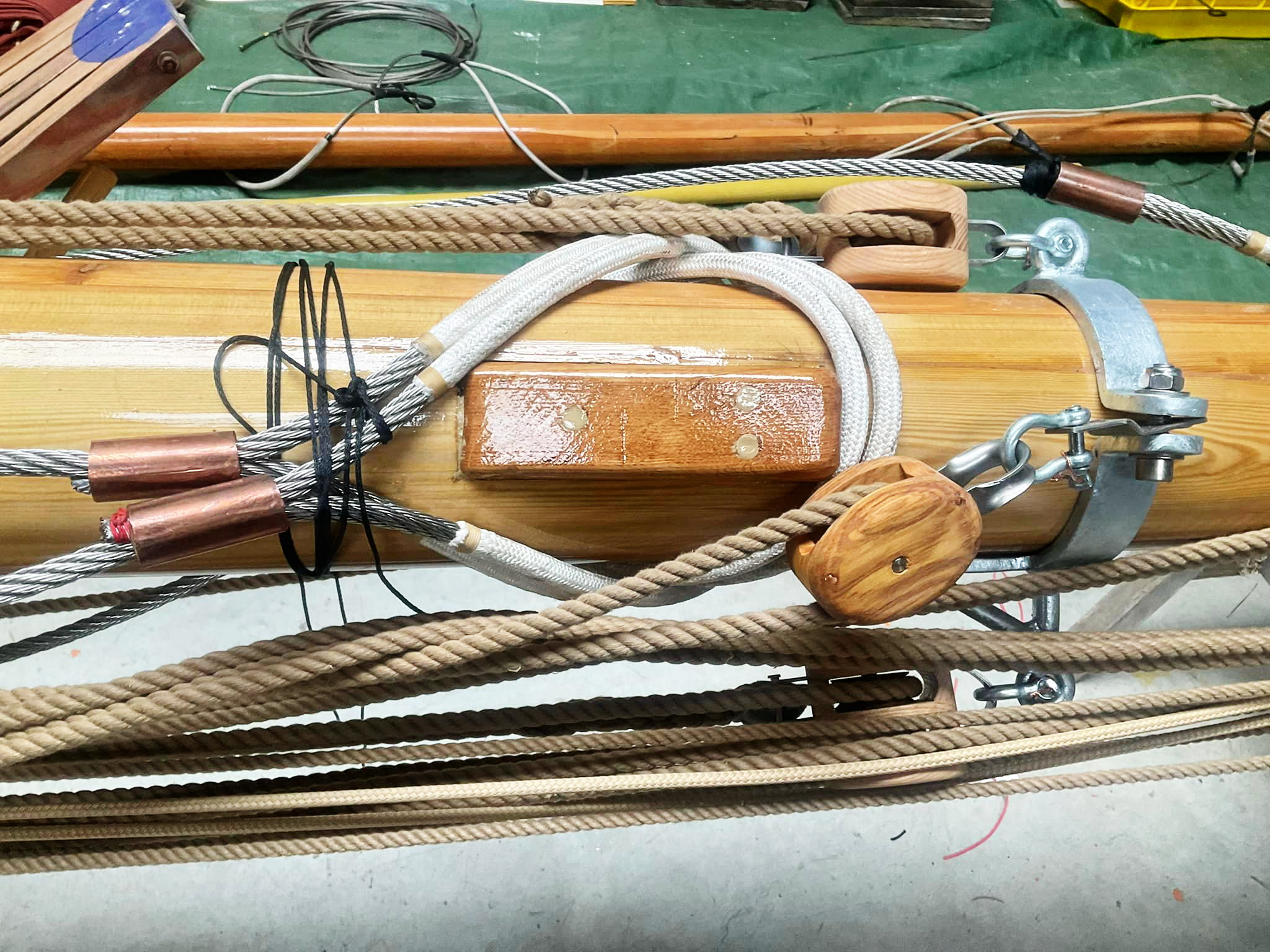
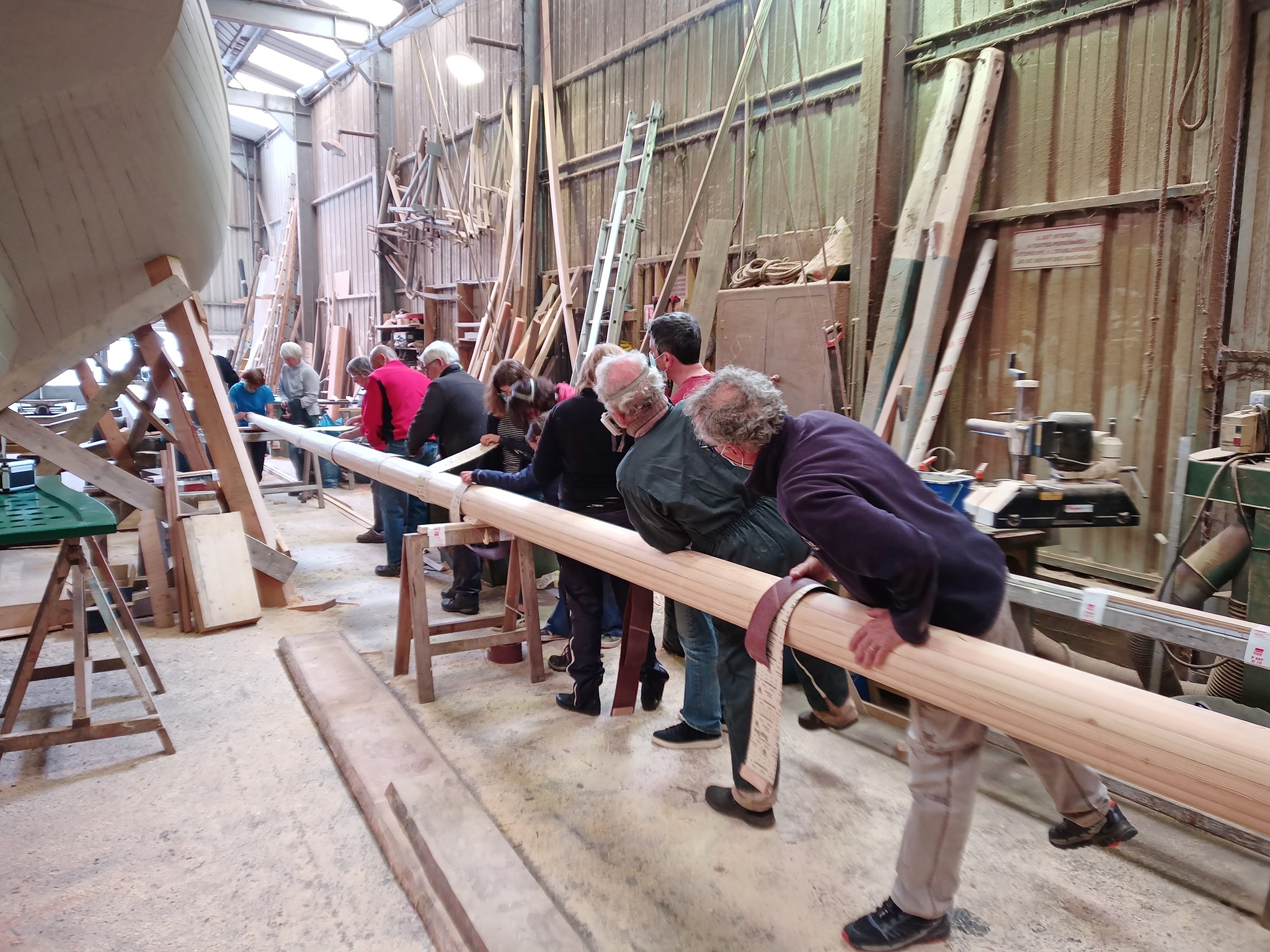
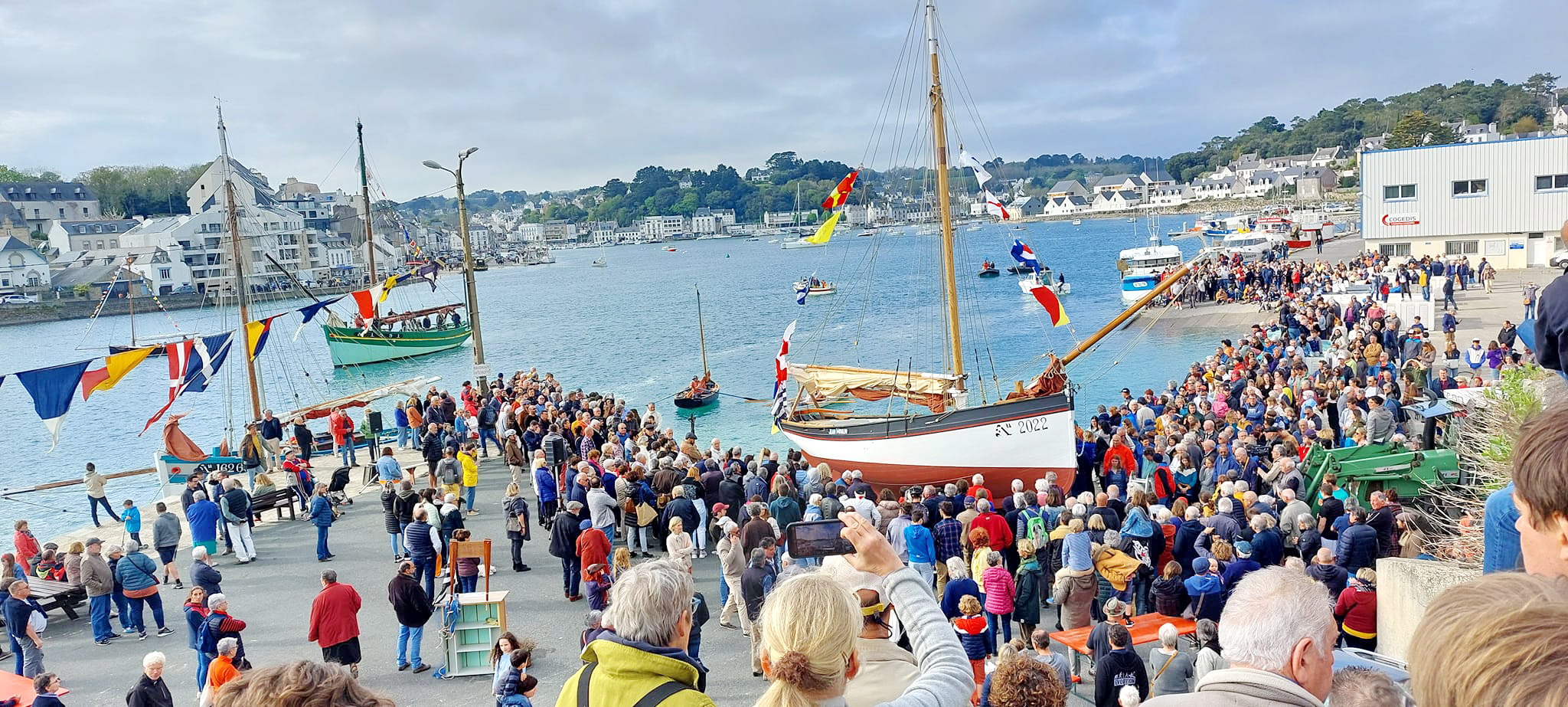
It was then that the Centre Nautique de Plouhinec decided to take the project forward. It took over the boat and sought funding. It contacted me to take over from Bernard Ficatier and finalise the structural plans, draw up the sail plan, design the fittings and ensure the boat complied with current regulations. The hull was transported to the premises of Les Charpentiers de Cornouaille in Tréboul, where its construction was completed. In early 2022, the boat was motored by sea to Audierne/Plouhinnec, where it was rigged, then launched in April of the same year. In July, whilst I was calling in Audierne with my own boat (Pen-Hir), I was able to take photographs of the Jean Moulin in Audierne Bay.
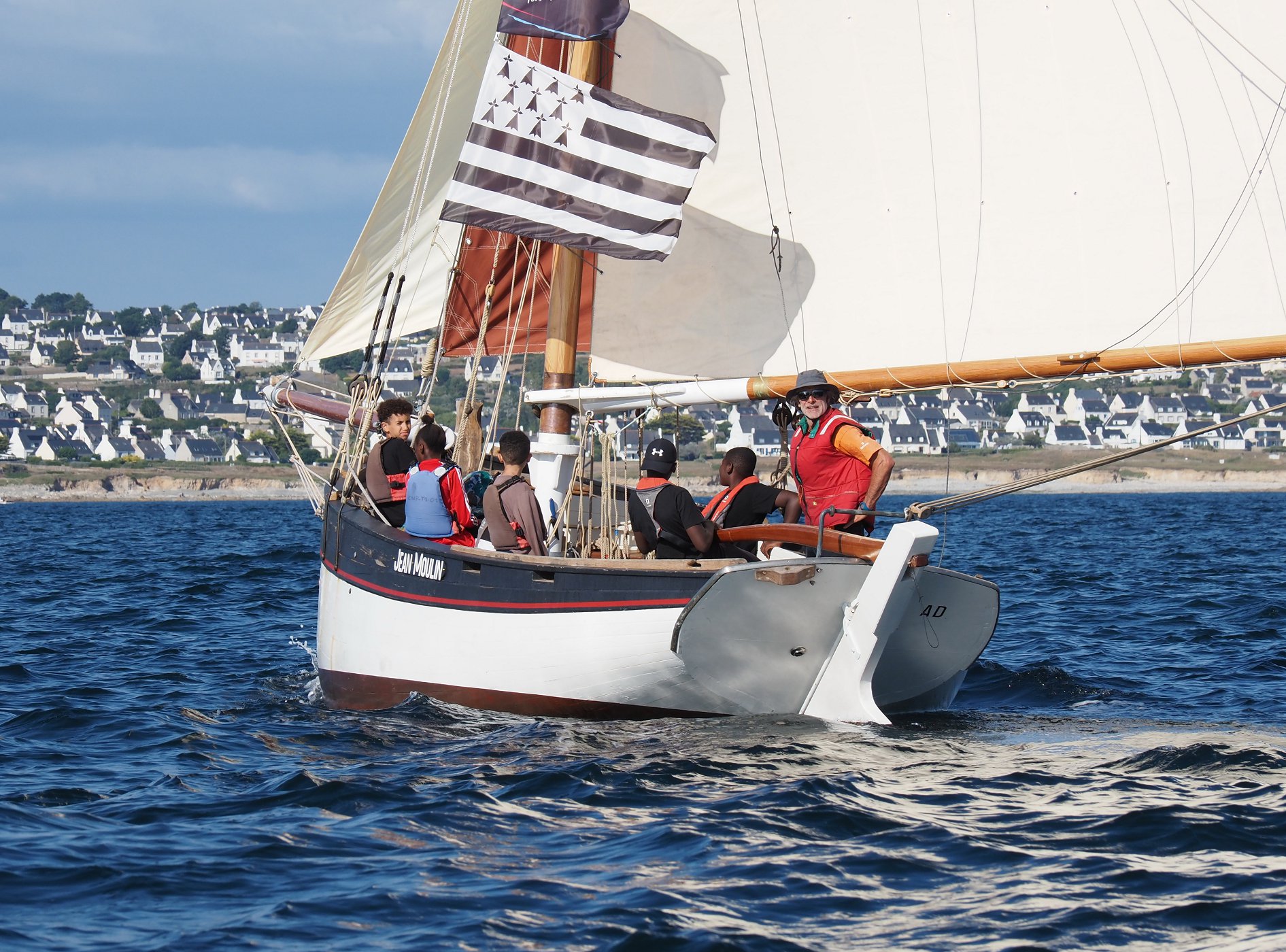
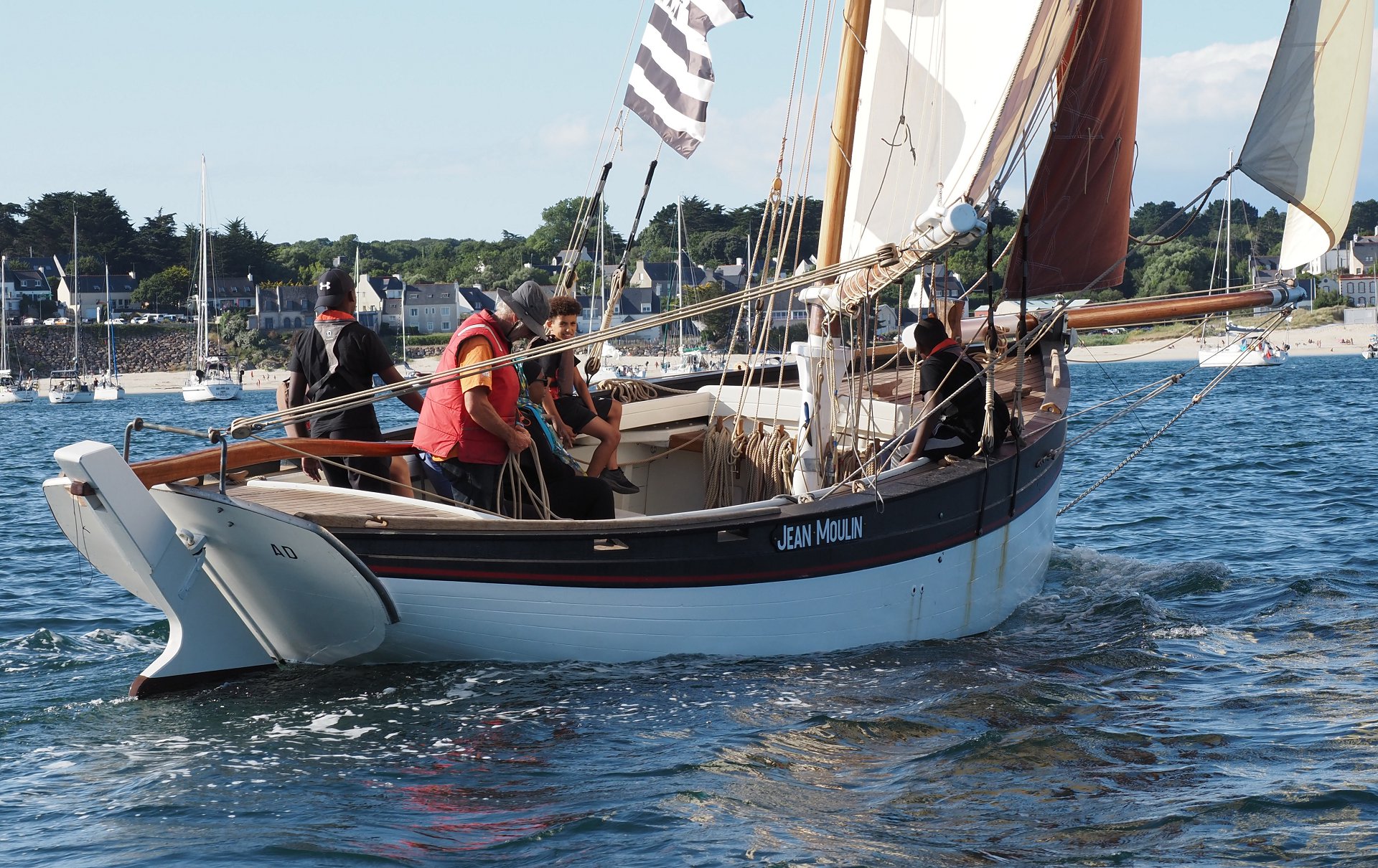
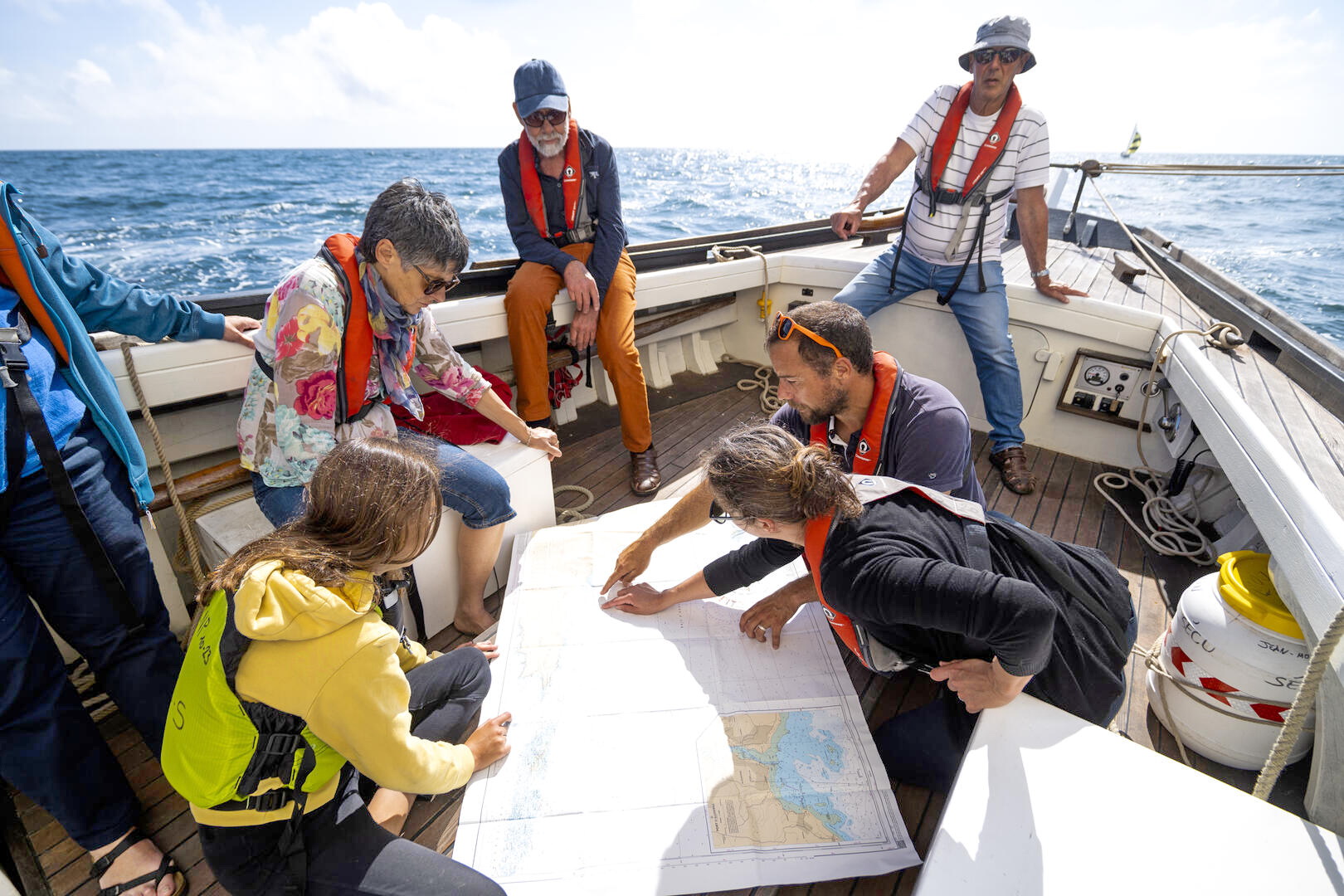
The boat registered in design category C for 9 people (or category D for 12 people). It is an open hull, but the stability standard (ISO 12217-2) allows a saiboat without buoyancy compartments to be classified as category C, provided it meets a wind stiffness test criterion. In practice, this criterion defines a stable boat with sufficient freeboard to sail safely in winds up to force 6 and corresponding sea conditions. It is worth noting that we have included a small side deck to increase the downflooding angle, which was not the case with traditional sloops from the region. Carrying out stability calculations in advance, based on a comprehensive digital model of the boat, makes it possible to anticipate and avoid the need to add buoyancy volumes to a finished boat.
This is all the more important given that creating enclosed, poorly ventilated spaces encourages the boat’s structure to rot, something we wish to avoid at all costs. This small side deck is a typical example of a compromised solution to improve the boat’s safety in accordance with current standards, without altering the core elements that define the boat’s authenticity. This type of side deck was, in fact, common in Northern Brittany.
Learn more about Jean Moulin sloop on the website “Patrimoine Martime et Fluvial“.